Customer and User Perception of Value and What it Means to Designers

• 8 min read

765 Shares

Often we talk about value and we mean “financial value” a concept that can be measured in dollars and cents or pounds and pennies or whatever currency is near to hand. However, financial value is not the only motivating factor for users and consumers to invest in a product. In fact, it is the perception of value both financial and non-financial that drives the decision to adopt (or not) a product.

Needs, Wants, Demands

It’s often said that it’s important to give a user what they need through product design and not to examine wants at all. It is true that if a product fails to meet a user’s needs – they are unlikely to find it useful and thus, unlikely to adopt it.

However, it is not true to say that a user will not prioritize their wants over their needs. Think about cars; both a Skoda and a Ferrari do a similar job for their users. They meet the need of being able to get from A to B quickly and efficiently. The Ferrari may be faster but in terms of meeting needs; this should be irrelevant both vehicles have top speeds which, except in very specific circumstances, exceed national speed limits.

Yet, there’s no doubt that there’s a market for the much more expensive Ferrari. If users only bought products based on need – the market for Ferrari should not exist.

In fact many products that are sold in today’s market meet a mix of user/customer needs and their wants too.

Wants and needs become “demands” when they are supported with the financial means to buy.

This is important because catering to wants and needs without such support is likely to lead to business failure; if there is no demand for a product it will not be adopted by the market.

Demands are executed based on the customer or user’s perception of value.
Author/Copyright holder: Duncan Hull. Copyright terms and licence: CC BY 2.0

Perception of Value

It is important to note that perception of value is not constant and may vary, significantly, from one user to another. For example, in the last section the author compared the value in a Skoda to the value in a Ferrari. Neither of these two cars would have any value to the author, who cannot drive. Yet, many other people draw a distinct value from driving a car.

In Peter Doyle’s “Value Based Marketing” published by Wiley in 2000 he offers four concepts of value which add up to the perception of overall value:

  1. Functional Value – what does the product do? What problem does it solve for the user or customer?
  2. Financial Value – is the product provided at a reasonable price point? It is worth noting that “reasonable” is very difficult to define as it involves the user or customer making multiple trade-offs between the costs of other things they want or need, the value of competing items and their ability to pay.
  3. Social Value – how does the product enable the user to connect with others? How does it improve the status of the user in other people’s eyes?
  4. Psychological Value – how does the product enable the user to feel about themselves? Does it bring them pride, pleasure, happiness, etc.? (Some psychological values both good and bad are shown in the image below).

Value may be expressed in two forms; quantitative (e.g. an amount) or qualitative (e.g. a description – it’s hard to rate happiness, for example, in a number even though it doesn’t stop market researchers from trying).
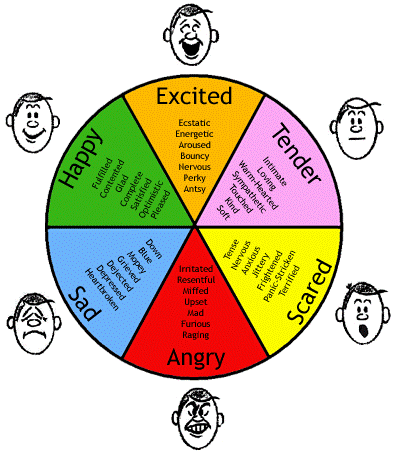
Author/Copyright holder: Toddatkins. Copyright terms and licence: CC0 1.0

If you’re struggling with where to create value – it can help to remember what the Fast Company said in 2005; “Design’s fundamental role is problem solver.”

Engaging with Perceived Value

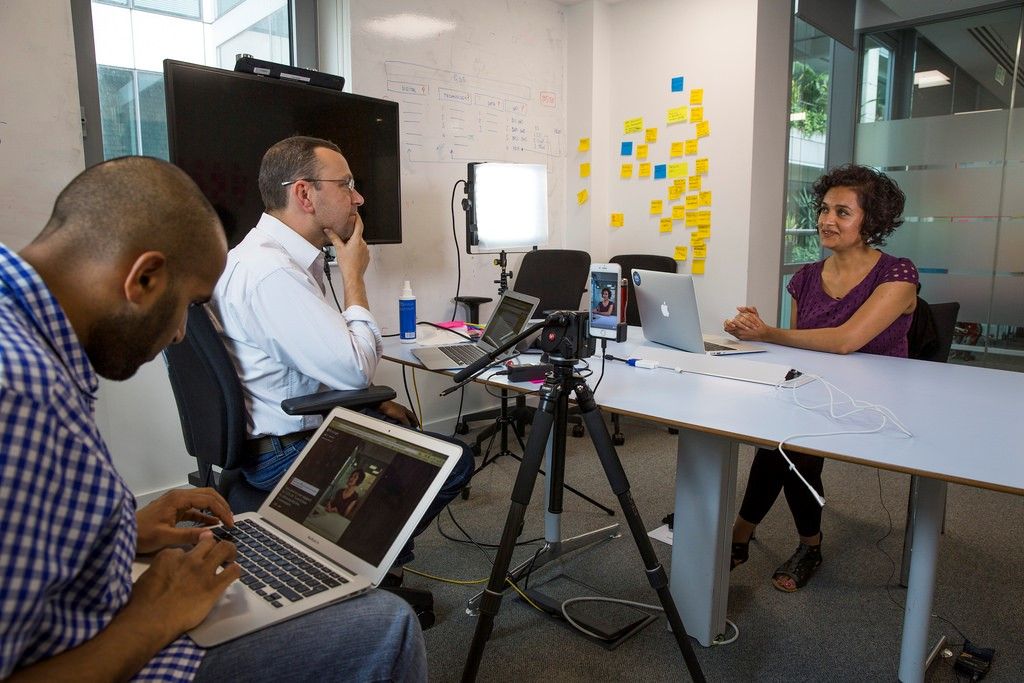
Designers and marketers can engage with perceived value by conducting market research. They will want to establish:

  • Why do users choose their product? What are the attributes and benefits of that product that are appealing?
  • Why do users choose their product when compared to a competitor’s product? What makes that product more interesting?
  • How much importance do users place on any given attribute or benefit? (E.g. what weighting can you give each item?)
  • What is the change in user/customer perception of value in your product over time?

The answers to these questions can inform the design process and the marketing approach taken – it is important to establish where perceptions of value exist so that they can be enhanced within designs and communicated through marketing.
Author/Copyright holder: gdsteam. Copyright terms and licence: CC BY 2.0

What Value is Enough Value?

This is a good question. How much value does a user need from our product in order to adopt it? The answer to this is potentially straightforward: when the perceived cost of a product is lower than the perceived value of that product.

Unfortunately, that definition assumes that the user has an unlimited budget and that every time they decide something is good value – they purchase it.

In reality, the perceived value must exceed the perceived value in all competing goods as well as the perceived cost of a product and the user must have budget for it in order for them to adopt the product.

This is important because a market of potentially millions of people can rapidly become a non-existent market even if the product holds a reasonable perceived-value to the members of that market.

Creating value is vital but it is important to also ascertain whether or not the market sees the value created as important enough to engage with.

Improving the value to cost ratio of any given product can also encourage adoption and ensure successful products in the long-term.

The Take Away

The more value a user perceives in a product compared to its cost; the more likely they are to adopt that product in their lives. Products compete for a user’s budget but not all value is perceived to be financial as there are also functional, social and psychological measures of value to consider. Market research can help uncover a user’s perception of value and allow designers to build on these in future product iterations and marketers to play to those values in communication with prospects.

References

Peter Doyle: Value-Based Marketing: Marketing Strategies for Corporate Growth and Shareholder Value. Wiley, 2000

Hero Image: Author/Copyright holder: Wiki4des. Copyright terms and licence: CC BY-SA 3.0

Topics in This Article

Learn More in This Course:

AI for Designers

9 days
23 % booked
View Course

What You Should Read Next

  • Read full article
    Use Circular Design To Reverse Harm - Article hero image
    Interaction Design Foundation logo

    Use Circular Design To Reverse Harm

    Nature is circular. Nothing ever goes to waste. The banana peel we discard degrades into nutritious compost for plants. Even the remains of deceased animals and humans disintegrate into the soil. Human engineering and design, on the other hand, are linear processes. And that has put us on a one-way

    Social shares
    426
    Published
    Read Article
  • Read full article
    Recycling is Not Enough. Let's Design for Reuse - Article hero image
    Interaction Design Foundation logo

    Recycling is Not Enough. Let's Design for Reuse

    “We live in the age of technology and luxury, but we also live in the age of waste,” Don Norman explains. In this video, the grandfather of User Experience Design, Don Norman unpacks the world of waste we have collectively generated. He examines aspects of our daily lives that we take for granted an

    Social shares
    459
    Published
    Read Article
  • Read full article
    Tree Testing: A Complete Guide - Article hero image
    Interaction Design Foundation logo

    Tree Testing: A Complete Guide

    Tree Testing reveals where users lose their way in your navigation. It’s a focused approach to evaluate a site's navigational structure. But it’s more useful in certain scenarios—so, you need to understand where you’ll benefit from tree testing the most. Learn about the pros and cons of testing tool

    Social shares
    687
    Published
    Read Article
  • Read full article
    How to Design Ethically: Expert Advice from Guthrie Weinschenk - Article hero image
    Interaction Design Foundation logo

    How to Design Ethically: Expert Advice from Guthrie Weinschenk

    As UX designers, we wield immense power to influence our users’ lives. We have the dual responsibility of catering to the interests of our users, as well as that of our sponsors (employers, clients and other business stakeholders). This can sometimes put designers in uncomfortable situations and rai

    Social shares
    546
    Published
    Read Article
  • Read full article
    Anything Artificial We Can Design Better - Article hero image
    Interaction Design Foundation logo

    Anything Artificial We Can Design Better

    If you look out the window, you’ll realize many things you see are artificial—buildings, cars, parks, electricity posts, water pipes, etc.—and most of those things were designed by humans. Founding father of UX, Don Norman introduces you to artificiality and how designers shape the world.[[video:142

    Social shares
    411
    Published
    Read Article
  • Read full article
    Stop the Generic Portfolio Trap! Design a Stand-Out Portfolio for Your UX/UI Niche - Article hero image
    Interaction Design Foundation logo

    Stop the Generic Portfolio Trap! Design a Stand-Out Portfolio for Your UX/UI Niche

    Your UX/UI portfolio is your ticket to your dream job, brief or client. It’s your opportunity to show off your expertise, creativity, and the tangible impact of your work. No matter your niche, your portfolio should be as innovative and polished as the projects it represents.Think of your portfolio

    Social shares
    293
    Published
    Read Article
  • Read full article
    Enter the World of Social VR - Article hero image
    Interaction Design Foundation logo

    Enter the World of Social VR

    Our metaverse is big—as in massive and expanding, to be more exact—and there’s plenty of room to trailblaze inside of all of that digital space, so if virtual reality (VR) can teleport, catapult, and integrate human users into brand-new worlds of excitement, discovery, and learning (which it can, by

    Social shares
    562
    Published
    Read Article
  • Read full article
    8 Talks by Women to Inspire UX Designers - Article hero image
    Interaction Design Foundation logo

    8 Talks by Women to Inspire UX Designers

    User Experience design, like so many other disciplines, has a lower representation of women as compared to men. Things are changing now, though. Slowly, but surely. From strategy to tactics and from ideas to actionable tips, here is a curated playlist of talks by, and stories of just some of the mos

    Social shares
    658
    Published
    Read Article
  • Read full article
    UX Storyboards: Ultimate Guide - Article hero image
    Interaction Design Foundation logo

    UX Storyboards: Ultimate Guide

    In user experience design, we use techniques like workshops and interviews to understand users. We turn our research into user stories and process flows. We use personas and wireframes to share our ideas with our teams.But it’s important to remember the real people we design for. We need to know wha

    Social shares
    783
    Published
    Read Article
  • Read full article
    Top 6 Tips to Make Your UX Portfolio Stand Out - Article hero image
    Interaction Design Foundation logo

    Top 6 Tips to Make Your UX Portfolio Stand Out

    Whether you’re a UX designer looking for your first UX job or a seasoned designer looking to further your career, your UX portfolio is arguably one of the most important projects you’ll work on. Your portfolio is the first touchpoint you have with the recruiters; it’s your chance to make an impactfu

    Social shares
    708
    Published
    Read Article

Top Articles

Top Topic Definitions

Feel Stuck?
Want Better Job Options?

AI is replacing jobs everywhere, yet design jobs are booming with a projected 45% job growth. With design skills, you can create products and services people love. More love means more impact and greater salary potential.

At IxDF, we help you from your first course to your next job, all in one place.

See How Design Skills Turn Into Job Options
Privacy Settings
By using this site, you accept our Cookie Policy and Terms of Use.
Customize
Accept all

Be the One Who Inspires

People remember who shares great ideas.

Share on:

Academic Credibility — On Autopilot

Don't waste time googling citation formats. Just copy, paste and look legit in seconds.

Feel stuck? Want Freedom?

Get one powerful email each week, like 322,593 others.

Learn to design a life you love.

Next email in: