Ethics and the User Experience - Privacy

• 5 min read

446 Shares

Ethical conduct differs from legal conduct. Legal conduct is ensuring that you meet the expectation of a user’s legal system and comply with any laws that might affect the work you do. Ethical conduct is bigger than that – it is concerned with the idea that your users are entitled to be treated in a certain manner and that “right and wrong” exist in areas that are not covered by the law.
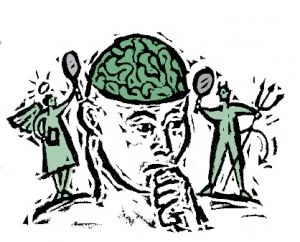


There are many areas of ethical experience and some that should concern you as you develop websites and applications include:

Privacy

There are legal rights to privacy in some jurisdictions; the European Union, for example, has very specific legal obligations for service providers to follow. The United States has a rather more relaxed approach to this.
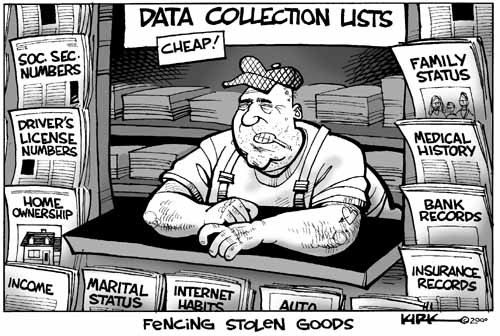

However, users are very much concerned with privacy. There is an implicit understanding that when we share our data with a company or organization that they will respect our privacy. Yet, all too often even big companies have found themselves on the wrong sides of the line from a customer’s perspective. So how can privacy be maintained for a better user experience?

  • Clear and simple privacy policies. You can draft a ridiculously long legal contract regarding privacy but it’s a fundamentally dishonest way to approach the issue. It is pretty much certain that the longer and more complicated a policy is – the less likely it is that people will read it. Just because you got the user to click “OK” to a 14 page privacy policy with a clause buried on page 12 about selling their data on – it’s not OK to sell their data. Your policy should include in as few words as possible and in plain English:
    • What their data will be used for and what it won’t be used for
    • An opt out (or better still an opt in) option for any uses of data that aren’t essential to providing a service to the customer (e.g. it’s perfectly OK to use their address to deliver good but you should get their permission before you start sending them catalogues, brochures, special offers, etc.)
    • An assurance that you are meeting any key legal obligations regarding their data
  • A point of contact for clearing up privacy questions. No matter how clear and simple your policy is – there’s always another way to interpret what’s being said. If a user has queries regarding their privacy; you should make it as easy as possible for them to seek clarification or reassurance.
  • It has been constantly demonstrated that engendering trust in your users will create strong relationships and continued business. Given that attracting new users is almost always more expensive than keeping your existing user base – it’s imperative that you build trust in a straightforward manner.

    Privacy is going to keep rising on people’s agendas particularly as the younger generation, which is far more au fait with technology and the consequences of the use of technology, becomes the majority of the user base. It’s worth getting out in front on this issue and ensuring that you do everything you can to protect your user’s privacy.


    Image Source: 

    Forbes (link to image)

    Innovate-edu (link to image)

    Warewhulf (link to image)

Learn More in This Course:

AI for Designers

10 days
18 % booked
View Course

What You Should Read Next

  • Read full article
    Use Circular Design To Reverse Harm - Article hero image
    Interaction Design Foundation logo

    Use Circular Design To Reverse Harm

    Nature is circular. Nothing ever goes to waste. The banana peel we discard degrades into nutritious compost for plants. Even the remains of deceased animals and humans disintegrate into the soil. Human engineering and design, on the other hand, are linear processes. And that has put us on a one-way

    Social shares
    425
    Published
    Read Article
  • Read full article
    Recycling is Not Enough. Let's Design for Reuse - Article hero image
    Interaction Design Foundation logo

    Recycling is Not Enough. Let's Design for Reuse

    “We live in the age of technology and luxury, but we also live in the age of waste,” Don Norman explains. In this video, the grandfather of User Experience Design, Don Norman unpacks the world of waste we have collectively generated. He examines aspects of our daily lives that we take for granted an

    Social shares
    458
    Published
    Read Article
  • Read full article
    Tree Testing: A Complete Guide - Article hero image
    Interaction Design Foundation logo

    Tree Testing: A Complete Guide

    Tree Testing reveals where users lose their way in your navigation. It’s a focused approach to evaluate a site's navigational structure. But it’s more useful in certain scenarios—so, you need to understand where you’ll benefit from tree testing the most. Learn about the pros and cons of testing tool

    Social shares
    687
    Published
    Read Article
  • Read full article
    How to Design Ethically: Expert Advice from Guthrie Weinschenk - Article hero image
    Interaction Design Foundation logo

    How to Design Ethically: Expert Advice from Guthrie Weinschenk

    As UX designers, we wield immense power to influence our users’ lives. We have the dual responsibility of catering to the interests of our users, as well as that of our sponsors (employers, clients and other business stakeholders). This can sometimes put designers in uncomfortable situations and rai

    Social shares
    546
    Published
    Read Article
  • Read full article
    Anything Artificial We Can Design Better - Article hero image
    Interaction Design Foundation logo

    Anything Artificial We Can Design Better

    If you look out the window, you’ll realize many things you see are artificial—buildings, cars, parks, electricity posts, water pipes, etc.—and most of those things were designed by humans. Founding father of UX, Don Norman introduces you to artificiality and how designers shape the world.[[video:142

    Social shares
    410
    Published
    Read Article
  • Read full article
    Stop the Generic Portfolio Trap! Design a Stand-Out Portfolio for Your UX/UI Niche - Article hero image
    Interaction Design Foundation logo

    Stop the Generic Portfolio Trap! Design a Stand-Out Portfolio for Your UX/UI Niche

    Your UX/UI portfolio is your ticket to your dream job, brief or client. It’s your opportunity to show off your expertise, creativity, and the tangible impact of your work. No matter your niche, your portfolio should be as innovative and polished as the projects it represents.Think of your portfolio

    Social shares
    291
    Published
    Read Article
  • Read full article
    Enter the World of Social VR - Article hero image
    Interaction Design Foundation logo

    Enter the World of Social VR

    Our metaverse is big—as in massive and expanding, to be more exact—and there’s plenty of room to trailblaze inside of all of that digital space, so if virtual reality (VR) can teleport, catapult, and integrate human users into brand-new worlds of excitement, discovery, and learning (which it can, by

    Social shares
    561
    Published
    Read Article
  • Read full article
    8 Talks by Women to Inspire UX Designers - Article hero image
    Interaction Design Foundation logo

    8 Talks by Women to Inspire UX Designers

    User Experience design, like so many other disciplines, has a lower representation of women as compared to men. Things are changing now, though. Slowly, but surely. From strategy to tactics and from ideas to actionable tips, here is a curated playlist of talks by, and stories of just some of the mos

    Social shares
    658
    Published
    Read Article
  • Read full article
    UX Storyboards: Ultimate Guide - Article hero image
    Interaction Design Foundation logo

    UX Storyboards: Ultimate Guide

    In user experience design, we use techniques like workshops and interviews to understand users. We turn our research into user stories and process flows. We use personas and wireframes to share our ideas with our teams.But it’s important to remember the real people we design for. We need to know wha

    Social shares
    782
    Published
    Read Article
  • Read full article
    Top 6 Tips to Make Your UX Portfolio Stand Out - Article hero image
    Interaction Design Foundation logo

    Top 6 Tips to Make Your UX Portfolio Stand Out

    Whether you’re a UX designer looking for your first UX job or a seasoned designer looking to further your career, your UX portfolio is arguably one of the most important projects you’ll work on. Your portfolio is the first touchpoint you have with the recruiters; it’s your chance to make an impactfu

    Social shares
    708
    Published
    Read Article

Top Articles

Top Topic Definitions

Feel Stuck?
Want Better Job Options?

AI is replacing jobs everywhere, yet design jobs are booming with a projected 45% job growth. With design skills, you can create products and services people love. More love means more impact and greater salary potential.

At IxDF, we help you from your first course to your next job, all in one place.

See How Design Skills Turn Into Job Options
Privacy Settings
By using this site, you accept our Cookie Policy and Terms of Use.
Customize
Accept all

Be the One Who Inspires

People remember who shares great ideas.

Share on:

Academic Credibility — On Autopilot

Don't waste time googling citation formats. Just copy, paste and look legit in seconds.

Feel stuck? Want Freedom?

Get one powerful email each week, like 322,597 others.

Learn to design a life you love.

Next email in: