This is a question that comes up a lot even with experience UX designers. It can be tricky deciding what technique to use for the right results. We think it probably starts with an understanding of qualitative and quantitative techniques and then you can start to select the right technique with just a little additional thought.
So What’s the Difference Between Qualitative and Quantitative Techniques?
In a nutshell it’s probably fair to say that a quantitative technique is one that provides a numerical result, whereas a qualitative technique is one that provides a range of non-standard insights usually in a verbal format.
More broadly:
Quantitative Research
Quantitative research is defined as research that produces numerical data. It can normally be expressed in a statistical or percentage format. It’s a great way to get a specific answer to a specific question. E.g. “What percentage of our users are stay at home mums?” or “What proportion of our users has a disposable income of more than $1,000 a month?”
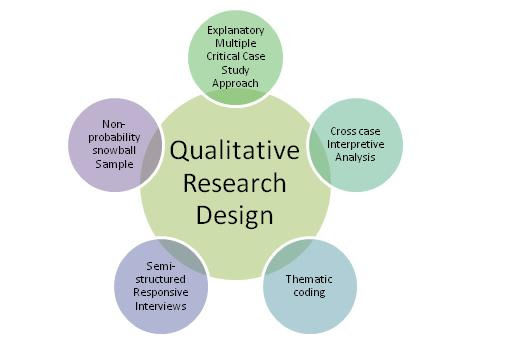
Qualitative Research
With qualitative research you collect textual data. That’s words to you and me. It allows us to get an idea of themes and patterns that cannot easily be expressed numerically when we have no underlying data to ask quantitative questions on. So you might ask; “Which functionality would people expect in our help suite?” or “What’s the biggest frustration that users have with our current product?”
Author/Copyright holder: Northumbria University. Copyright terms and licence: All rights reserved Img source
Isn’t That A Little Cut and Dried?
Yes, while technically you could say that all UX research boils down to qualitative vs. quantitative data capture, in reality many forms of research can capture both kinds of data. A questionnaire, for example, can capture qualitative data such as someone’s age, gender, nationality, etc. but you can also ask more open questions and capture quantitative data too. E.g. “What’s the one thing you would change with the product if you could make any change at all?”
Then there’s the fact that we can say the same thing in many different ways. Send that questionnaire to enough people and qualitative data can become quantitative data. E.g. 17% of respondents said that they disliked the UI because it doesn’t work well on a smartphone.
You might also want to separate data into other areas of measurement. For example; you might have data that is concerned with user behaviour and other data that is concerned with user attitudes.
And again a single method is capable of touching on both these areas. A questionnaire can easily examine; “What’s the first thing you do when you log in?” (behavioural) and “What’s the most exciting development in XYZ field today?” (attitudinal).
So How Do We Choose a Research Method?
Once we’ve examined the idea of qualitative vs. quantitative it’s clear that the same methods can lead us to very different results. So how do we select the right research method for our project?
We use a simple process that focuses our attention on the purpose of the research to begin with:
State and Understand the Problem
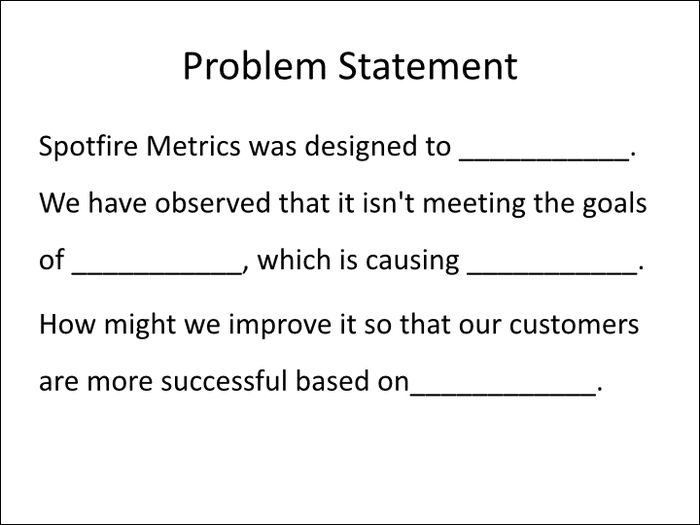
Before you can choose the right technique, you need to know what problem you’re trying to solve. It’s important to examine and understand the problem in detail before you can state it effectively. Problems are not just user problems, they also have a business and organizational context.
For example; let’s say that your customer support team are complaining that they’re receiving a high level of customer calls regarding usability. Your customers don’t quite know how to get to grips with the features of your product.
It would be very easy to assume that this problem was caused by a poor online help solution. Improve the online help and the customer care calls will drop, right?
But is that really the problem? Could the problem not be the fact that the UI or process flow is simply not as intuitive as it could be? Wouldn’t it be better to fix the problem before the customer has to ask for help rather than fixing the ways that a customer can get help?
To get to grips with this you need to ask deeper questions. You need to hone in on the actual cause of the issue rather than a superficial solution. The big question here is “How can we get users to stop needing help?” rather than “How can we improve the online help?”
The former is much more likely to meet the business need of reducing help calls than the latter.
Author/Copyright holder: William Bernhard. Copyright terms and licence: All rights reserved Img source
Determine What Data You Need to Solve The Problem
What data will help you determine how to get users to stop needing help in this scenario? Do you need to look at where customers are reaching for help? Or do you need to know why they are reaching for help? Or do you need both?
Quantitative data is often useful for exploring an issue. It helps you understand the thought processes of the user. Qualitative data will generally provide a more detailed answer to a problem; what’s the cause of the problem? How many people have the problem as a percentage of users?
Are you looking to work out what your users are doing? Or are you seeking their opinion on what they’re doing? The two are quite different things.

Author/Copyright holder: Gisela Giardino. Copyright terms and licence: CC BY-SA 2.0
Select the Research Technique that Gives You The Easiest Path to Reliable Data
When you know what you’re trying to solve and what data will help you solve the issue; it should be easy to choose a methodology.
You want to choose a method that delivers the data you need in the easiest manner possible. Hopefully, this will also maximize the use of your budget and keep deadlines to a minimum too.
A survey may be the simplest way to get to a qualitative measure if you understand the user’s needs to some extent but it might be a terrible way to try and understand the user’s needs from scratch (surveys – particularly those going to large groups – need to be tightly controlled to generate valuable data).
Interviews, on the other hand, are a great way to get to qualitative data that can quickly develop brand new ideas for solutions.
Summary
It’s not about “numbers” or “words” when it comes to selecting user research techniques. It’s about solving a problem. The better you understand the actual problem, the easier it is to select the right technique.
Header Image: Author/Copyright holder: Startup Weekend. Copyright terms and licence: All rights reserved. Img Source