5 Ideas to Help Bring Lean #UX into Your Research

• 9 min read

599 Shares

Lean UX can be a tricky beast to get to grips with at first. For those used to working in more traditional UX environments it can be very challenging to move to an environment where the focus is on making decisions rather than producing deliverables.

That means there’s a change in the way that the UX design team works. The idea is simply to channel your energy into delivering an end product with a great user experience and less energy on large scale test plans, presenting detailed research and getting the look and feel of your reporting perfect.

You have far less time when using Lean UX to capture data at any stage of development. That means looking for ways to bring in data that enables quick decision making at any point in the process. The development team needs your input to be able to decide what to build, which fixes are necessary and when, and what to kill off if it’s interfering with the user experience.

So how do we go about developing UX research that focuses on decision making? Here are 5 ideas that might get you started:

Schedule Regular User Testing

Pick a sensible time in your monthly calendar and book a number of users for that time each month. You’re going to vary the testing depending on the specific project needs at that point in time but having your users lined up and ready to go makes things much easier.

These tests may focus on the UI, or conceptual testing, or content, or playing with wireframes and prototypes. It doesn’t really matter. In Agile environments you don’t have much time between bursts to schedule participants and then get moving – so don’t, book the users ahead of time and then focus on developing the user’s understanding of what’s needed as soon as you’re ready to start testing.

The number of users you book for these sessions is up to you. What is generally the most meaningful number to use? Use that number.

Regular feedback from users during Lean UX research is, perhaps, the most valuable output of them all.



Author/Copyright holder: Samuel Mann. Copyright terms and licence: CC BY 2.0


Share Data Early

Lean UX requires a bit more trust in the UX team than other UX approaches. Because the focus is on making decisions, it means that as soon as meaningful data is created – it needs to be shared with the relevant stakeholders.

Beautiful, long form, fully comprehensive reports simply take too much time to generate. So don’t do them. Shine a spotlight on the issue and send out simple headline reports – if stakeholders want to dig deeper, they need to be aware it may take time to answer their questions, but rough and ready data is better than no data at all when you’re making a decision.

The more you do this and the more your observations are perceived as useful, the less likely you are to have to spend hours writing long form reports at all.

Take Pruning Shears to the Test Plan

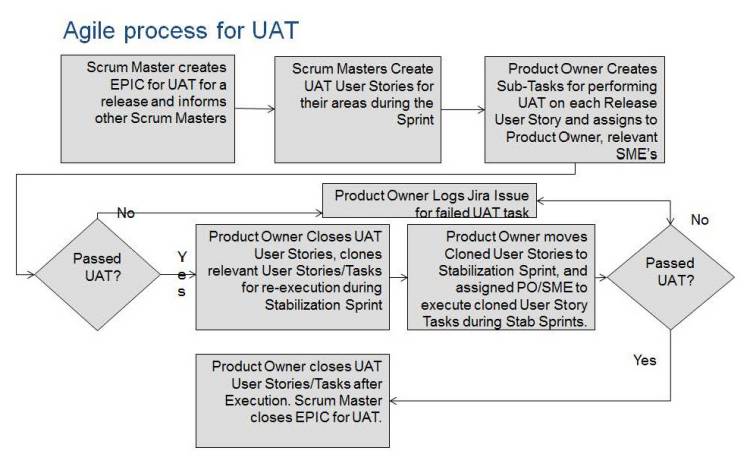
We’ve all worked in companies with huge formal documentation requirements. From the indentations on pages to the change control process at the start of every document. The trouble with all of this is that it interferes with delivering just the information everyone needs to understand your plan.

It may take some cunning negotiation on your part but you want to try and skip all the unnecessary junk. Your plans should be bare bones outlines that convey all the data that everybody needs to know and absolutely nothing else.

Big documents may make a corporate documentation manager happy but in practice – people struggle to engage with them. You can always go back and make the formal version for the archives later if you can’t get out of the requirement completely.


Author/Copyright holder: Scrum Alliance. Copyright terms and licence: All rights reserved Img source


Let Developers Observer Usability Tests

There’s no time to argue over points when you’re working in an Agile environment, either the developers are on-board with your observations or they’re going to be ignored. The process won’t stop without becoming deeply inefficient.

We all know that usability tests can generate a ton of useful insight. However, the trouble is that if it’s just the UX team sitting in on these tests – they then have to explain the results and problems second hand to the development team.

It’s much easier, and faster, to bring a developer in and let them see the issues as they unfold during a usability test. In our experience when a developer recognizes a problem, they want to spring into action and fix it. This saves us explaining the issue and leads to much faster decision making. Which is what we’re looking for when we employ Lean UX.



Author/Copyright holder: Luca Mascaro. Copyright terms and licence: CC BY-SA 2.0


Pre-Build Reports and Fill Them In as You Go

Template reports can save you a ton of time. Develop your test reports before you start testing then just fill them as you go through the testing. This also has another benefit – it helps you test your expected outputs ahead of time, if you generate a report and think; “How exactly does this method lead to this data?” – you can fix the test before it’s conducted too.

It also means that when testing is complete, the report should be pretty much complete too. That’s a great way to ensure that stakeholders have enough time to digest the content and offer their own input into the decision making process.

Summary

Author/Copyright holder: Zen Ex Machina. Copyright terms and licence: All rights reserved Img source

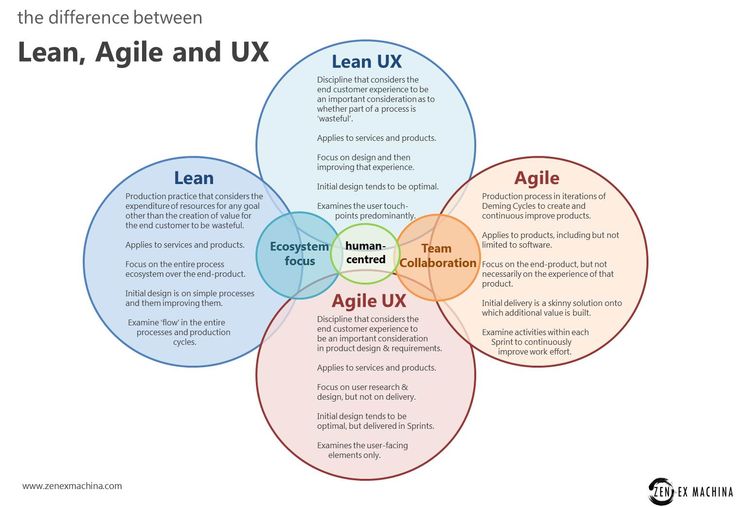
Agile development is here to stay and that means that Lean UX opportunities are going to keep opening up. Integrating Lean UX into Agile environments is all about learning to focus on making decisions. It doesn’t mean you can just stop doing everything you currently do and it may mean that sometimes “the formal stuff” is created after a decision has been made. That’s not the end of the world, you can still use that formal approach to help you learn lessons in the future and use it to inform the way you approach Lean UX in your business.

Header Image: Author/Copyright holder: UXcellence Copyright terms and licence: All rights reserved. Img Source

Learn More in This Course:

AI for Designers

9 days
18 % booked
View Course

What You Should Read Next

  • Read full article
    Use Circular Design To Reverse Harm - Article hero image
    Interaction Design Foundation logo

    Use Circular Design To Reverse Harm

    Nature is circular. Nothing ever goes to waste. The banana peel we discard degrades into nutritious compost for plants. Even the remains of deceased animals and humans disintegrate into the soil. Human engineering and design, on the other hand, are linear processes. And that has put us on a one-way

    Social shares
    425
    Published
    Read Article
  • Read full article
    Recycling is Not Enough. Let's Design for Reuse - Article hero image
    Interaction Design Foundation logo

    Recycling is Not Enough. Let's Design for Reuse

    “We live in the age of technology and luxury, but we also live in the age of waste,” Don Norman explains. In this video, the grandfather of User Experience Design, Don Norman unpacks the world of waste we have collectively generated. He examines aspects of our daily lives that we take for granted an

    Social shares
    458
    Published
    Read Article
  • Read full article
    Tree Testing: A Complete Guide - Article hero image
    Interaction Design Foundation logo

    Tree Testing: A Complete Guide

    Tree Testing reveals where users lose their way in your navigation. It’s a focused approach to evaluate a site's navigational structure. But it’s more useful in certain scenarios—so, you need to understand where you’ll benefit from tree testing the most. Learn about the pros and cons of testing tool

    Social shares
    687
    Published
    Read Article
  • Read full article
    How to Design Ethically: Expert Advice from Guthrie Weinschenk - Article hero image
    Interaction Design Foundation logo

    How to Design Ethically: Expert Advice from Guthrie Weinschenk

    As UX designers, we wield immense power to influence our users’ lives. We have the dual responsibility of catering to the interests of our users, as well as that of our sponsors (employers, clients and other business stakeholders). This can sometimes put designers in uncomfortable situations and rai

    Social shares
    546
    Published
    Read Article
  • Read full article
    Anything Artificial We Can Design Better - Article hero image
    Interaction Design Foundation logo

    Anything Artificial We Can Design Better

    If you look out the window, you’ll realize many things you see are artificial—buildings, cars, parks, electricity posts, water pipes, etc.—and most of those things were designed by humans. Founding father of UX, Don Norman introduces you to artificiality and how designers shape the world.[[video:142

    Social shares
    411
    Published
    Read Article
  • Read full article
    Stop the Generic Portfolio Trap! Design a Stand-Out Portfolio for Your UX/UI Niche - Article hero image
    Interaction Design Foundation logo

    Stop the Generic Portfolio Trap! Design a Stand-Out Portfolio for Your UX/UI Niche

    Your UX/UI portfolio is your ticket to your dream job, brief or client. It’s your opportunity to show off your expertise, creativity, and the tangible impact of your work. No matter your niche, your portfolio should be as innovative and polished as the projects it represents.Think of your portfolio

    Social shares
    291
    Published
    Read Article
  • Read full article
    Enter the World of Social VR - Article hero image
    Interaction Design Foundation logo

    Enter the World of Social VR

    Our metaverse is big—as in massive and expanding, to be more exact—and there’s plenty of room to trailblaze inside of all of that digital space, so if virtual reality (VR) can teleport, catapult, and integrate human users into brand-new worlds of excitement, discovery, and learning (which it can, by

    Social shares
    561
    Published
    Read Article
  • Read full article
    8 Talks by Women to Inspire UX Designers - Article hero image
    Interaction Design Foundation logo

    8 Talks by Women to Inspire UX Designers

    User Experience design, like so many other disciplines, has a lower representation of women as compared to men. Things are changing now, though. Slowly, but surely. From strategy to tactics and from ideas to actionable tips, here is a curated playlist of talks by, and stories of just some of the mos

    Social shares
    658
    Published
    Read Article
  • Read full article
    UX Storyboards: Ultimate Guide - Article hero image
    Interaction Design Foundation logo

    UX Storyboards: Ultimate Guide

    In user experience design, we use techniques like workshops and interviews to understand users. We turn our research into user stories and process flows. We use personas and wireframes to share our ideas with our teams.But it’s important to remember the real people we design for. We need to know wha

    Social shares
    782
    Published
    Read Article
  • Read full article
    Top 6 Tips to Make Your UX Portfolio Stand Out - Article hero image
    Interaction Design Foundation logo

    Top 6 Tips to Make Your UX Portfolio Stand Out

    Whether you’re a UX designer looking for your first UX job or a seasoned designer looking to further your career, your UX portfolio is arguably one of the most important projects you’ll work on. Your portfolio is the first touchpoint you have with the recruiters; it’s your chance to make an impactfu

    Social shares
    708
    Published
    Read Article

Top Articles

Top Topic Definitions

Feel Stuck?
Want Better Job Options?

AI is replacing jobs everywhere, yet design jobs are booming with a projected 45% job growth. With design skills, you can create products and services people love. More love means more impact and greater salary potential.

At IxDF, we help you from your first course to your next job, all in one place.

See How Design Skills Turn Into Job Options
Privacy Settings
By using this site, you accept our Cookie Policy and Terms of Use.
Customize
Accept all

Be the One Who Inspires

People remember who shares great ideas.

Share on:

Academic Credibility — On Autopilot

Don't waste time googling citation formats. Just copy, paste and look legit in seconds.

Feel stuck? Want Freedom?

Get one powerful email each week, like 322,594 others.

Learn to design a life you love.

Next email in: