Handwritten research notes on yellow sticky notes, grouped into outlined clusters with green labels and colored dots

UX Research with Other People at Work

• 5 min read

428 Shares
Save

UX can be a lonely job if you let it become that way. This is particularly true at small companies where UX can be a small part of someone’s role. Yet, not only does it not have to be a lonely role but it’s one where many other people in the organization can contribute their ideas too in a useful and constructive way. Most importantly, it’s a good idea to remember that it’s not just design and development professionals who can provide valuable insights either:

Customer Services

User experience is really a subset of the bigger customer experience. One awesome source of UX research is your customer service department. They deal with your users (as customers) day in and day out. They know what frustrates people and what they like. Annoyingly; much of what they know isn’t to be found in a database and that means you should be talking to these folks regularly.
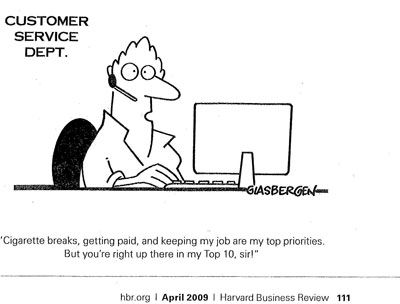


The most common issues with a product are often never written down. Why? Because they were written down once. Then someone said; “we can’t do anything about that now” and that’s the message the customer care guys have been passing on ever since. Since they can’t do anything about the problem; they often don’t record it. What’s the point?

The smart UX researcher works with the customer services team to develop UX tagging for their systems. Even when a problem that won’t be solved today comes in – they have it noted so that they can improve their data. They talk to customer services regularly to see if there are ways to make the product make their lives easier. They turn customer services into ambassadors for UX work with the larger organization.

Sales Representatives

The other group of people who know your users really, really well are your sales people. Given my own experience as a sales person in the past; sales people don’t tend to record things unless they may be relevant to a future sale. They are far worse than customer care agents in updating electronic systems. This is probably because sales reps tend to work to a small pool of potential prospects. They speak to them regularly and much of what they know gets filed away at the back of their brains for further discussion at a later date. Any time spent recording interactions is time that can’t be spent selling. So it doesn’t get done.



Sales people are a fount of wisdom regarding what users want or at least what they think they want. You need to research the data provided by sales people to ensure that they’re not pushing a specific agenda (e.g. for their biggest account) and that their findings are representative of the wider user base. However, their insight are a great starting place to point out possible directions of future user research.

Once again, the right interactions with the sales team can turn them into ambassadors for UX and that makes your life easier everywhere in the organization

Header Image: Author/Copyright holder: Smashing Magazine. Copyright terms and licence: All rights reserved. Img

Image Source:

UX Booth (link to image), Harvard Business Review (link to image), Mirror Ministries (link to image)

Learn More in This Course:

Learn Design and AI From the Best

Get one powerful email each week, like 312,068 others.

Next email in:

What You Should Read Next

  • Read full article
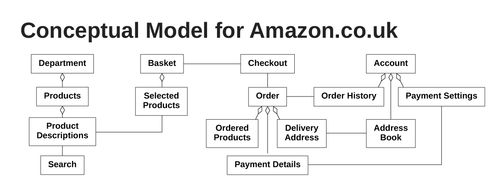
    Conceptual Models: The Hidden Structure Behind Your Next Great Interface - Article hero image

    Conceptual Models: The Hidden Structure Behind Your Next Great Interface

    Ever wondered why some interfaces feel effortless: like they already know what you’re trying to do, while others leave you guessing? The difference often lies in how well a product’s design matches the way users think. When your interface reflects their mental model, every action feels intuitive, an

    Social shares
    472
    Published
    Read Article
  • Read full article
    Get to Grips with Constraints - Article hero image

    Get to Grips with Constraints

    Got constraints? Perfect. That’s where great design begins. Just as electrical standards define how a toaster safely works without shaping what it does, your software also lives within boundaries that quietly guide its behavior. Functional requirements describe what your system does: the stories of

    Social shares
    469
    Published
    Read Article
  • Read full article
    How Persona Stories Help You Design for Real People - Article hero image

    How Persona Stories Help You Design for Real People

    User stories caught on because they were quick and simple, but speed often came at the cost of real understanding. A “user” in a story is rarely more than a guess, shaped by the assumptions of whoever wrote it. When you shift to persona stories, you ground your work in real research and real people.

    Social shares
    391
    Published
    Read Article
  • Read full article
    Use Cases: The Ideal Bridge Between Requirements and Design? - Article hero image

    Use Cases: The Ideal Bridge Between Requirements and Design?

    Imagine trying to describe everything your product needs to do, without getting lost in technical detail or endless feature lists. That’s the problem Ivar Jacobson set out to solve in the 1980s when he introduced use cases. Instead of worrying about how a system worked internally, he described it fr

    Social shares
    410
    Published
    Read Article
  • Read full article
    What is Good Design? - Article hero image

    What is Good Design?

    Design matters. It enables us to understand, communicate and improve the world around us. When done right, design has the power to improve the everyday lives of users. When done wrong, design can disrupt and frustrate users. As a designer, you have the power to improve the everyday lives of your use

    Social shares
    668
    Published
    Read Article
  • Read full article
    How To Use Grid Systems - Article hero image

    How To Use Grid Systems

    Grids systems can help you add structure to your design, organize information and create a consistent user experience. When designing with grids, the best thing you can do is to choose the right grid for the right project. However, with so many grids to choose from, it can be hard to know where to s

    Social shares
    829
    Published
    Read Article
  • Read full article
    The Basics of Type: Design Interfaces Users Keep Coming Back To - Article hero image

    The Basics of Type: Design Interfaces Users Keep Coming Back To

    Type is everywhere. In the books you read, the products you use, and even in this very website you're on right now. But what is type? In the context of design, type is the style or appearance of text. It can also refer to the process of working with text. Typography can often be an intimidating topi

    Social shares
    676
    Published
    Read Article
  • Read full article
    What are Color Modes? - Article hero image

    What are Color Modes?

    As a designer, it’s important to differentiate the color modes so you can optimize each stage of your design process. If you use the correct color mode in your design, you will also help get your message and tone across. In this lesson, we’ll define common color modes and help you understand when to

    Social shares
    789
    Published
    Read Article
  • Read full article
    The 5 Pixar Storytelling Principles That Will Redefine How You Present and Fast-Track Your Career - Article hero image

    The 5 Pixar Storytelling Principles That Will Redefine How You Present and Fast-Track Your Career

    Ever sat through a presentation that felt like watching paint dry? You’re not alone. Most presentations miss one vital ingredient: Storytelling. And when it comes to telling stories that make people laugh, cry, or rethink their entire worldview… no one does it like Pixar. They’ve mastered the art of

    Social shares
    513
    Published
    Read Article
  • Read full article
    5 Ways to Use Behavioral Science to Create Better Products - Article hero image

    5 Ways to Use Behavioral Science to Create Better Products

    A myriad of fields, skills and insights come together to create the overarching discipline of user experience design. Psychology and behavioral science play a big part in UX design because understanding people, the way their minds work, what they want and don’t want, will help us create better produ

    Social shares
    654
    Published
    Read Article

Top Articles

Top Topic Definitions

39% of Today's Skills Will Change by 2030

The World Economic Forum expects 39% of today's skills to be transformed or become outdated by 2030.

The good news is that jobs in UX / UI design and AI are among the fastest-growing professions globally.

Build Skills That Keep You Relevant

Privacy Settings

By using this site, you accept our Cookie Policy and Terms of Use.
Customize
Accept all

Be the One Who Inspires

People remember who shares great ideas.

Share on:

Academic Credibility — On Autopilot

Don't waste time googling citation formats. Just copy, paste and look legit in seconds.

Learn Design and AI From the Best

Get one powerful email each week, like 312,068 others.

Next email in: