Deformation Professionnelle

Your constantly-updated definition of Deformation Professionnelle and collection of videos and articles.
Be a conversation starter: Share this page and inspire others!

210 Shares
Save

Get 1 Powerful Email Each Week

Join 313,908 subscribers.

What is Deformation Professionnelle?

Deformation professionelle is a cognitive bias that restricts a designer’s view of the world. Where most people will see things from a more general point of view, designers—and other specialists, for that matter—run the risk of sticking only to the views offered by the lens of their expertise. Being so biased by their professional backgrounds can trap designers into limited viewpoints, and they may therefore overlook vital points about a design problem or proposed solution.

As this symptom of “over-specialization” in one field can prove to be such an obstacle, it’s healthy and helpful to flip the view you, and your team members, may have on a problem at hand. For example, design thinking is extremely useful for accessing vantage points to view matters and harvest insights into the users’ world you might otherwise miss altogether.

Learn More About Deformation Professionnelle

Make learning as easy as watching Netflix: Learn more about Deformation Professionnelle by taking the online IxDF Course User Research – Methods and Best Practices.

Why? Because design skills make you valuable. In any job. Any industry.

In This Course, You'll

  • Get excited to discover what people truly need so you can create products and services they love. In this course, you'll be guided by industry experts, including renowned Professors Alan Dix and Ann Blandford. They'll teach you how to plan research, fit it into real-world design work, and translate raw findings into deliverables that influence design decisions. Whether you're transitioning into design or stepping into a senior role, this course builds your research toolkit with four essential qualitative techniques: semi-structured interviews, contextual inquiries, observational studies, and usability testing. All four are just as applicable to reducing abandoned carts in online shopping as to improving patient outcomes in healthcare. As AI speeds up research synthesis, your real advantage comes when you build timeless, human-centered design skills to frame the right research question, read between the lines of what users say and do, and translate your findings into insights stakeholders can understand and act on.
  • Make yourself invaluable when you can plan, conduct, and analyze research to discover who your users are, what they need, and what gets in their way. PwC found that customers will pay a 16% premium for great experiences, and great experiences start with knowing your users deeply. By the end of this course, you'll know which qualitative method to use based on the product development stage and how to prepare a comprehensive project plan. You'll write interview questions drawing on Kvale and Brinkmann's nine question types and analyze data through a six-step thematic analysis. Whichever method you use, you'll apply research ethics and obtain informed consent, avoid pressuring participants, and handle vulnerable populations with appropriate safeguards.
  • Gain confidence and credibility when you can prove the ROI of user research to decision-makers. You'll articulate research's three core purposes and translate them into the language of revenue, cost, and risk to secure resources for research work. You'll map stakeholders across business, engineering, and UX using Tomer Sharon's framework and conduct interviews to surface constraints, history, and expectations. To turn raw research into shared understanding among stakeholders, you'll learn to run a five-part workshop that produces well-framed How Might We questions and a team aligned on what to do next. And because words alone rarely move design forward, you'll produce affinity diagrams, empathy maps, and user journey maps that turn research data into something stakeholders can connect with and build on.
  • Craft your personal portfolio with optional hands-on projects and gain experience with user interviews, contextual inquiries, and observations. You'll translate your findings into concrete design deliverables that serve as visual artifacts in your case studies, ready to prove your research abilities to hiring managers. Plus, with ready-to-use templates like interview guides and customer journey maps, you'll implement your new skills immediately in your work.

Learn From Industry Leaders

Master complex skills with proven best practices and toolkits directly from industry leaders. Meet your experts for this course:

  • Frank Spillers: Service Designer and Founder and CEO of Experience Dynamics.

  • Ann Blandford: Professor of Human-Computer Interaction at University College London.

  • Alan Dix: Author of the bestselling book “Human-Computer Interaction” and Director of the Computational Foundry at Swansea University.

Earn Industry-Recognized Certificates

Industry giants trust our courses to train their teams, and prestigious universities integrate our content into their curricula. Add your certificates to your LinkedIn profile, résumé, and job applications.

Our clients: IBM, Harvard University, University of Cambridge, NASA, Adobe, Stanford, Massachusetts Institute of Technology, LinkedIn
Course Certificate

All Free IxDF Articles on Deformation Professionnelle

Read full article
User Research: What It Is and Why You Should Do It - Article hero image

User Research: What It Is and Why You Should Do It

User research is an essential part of UX design. Unless we understand who we are designing for and why, how can we even know what to create or where to begin? Depending on your project, requirements and constraints, you can choose different types of research methods, from surveys and tests to interv

Social shares
1.1k
Published
Read Article
Read full article
Deformation Professionnelle and the Dunning-Kruger Effect – When Expertise Isn’t So Great - Article hero image

Deformation Professionnelle and the Dunning-Kruger Effect – When Expertise Isn’t So Great

There can be quite a bit of confusion when you think about what the word “expertise” means. We all like to believe we have areas of expertise. However, sometimes, this leads to an over-estimation of our capacities. We fail to see our limits and how they might affect our results. A similar fairly pai

Social shares
638
Published
Read Article

Deformation Professionnelle and the Dunning-Kruger Effect – When Expertise Isn’t So Great

Deformation Professionnelle and the Dunning-Kruger Effect – When Expertise Isn’t So Great

There can be quite a bit of confusion when you think about what the word “expertise” means. We all like to believe we have areas of expertise. However, sometimes, this leads to an over-estimation of our capacities. We fail to see our limits and how they might affect our results. A similar fairly painful outcome might happen when we only see the world from our professional lenses. Deformation Professionelle and the Dunning-Kruger Effect are cognitive biases related to expertise assessment that we have to be aware of and take action to prevent them from interfering with our work.

Let’s see how to do it!

Expertise is a matter of professional and personal pride. We need to demonstrate expertise to differentiate ourselves from other people who offer similar services and work that we do. It’s expertise that brings higher salaries than those who lack such expertise.

Sadly, there are times when expertise can obfuscate the way we see the world too. When that happens we can fail to think creatively or logically and we lower our levels of performance. Worse, this can impact on the user experience, the product and our clients too.

What is Deformation Professionelle?

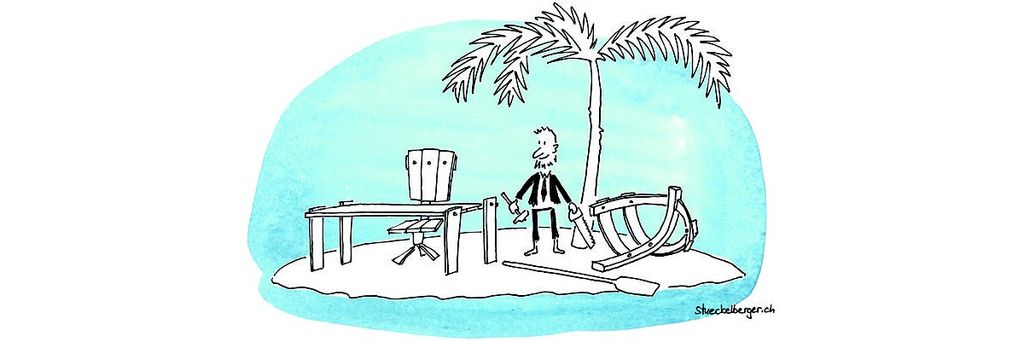
Deformation professionelle (other than being a French term) is a cognitive bias. It stops us from seeing the world the way that most people see it. What it is, is a tendency to view the world through the eyes of our own profession. We stop seeing things as they are and see them only as a designer would view them.

This isn’t always a bad thing but it can be very limiting too. It’s a warning sign that we’ve become over-specialized in our approach. Not everything in life needs “design theory” applying to it and in fact, there are times when “design theory” is plain wrong in light of the facts.

There are situations when it’s better to take an intuitive or common approach to an idea or a problem or to tackle that problem from the perspective of an alternative profession.

When expertise runs wild; it can severely limit the way we solve problems and handle new ideas.


Author/Copyright holder: Kevin Marks. Copyright terms and licence: CC BY 2.0

What’s the Dunning-Kruger Effect?

The Dunning-Kruger effect appears at the other end of the expertise scale. It’s when we suffer from an illusion of expertise when in reality we’re not really all that skilled at something. In its worst form, it’s a belief that we’re good at everything because we’re good at something.

When people suffer from this bias – they have a tendency to massively over-estimate what their competence is in things that they’re not very good at.
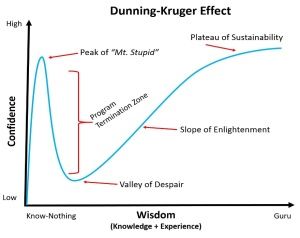

Author/Copyright holder: The YPS Group. Copyright terms and licence: All rights reserved Img source

The bias can also manifest when highly-skilled individuals (or experts as we call them) believe that because they have expertise and thus a task is easy to them; everyone has that expertise and thus the same task should be easier for others than it actually is.

How Do We Tackle These Biases?

If you find yourself prefacing your thoughts with; “Well design theory says…” or “It’s well known in design that…” you might want to take a step back and ask; “How would someone with no expertise see this?”
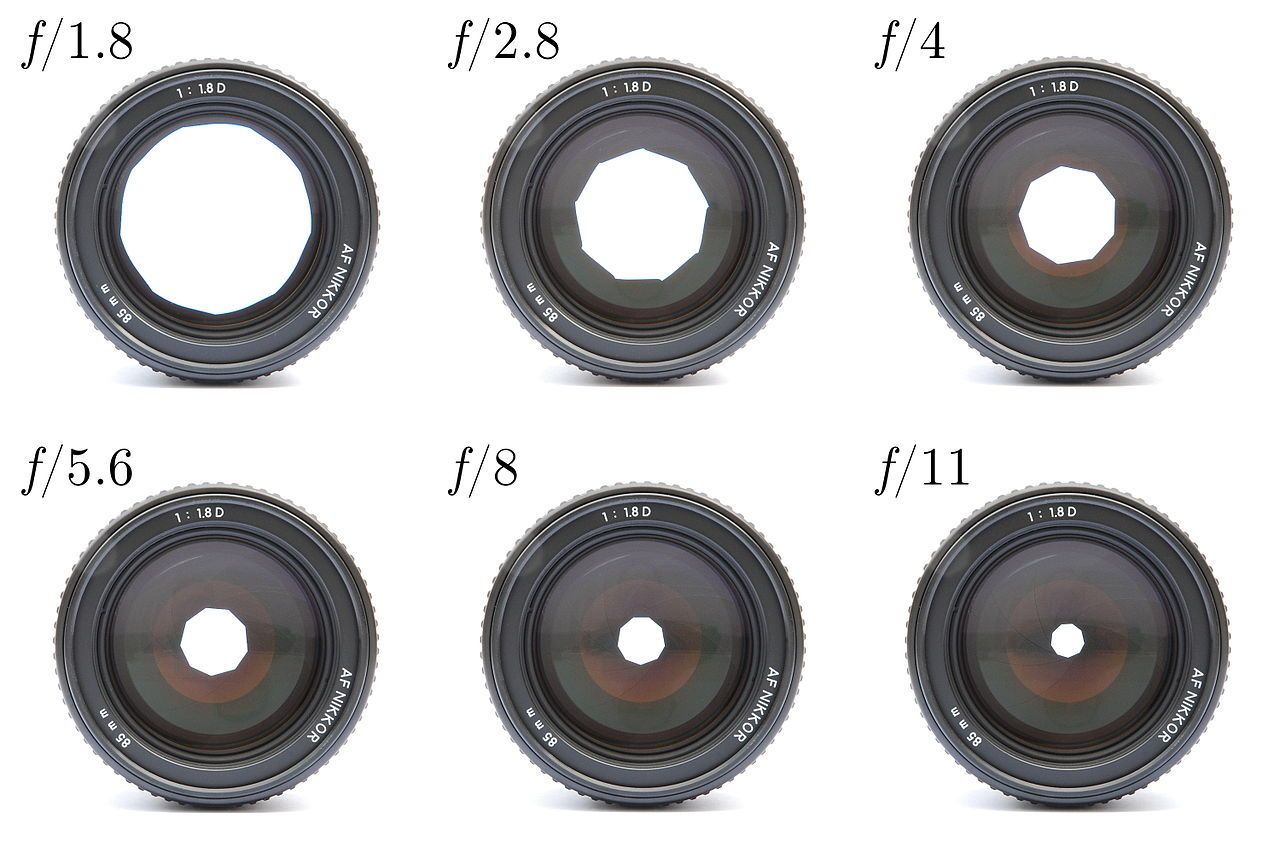


Author/Copyright holder: KoeppiK. Copyright terms and licence: CC BY-SA 3.0

You may then find yourself falling into the same trap as you progress through the process. Keep taking a step back and make sure you’re examining the problem through fresh eyes.

It can be harder to spot the Dunning-Kruger effect at play. You need to be able to ask yourself; “What do I really know about this situation?” and see if you’re over-estimating your ability to cope with a challenge and whether it needs a little more thought.

If you find that people around you are under-performing in your eyes; you might also want to ask “am I being fair?” Does the person actually have the expertise or should you be giving them more time to develop it?

As with all cognitive biases – tackling them by yourself can be incredibly challenging. That’s because we’re programmed (naturally) to not recognize our biases. You might want to consider enlisting the aid of a coach if you really want to rid yourself of these biases and become more effective.

The Take Away

Expertise can be extremely useful in our work; however, we shouldn’t become over-reliant on expertise – there are advantages to seeing the world with a fresh “non-design” pair of eyes at times. It can help us be more creative and get different perspectives on our work.

It’s also important not to become over-reliant on our image of ourselves as an expert. We cannot be experts at everything, and we cannot expect others always to share our expertise either. Knowing when to differentiate these circumstances can make us better at what we do and make it easier for others to work with us.

References & Where to Learn More:

A brutal but funny look at the Dunning-Kruger effect: Here’s Why Stupid People Don’t Realize They’re Stupid.

A slightly healthier perspective on the Dunning-Kruger effect: We are All Confident Idiots.

A case study in the destructiveness of Deformation Professionnelle.

Hero Image: Author/Copyright holder: Stueckelberger.ch. Copyright terms and licence: All rights reserved. Img

39% of Today's Skills Will Change by 2030

The World Economic Forum expects 39% of today's skills to be transformed or become outdated by 2030.

The good news is that jobs in UX / UI design and AI are among the fastest-growing professions globally.

Build Skills That Keep You Relevant

Privacy Settings

By using this site, you accept our Cookie Policy and Terms of Use.
Customize
Accept all

Be the One Who Inspires

People remember who shares great ideas.

Share on:

Academic Credibility — On Autopilot

Don't waste time googling citation formats. Just copy, paste and look legit in seconds.