Your constantly-updated definition of Desirability and collection of videos and articles. Be a conversation starter: Share this page and inspire others!
Desirability is an important level of user experience that gauges how much a product or brand is wanted by a consumer. Sometimes, high desirability may be expressed through a premium. Increased prices sometimes evoke desirability—for example, as seen with a sleek BMW car design.
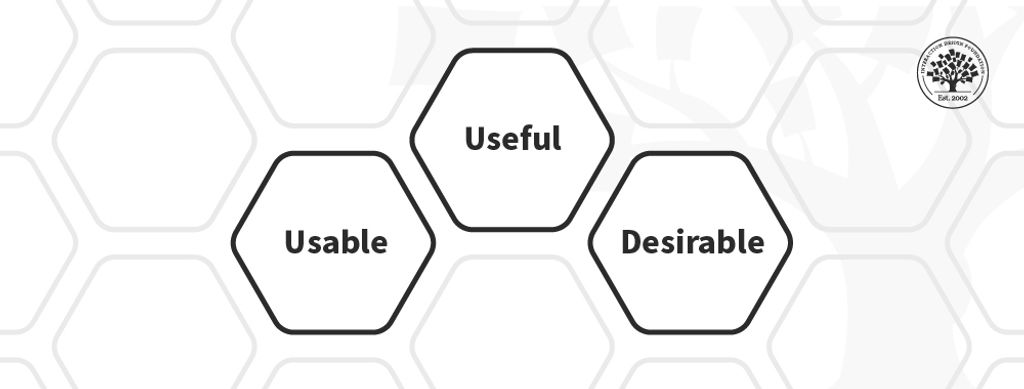
Desirability is a subjective factor that relates to taste and aesthetics. When a product or brand is desirable, users are attracted to it. Desirability is important because it keeps users engaged at the beginning, attracting them to interact with the product and find its usefulness and usability features.
Why? Because design skills make you valuable. In any job. Any industry.
In This Course, You'll
Get excited to move past what just works well and looks good as you learn to design products and experiences people love. Every morning your alarm goes off, you shuffle to the kitchen, and you start your daily ritual. Still half-asleep, you boil the kettle, scoop the coffee, and add the milk. And out of every mug you own, you reach for the same one. Every single time. We all have things we choose over and over, sometimes without knowing why. It feels like instinct, but that pull comes from emotional design: It's not just what a product does, but how it makes you feel each time you use it. It's why some things earn a place in our lives while others, even when they're just as functional, get forgotten in a drawer. In this course, design legend and author of the bestselling book "Human-Computer Interaction," Professor Alan Dix, shows you how to use psychology to design for emotion, so that the feelings your product evokes are intentional, not accidental.
Make yourself invaluable when you can turn products and experiences that are functional into ones that make people actually feel. In this course you'll learn why people fall in love with some things and abandon others, using Don Norman's three levels of design to make sense of why people respond the way they do. You'll understand the cognitive and affective systems running in every user's head, so you can shape how your work feels before anyone consciously thinks about it. Through Maslow's hierarchy and MacLean's three brains, you'll ground what you build in the instincts, emotions, and reasoning every user carries with them. And with real examples from brands like Apple and Swatch, you'll see how your design choices can earn that connection. AI has made it possible to build more products faster and cheaper than ever, and users are now flooded with endless options. Your timeless, human-centered design skills are what let you look past the screen to the human on the other side, so the people who use what you build feel understood.
Gain confidence and credibility because when you design for emotion, you build things that genuinely serve people, earn their trust, and keep them coming back. Emotion is often treated as the soft, unprovable part of design, but according to Gallup, behavioral economists estimate that up to 70% of consumer decisions are driven by emotion rather than logic. In this course, you'll learn to make the business case for emotional design and trade "it just feels better" for a clear explanation of what's working, why it matters, and what you can do about it. You'll also see why a beautiful design isn't just nice to look at: Research shows people perceive attractive things as more usable, even when their actual experience suggests otherwise. And with downloadable templates like the 5 Principles of Humanity-Centered Design, you'll apply your skills immediately.
Learn From Industry Leaders
Master complex skills with proven best practices and toolkits directly from industry leaders. Meet your expert for this course:
Alan Dix: Author of the bestselling book “Human-Computer Interaction” and Director of the Computational Foundry at Swansea University.
Earn Industry-Recognized Certificates
Industry giants trust our courses to train their teams, and prestigious universities integrate our content into their curricula. Add your certificates to your LinkedIn profile, résumé, and job applications.
User Interface Design Guidelines: 10 Rules of Thumb
Learn to design with your user’s needs and expectations in mind by applying Jakob Nielsen and Rolf Molich’s Ten User Interface Guidelines. These heuristics have been reflected in many of the products designed by some of the most successful companies in the world such as Apple, Google, and Adobe. Fur
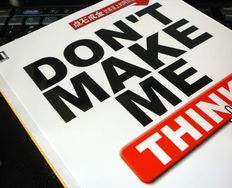
Don’t Make Me Think – Key Learning Points for UX Design for the Web
Don’t Make Me Think is the title of a book by the HCI and Usability engineer Steve Krug. It teaches UX designers how to deliver great user experiences in a very simple and accessible way. Since its release in the year 2000 it has become one of the defining texts in the industry and an invaluable gui
The question of usability compared to desirability comes up a lot in UX design, and it’s important to distinguish the two. Why? Because usability is the base level of the user experience, it is difficult to create a worthwhile user experience without it. However, without desirability, it’s unlikely
Creating Lust, Desirability and the Mobile User Experience
User experience can often be reduced by those outside the discipline to “usability” and to be fair to them – UX did arise from usability but the user experience depends on more than just a product being usable. One key component of UX is desirability – the ability to make a product fun and engaging
Social shares
575
Published
Read Article
Usability vs Desirability in Mobile UX
The question of usability compared to desirability comes up a lot in UX design, and it’s important to distinguish the two. Why? Because usability is the base level of the user experience, it is difficult to create a worthwhile user experience without it. However, without desirability, it’s unlikely that the user experience will be memorable or recommendable to others. Here we’ll look into the differences between usability and desirability and how to consider them in a successful mobile user experience (UX) design strategy.
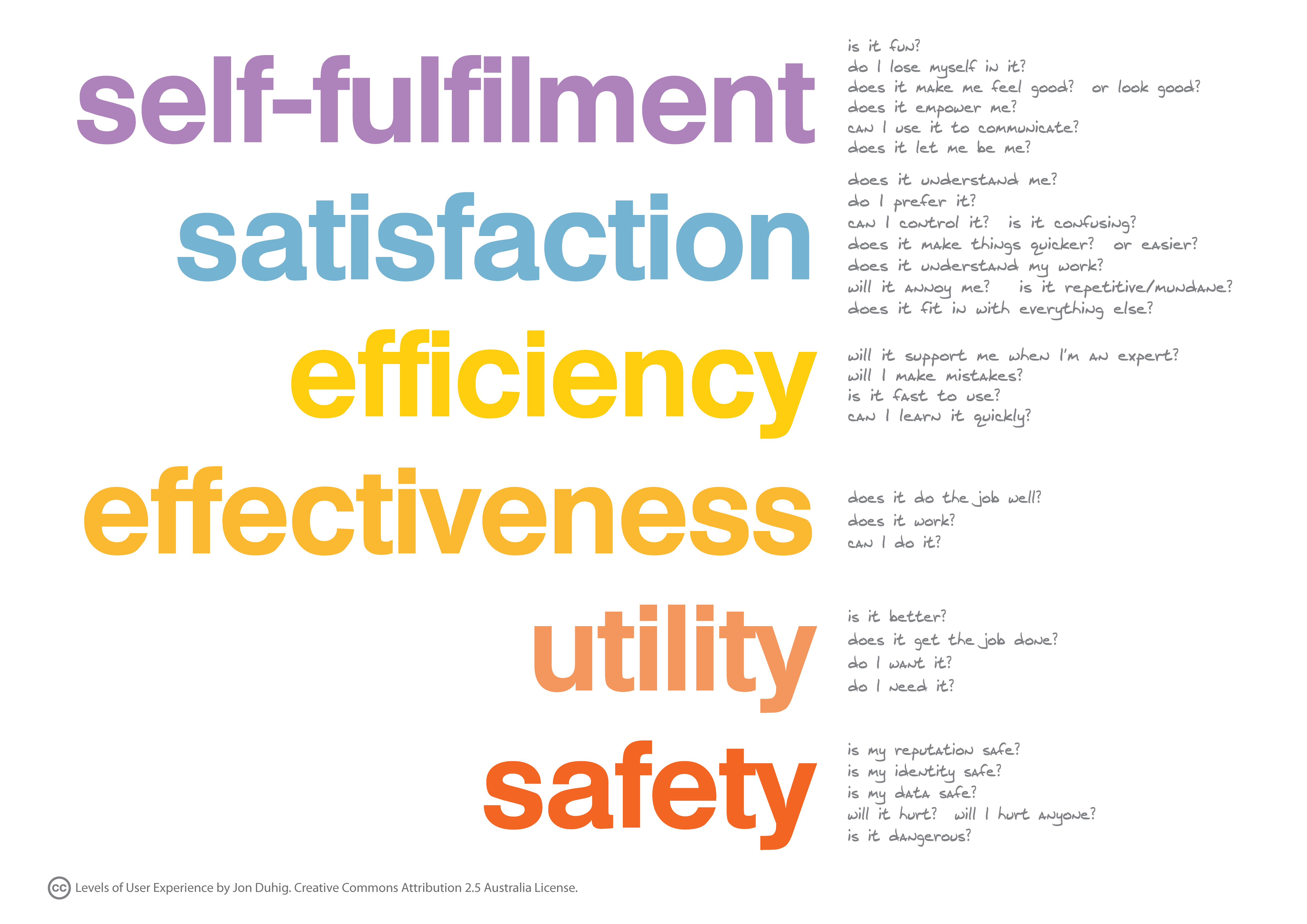
Four simple levels of UX were defined by the Nielsen Norman Group Conference in Amsterdam in 2008. They are:
The UX designer has the most control over the levels of usability and desirability. But first, let’s examine each level before considering why the difference between usability and desirability matters.
1. Utility
The very first step of the user experience is utility. The questions that must be answered for a product to have utility are:
Is the product useful to the user? Does it have a purpose that the user accepts? (In short, the product must not be a solution in search of a problem but rather one that solves an established problem the user is looking to solve.)
Does the product meet the needs of the user? (A product can solve a problem but still not be of any value unless it meets the user’s requirements in other areas—such as cost or size.)
Without utility, it’s clear that there is no user experience. A potential user who does not see a product as having any value to them or does not feel that product meets their needs will not become a user in the first place.
Usability is the next step up the user experience ladder. It answers the question (positively):
Is the product easy and intuitive to use? (Many great ideas have failed when translated into a product by falling at this hurdle—a user only has so much time; if they can’t quickly get to grips with using a product, they will abandon it and move on.)
Does the user like the way that this product looks and feels?
Does the user want this product more than similar products?
Until recently, people mistook usability for the user experience. The assumption that a product that solved a problem (utility) and was easy to use (usability) was enough for users was a sensible idea—but it turns out that this is not enough. The user expects more from a user experience, and products beyond the usability phase compete best in their marketplace. Apple’s iPod, for example, was not the first MP3 player. It may have had slight usability advantages over existing products, but these advantages were insufficient to propel the iPod to a world-changing market-leading product; it was moving up the value chain of user experience that enabled that.
3. Desirability
This brings us to desirability. Note some use this term (including NNgroup) to mean aesthetics. Microsoft even has a tool to measure aesthetic desirability.
For now, we refer to desirability as: Did it solve the right problem? Larry Marine, a UX consultant and top student of Don Norman, said that, in his 25 years of consulting, rarely did he find teams that solved the right problem for their users. Desirability is this problem.
In any category of product, there are many competitors. If we assume a market for the product exists, it’s likely that most other products pass utility and usability tests.
Therefore, the product's desirability separates market leaders from the pack. Think of Apple Watch vs. Google’s original watch. Google took a strictly task-oriented approach but forgot emotional differentiation and desirability. Apple’s Jonathan Ive turned the Apple Watch into a biofeedback device with emotional appeal. For example, you could draw a heart and send a vibration to a friend.
Desirability commands a premium in marketplaces. Think about cars, for example; a Dacia and a BMW may both have utility and be usable, but there’s a significant difference in their desirability by users.
Desirability enables the user experience designer to add “cachet” to a product that would otherwise be lost amongst other similar products in terms of utility and usability.
Desirability gives users what they really want as well as need. Don Norman famously once said, “usability is the easy part, it’s desirability that really matters.”
4. Brand Experience
Brand experience is mostly outside the user experience designer’s control. However, brand experience is intimately connected to the desirability of products. You could argue it is perhaps not separate from desirability at all. Brand experience answers the question:
Does the user feel good about the product and the company/brand that makes it?
This may explain why Microsoft has had such a hard time breaking into the hardware market, an area in which Apple, for example, excels. Windows may be the dominant operating system on desktop, but it would be hard to argue that Windows users feel good about that. Whereas Apple users do, and are highly vocal about the operating systems of their devices.
Apple’s brand increases the desirability of their physical products—the company has an excellent reputation for flawless design (there are plenty of arguments to suggest that this reputation is not always deserved but the reputation remains nonetheless).
Consider Context of Use with Usability and Desirability
As UX designers, we have a major influence over these two areas of the user experience. The key difference between the two is that usability is a minimum requirement—there is no user experience without usability. Desirability changes a product from usable into something that a user needs and desires and thus adopts.
It is important in today’s always-connected world to consider mobile, or even adopt a mobile-first approach when you measure usability and desirability. While many of the ways we examine mobile products are the same as the way we examine desktop products, mobile products should be examined for usability and desirability in the user’s context of use (e.g., where and when and how will a mobile product be used?). This is more important on mobile because desktop products tend to be used in fixed places, whereas mobile can be used anywhere.
The Take Away
Usability is the minimum requirement for a decent user experience. Desirability is what separates a great product from an average one.
The utility of a mobile product—the intrinsic value of the product for a particular user need— is essential and to be considered before design commences.
Desirability is why a user prefers one product over another. Lastly, brand experience is probably outside the user experience team’s control and might lie more within marketing’s purview.