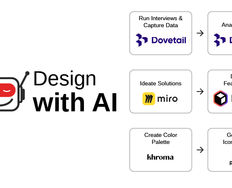
Screenshot from one of the AI for Designers course videos. The image shows course instructor, Ioana Teleanu speaking. Next to her is an animation of an illustrated character that represents AI. Next to character is an illustration that depicts prompts for

Your Practical Prompt Playbook: Get Better Results from AI Right Now

by Laia Tremosa • • 21 min read

645 Shares
Save

If you’re going to collaborate seamlessly with Artificial Intelligence (AI), then you’ve got to master the art of effective communication and, with that, craft prompts that precisely guide the AI to the outcomes you want. Let's look at the complexities of prompt engineering and practical techniques on how to get the results we’re after.

In this video, Ioana Teleanu, Founder of UX Goodies and former Lead Product Designer (AI) at Miro, shares practical tips on how to create effective AI prompts.

Transcript

To create effective prompts for AI systems, you’re going to have to understand what the AI's capabilities and limitations are. Here are some key strategies for how you can make the best of your prompt engineering:

  1. Be specific: It’s vital to clearly specify what format you want the AI's response in. So, if a particular structure is what you need, then be sure to include that information in your prompt.

  2. Provide context: Especially when you’re working on complex tasks, it’s vital to give the AI context to guide it. You can describe earlier related interactions or describe the current situation you’re in. Examples are incredibly helpful, so it’s wise to show the AI what a correct response looks like.

  3. Iterate and refine: After the AI responds, it’s time to get your prompts refined. If the AI doesn’t produce the output you’re after, adjust your prompts' specificity, tone, or format, and, important note, it often takes several iterations to get the best results.

  4. Experiment and learn: Effective prompt engineering does involve trial and error, so it’s vital to test and refine your prompts continuously. Over time, all this experimentation is going to lead to better outcomes.

  5. Utilize tools: You’ve got helpful tools available to you, like prompt optimizers and prompt templates, and they’re resources that can streamline your prompt creation process and really boost creativity.

Prompt engineering for image generation follows a similar process. Specificity and detail are key in getting realistic, usable, and non-biased results. In this short snippet from a 1-hour Master Class, Pablo Stanley, Designer and CEO of Musho and Lummi, explains his 5-step formula for better, more inclusive AI-generated images.

Transcript

Remember, it’s an evolving process to interact with AI. So, be sure to stay curious and experiment, and don't hesitate to try different approaches so you can find what works best for your specific needs.

Use this checklist to make sure your AI prompts are really effective:
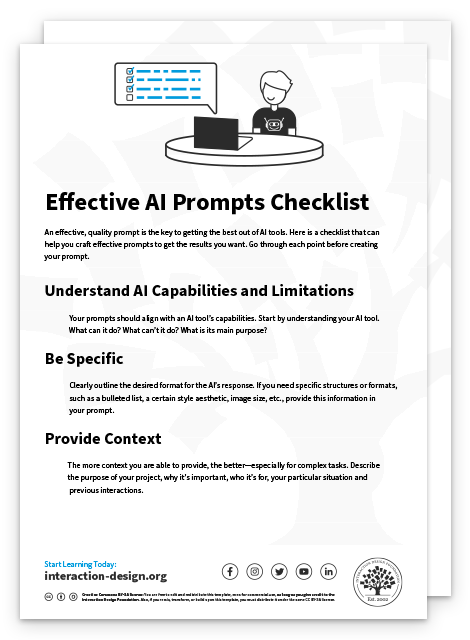
Advance Your Career With This Free Template for “Effective AI Prompts Checklist”
Effective AI Prompts Checklist
Optional
Optional
We respect your privacy
Get 1 powerful email each week: Learn Design and AI From the Best.

The Take Away

To create effective prompts for AI systems, it calls for a nuanced approach. So, be specific about the desired response format, and make sure you’ve got very clear instructions.

Provide context, especially when it comes to intricate tasks, with background information or examples to guide the AI in an effective way. After you get responses, iterate and refine your prompts, adjust the specificity, tone, or format as you need to for optimal outcomes. Embrace experimentation and continuous learning: They’ll be hugely helpful. 

One of the things that effective prompt creation involves is trial and error. What’s more, leverage tools and templates to streamline the process and give creativity a good boost. Human-AI (HAX) Interaction is an evolving journey; stay curious, experiment, and adapt your approach to discover what works best for your unique requirements.

References and Where to Learn More

Enjoy our Master Class with Pablo Stanley, How to Create AI Images: On-Brand and Inclusive Photography.

Hero image: © Interaction Design Foundation, CC BY-SA 4.0

Topics in This Article

Learn More in This Course:

Learn Design and AI From the Best

Get one powerful email each week, like 313,904 others.

Next email in:

What You Should Read Next

  • Read full article
    ChatGPT for UX Design: 7 of Our Favorite Prompts - Article hero image

    ChatGPT for UX Design: 7 of Our Favorite Prompts

    Your creative process is a precious part of how you design—as in, it’s the engine behind it all. And in the era of ChatGPT—a real game-changer in design—there’s one question in particular that might be top of mind: How can the worlds of artificial intelligence (AI) and user experience (UX) design co

    Social shares
    1k
    Published
    Read Article
  • Read full article
    No-UI: How to Build Transparent Interaction - Article hero image

    No-UI: How to Build Transparent Interaction

    Here, we will explore and teach you about the incredible user experience opportunities which you can take advantage of when designing for interaction beyond the classical Graphical User Interface (GUI). Non-visual User Interaction (no-UI) is pioneered by the ground-breaking work of researchers who h

    Social shares
    886
    Published
    Read Article
  • Read full article
    Healthcare UX: Design that Saves Lives - Article hero image

    Healthcare UX: Design that Saves Lives

    UX (user experience) design has the potential to improve people’s everyday lives. The stakes are even higher if you work as a UX designer in the healthcare industry. The health-tech sector is among the fastest-growing in the world, with expected revenue of USD 1,305.1 billion in 2030, according to G

    Social shares
    844
    Published
    Read Article
  • Read full article
    How Can Designers Adapt to New Technologies? The Future of Technology in Design - Article hero image

    How Can Designers Adapt to New Technologies? The Future of Technology in Design

    The design industry is rapidly evolving with the integration of technologies such as artificial intelligence (AI) and 3D printing. While there may be concerns about job displacement, history has demonstrated that new technologies typically create more job opportunities. Don Norman, author of The Des

    Social shares
    686
    Published
    Read Article
  • Read full article
    Create a Winning UX/UI Portfolio: Optimize with AI - Article hero image

    Create a Winning UX/UI Portfolio: Optimize with AI

    You’re a designer. You’ve got talent, vision, and a lot of potential—and know that, somewhere ahead, you’ve got an open road on a great employment “highway” to fulfill that potential. But what about putting that portfolio together? You know you need it, but it can feel like an endless traffic jam of

    Social shares
    662
    Published
    Read Article
  • Read full article
    How to Design with AI: 5 Insights to Supercharge Your Work - Article hero image

    How to Design with AI: 5 Insights to Supercharge Your Work

    Designers who master AI aren’t just faster. You'll make better decisions, explore more ideas, and spend more time on the rewarding work that requires your human creativity. Here are five key insights from the AI for Designers course that you can use to take your design process to new levels and acce

    Social shares
    653
    Published
    Read Article
  • Read full article
    How to Supercharge Your Design Workflow with AI - Article hero image

    How to Supercharge Your Design Workflow with AI

    AI won't replace you. But a designer who uses AI will. That's the reality we face today. AI amplifies your natural ability to solve people's problems, improve their lives, and do fulfilling, career-accelerating work. But it can't replace your human-centered skills like empathy, creativity, and syste

    Social shares
    650
    Published
    Read Article
  • Read full article
    AI Challenges and How You Can Overcome Them: How to Design for Trust - Article hero image

    AI Challenges and How You Can Overcome Them: How to Design for Trust

    As a designer, designing for trust in Artificial Intelligence (AI) products is paramount. AI presents unique challenges that require transparent interfaces, clear feedback, and ethical considerations to build user confidence. If you prioritize trust, you can ensure user adoption and satisfaction, wh

    Social shares
    639
    Published
    Read Article
  • Read full article
    Are AI-Generated Synthetic Users Replacing Personas? What UX Designers Need to Know - Article hero image

    Are AI-Generated Synthetic Users Replacing Personas? What UX Designers Need to Know

    AI-generated personas sound like a dream: faster insights, lower costs, happier stakeholders. But there’s a catch—if you build for fake users, you risk losing the real ones. The choice isn’t just about speed. It’s about trust, accuracy, and your reputation as a thoughtful, strategic designer. A tra

    Social shares
    629
    Published
    Read Article
  • Read full article
    Design Freedom: Automate Repetitive Tasks in the Design Process - Article hero image

    Design Freedom: Automate Repetitive Tasks in the Design Process

    Ever found your workday disappearing into tasks that don't require your expertise? Scheduling meetings, reformatting decks, and tracking action items can keep you from the strategic design work you were hired to do. AI won't fix bad processes, but it can reclaim hours lost to repetitive work. Hours

    Social shares
    568
    Published
    Read Article

Top Articles

Top Topic Definitions

39% of Today's Skills Will Change by 2030

The World Economic Forum expects 39% of today's skills to be transformed or become outdated by 2030.

The good news is that jobs in UX / UI design and AI are among the fastest-growing professions globally.

Build Skills That Keep You Relevant

Privacy Settings

By using this site, you accept our Cookie Policy and Terms of Use.
Customize
Accept all

Be the One Who Inspires

People remember who shares great ideas.

Share on:

Academic Credibility — On Autopilot

Don't waste time googling citation formats. Just copy, paste and look legit in seconds.

Learn Design and AI From the Best

Get one powerful email each week, like 313,904 others.

Next email in: