Woman presenting with bold text that says “Going overtime,” labeled as both “Unprofessional” and “Disrespectful,” highlighting the negative perception of exceeding time limits during presentations.

Presentation Pitfalls and How You Avoid Them

• 9 min read

269 Shares

You’ve worked hard on your ideas—don’t let simple messaging missteps keep them from landing. Make your brilliant ideas shine in every presentation by deftly sidestepping common messaging missteps, and give your hard work the influence it deserves every time.

Morgane Peng, Head of Product Design & AI Transformation at Societe Generale, has given and attended many presentations throughout her career—she’s identified several subtle yet consequential messaging mistakes that can derail your presentation. In the next video, Morgane shares these common errors and explains how you can avoid them so that your message lands every time.

Transcript

Here’s a summary of the mistakes and their solutions:

  • Lack of context or goals: Don't jump straight in. Always start with a quick recap of your presentation's context and purpose. Consider this your exposition (setting the scene and introducing key elements) or situation stage (providing the background to a challenge or opportunity).

  • Too generic or too specific: If your message is too basic, your audience tunes out. If it’s too complex, they get lost. Research their knowledge level and tailor information to their needs.

  • No control of time: Going overtime appears disrespectful and unprofessional. Finishing too early can also make your audience question your competency—aim to use your allotted time with intention—practice to stay within range.

  • Unfocused storytelling: Too many details dilute your message. Listeners may wonder about your point. Include only the most pertinent elements of your story.

  • No structure: Lack of structure is a major mistake. Audiences feel lost and remember little. Use structure frameworks, work on transitions, and repeat key points to make sure your message is clear.

The Take Away

If you can avoid common presentation messaging mistakes, you can achieve precision, engagement, and get the results you want. Always provide clear context and state your goals so that you align with your audience. Tailor your content to your audience's knowledge level by avoiding overly generic or specific details. Master time control to show professionalism and respect for your audience. Be strategic with storytelling and include only essential elements to maintain focus and impact.

Above all, adopt a strong structure in your presentation because without it, your message risks being lost and forgotten. When you get these elements right, your presentations will be clear, credible, and convincing—every time.

References and Where to Learn More

Discover more presentation mistakes in:

Hero Image: © Interaction Design Foundation, CC BY-SA 4.0

Learn More in This Course:

Perception and Memory in HCI and UX

1
18
11
46
93 % booked
View Course

What You Should Read Next

  • Read full article
    8 Talks by Women to Inspire UX Designers - Article hero image
    Interaction Design Foundation logo

    8 Talks by Women to Inspire UX Designers

    User Experience design, like so many other disciplines, has a lower representation of women as compared to men. Things are changing now, though. Slowly, but surely. From strategy to tactics and from ideas to actionable tips, here is a curated playlist of talks by, and stories of just some of the mos

    Social shares
    655
    Published
    Read Article
  • Read full article
    UX Storyboards: Ultimate Guide - Article hero image
    Interaction Design Foundation logo

    UX Storyboards: Ultimate Guide

    In user experience design, we use techniques like workshops and interviews to understand users. We turn our research into user stories and process flows. We use personas and wireframes to share our ideas with our teams.But it’s important to remember the real people we design for. We need to know wha

    Social shares
    777
    Published
    Read Article
  • Read full article
    Stop the Generic Portfolio Trap! Design a Stand-Out Portfolio for Your UX/UI Niche: UX Writing - Article hero image
    Interaction Design Foundation logo

    Stop the Generic Portfolio Trap! Design a Stand-Out Portfolio for Your UX/UI Niche: UX Writing

    A picture may be worth a thousand words, but in UX design the right words are priceless. UX writing guides users, simplifies complex concepts, encourages desired actions, and creates a sense of delight. But how do you demonstrate you can do all of these things? How do you get noticed by hiring manag

    Social shares
    416
    Published
    Read Article
  • Read full article
    Mobile Breadcrumbs: 8 Best Practices in UX - Article hero image
    Interaction Design Foundation logo

    Mobile Breadcrumbs: 8 Best Practices in UX

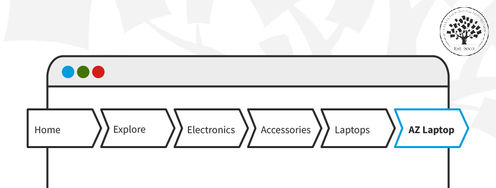
    Breadcrumbs act as navigation aids—ones that simplify user journeys on websites. They highlight the path taken within a site to boost user experience, especially on mobile devices with limited screen space. Explore more about mobile breadcrumbs and understand the common design mistakes and best prac

    Social shares
    806
    Published
    Read Article
  • Read full article
    TAPT: Teasing Apart, Piecing Together - Article hero image
    Interaction Design Foundation logo

    TAPT: Teasing Apart, Piecing Together

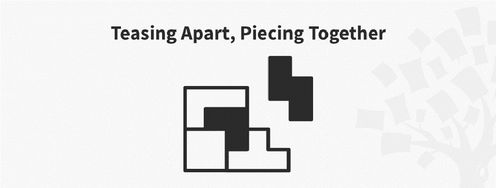
    [[video:96]]Many experiences share the same core elements but differ in context. Photo sharing on Facebook has similar experience elements to sharing physical photos, but the actions involved and the context of the two experiences differ vastly. In creative processes, it’s valuable to analyze relate

    Social shares
    420
    Published
    Read Article
  • Read full article
    Why Care about Statistical Significance? - Article hero image
    Interaction Design Foundation logo

    Why Care about Statistical Significance?

    The categorical data depicts the success and failure rate of the low-fidelity wireframe above. There is not a large enough difference between the two to determine if the designs were successful.There is an element of error involved in measuring anything. So, when we want to compare measurements, how

    Social shares
    434
    Published
    Read Article
  • Read full article
    Web Fonts: Definition and 10 Recommendations - Article hero image
    Interaction Design Foundation logo

    Web Fonts: Definition and 10 Recommendations

    Web fonts bring digital content to life. They enhance readability, set the tone, and ensure consistency across various platforms—all vital ingredients. When you understand web fonts and their impact, it can help you with effective website creation—and greatly so. We’ll provide a comprehensive overvi

    Social shares
    783
    Published
    Read Article
  • Read full article
    How to Screen Research Participants - Article hero image
    Interaction Design Foundation logo

    How to Screen Research Participants

    Finding the right participants is crucial for gathering user research. We usually need to do research with participants having a particular set of needs or experience. In this short video, you will find out about the basic need for screening and how we make sure that we have suitably qualified parti

    Social shares
    452
    Published
    Read Article
  • Read full article
    Pitfalls in Recruiting Participants for User Research - Article hero image
    Interaction Design Foundation logo

    Pitfalls in Recruiting Participants for User Research

    The level of participant engagement is an important part of the user research results. Our results are dependent on proper engagement with our participants. In this video we look at some of the issues around participant recruitment and hear practical examples that arose in a large online study.[[vid

    Social shares
    421
    Published
    Read Article
  • Read full article
    How to Fit Quantitative Research into the Project Lifecycle - Article hero image
    Interaction Design Foundation logo

    How to Fit Quantitative Research into the Project Lifecycle

    Quantitative research methods fit into the project lifecycle at different stages of the process.In this video, we see where different quantitative research methods fit into a typical project lifecycle. Bear in mind that even with an iterative process such as Agile, the short cycles still address dif

    Social shares
    511
    Published
    Read Article

Top Articles

Top Topic Definitions

Feel Stuck?
Want Better Job Options?

AI is replacing jobs everywhere, yet design jobs are booming with a projected 45% job growth. With design skills, you can create products and services people love. More love means more impact and greater salary potential.

At IxDF, we help you from your first course to your next job, all in one place.

See How Design Skills Turn Into Job Options
Privacy Settings
By using this site, you accept our Cookie Policy and Terms of Use.
Customize
Accept all

Be the One Who Inspires

People remember who shares great ideas.

Share on:

Academic Credibility — On Autopilot

Don't waste time googling citation formats. Just copy, paste and look legit in seconds.

Feel stuck? Want Freedom?

Get one powerful email each week, like 325,427 others.

Learn to design a life you love.

Next email in:
1
day
6
hrs
11
mins
47
secs