Social Proof

Your constantly-updated definition of Social Proof and collection of videos and articles.
Be a conversation starter: Share this page and inspire others!

524 Shares
Save

Get 1 Powerful Email Each Week

Join 315,232 subscribers.

What is Social Proof?

Social proof (sometimes referred to as “informational social influence”) refers to the tendency of human beings to follow the actions of others when making decisions, placing weight on these actions to assume “the correct decision.” Social proof can be used to deliver credibility to prospective users and promote adoption or acceptance in the design of products and services.

The understanding that people are influenced by other people’s actions is well established and has seen extensive, profitable use in human history. It has led to the incorporation of social proof in the user experience of many websites and applications and in the real world. While the implementation of social proof remains ubiquitous—visible, for example, at the level of seating restaurant patrons by windows—perhaps the most famous examples are the star ratings on Amazon and eBay, and the reviews of products and sellers on these sites. Highly rated and highly recommended products (and sellers) are more likely to be successful than those with poor or no ratings.

Social proof is used for two reasons in user experience design:

  1. To deliver credibility. If other people find a source useful or credible, we are more likely to believe that source may useful or credible for ourselves.

  2. To promote adoption and/or acceptance. Volumes of people subscribing to a Facebook page or Twitter feed can encourage others to do the same. Seeing large numbers of people doing something is a psychological indicator to people that they should do the same thing.

Timeless, the power of social proof is undeniable. However, designers must consider the implications it involves. For example, while an organization’s Facebook page may show 10,000 likes, the power of social proof will only be evident if a high rate of engagement with those who like the page is evident.

Learn More About Social Proof

Make learning as easy as watching Netflix: Learn more about Social Proof by taking the online IxDF Course Mobile UX Design: The Beginner's Guide.

Why? Because design skills make you valuable. In any job. Any industry.

In This Course, You'll

  • Get excited to stop treating phones and tablets as just smaller screens and apply mobile UX principles built around how people think and make decisions on their devices. Smartphones and tablets differ in usage, attention spans, and session length. You can use those differences to create intuitive, accessible solutions that make people's lives easier, faster, and better. Through the eight goals of mobile UX, the principles of responsive and adaptive design, Google's micro-moments framework, and Josh Clark's three mobile mindsets, you'll understand what people are really trying to do when they pick up their phones. According to Statista, smartphone ownership has nearly doubled since 2019, and mobile devices generate over 62% of all web traffic worldwide. Companies in nearly every industry now build for mobile first: for SEO, for performance, for feature prioritization, and for users who increasingly live on their phones. Mobile UX is one of the most essential skills to invest in, whether you're ready to make the switch into a career in design or take on a more senior or leadership role.

  • Make yourself invaluable when you know how to design a mobile product people return to. According to AppsFlyer, 1 in 2 apps are uninstalled within 30 days of download, so designers who can improve retention are in high demand. You'll learn the five-step human-centered design process built for mobile (assess, understand, define, differentiate, and sketch), and how context of use influences whether people keep your app or delete it. From there, you'll study how to use sociability to build a community that leads to long-term adoption. No matter your background, you'll be able to make the business case for mobile UX, whether you're presenting to your team or interviewing for a role.

  • Gain confidence and credibility as you replace opinions with structured heuristic evaluations. When you understand the trade-offs between native, hybrid, and web apps (cost, capability, and reach), you'll be able to pick the right format for any project. You'll use the heuristic frameworks of Jakob Nielsen, Nadav Savio, and Jared Braiterman to assess mobile interfaces, and the USE Scorecard to score real mobile experiences against the criteria that decide whether users adopt them or not. Finally, the Assumption Buster helps you catch bias early, so your designs stay accessible and inclusive for all your users.

  • Craft your personal portfolio with a series of optional hands-on activities. You'll pick a mobile app, evaluate it against the eight goals of mobile UX, redesign it, layer in a sociability feature, and end with a heuristic evaluation. Apply your new skills immediately with downloadable templates, including the Customer Journey Map and the USE Scorecard. You'll finish the course with a complete case study that walks recruiters through your design process (from research to evaluation) and shows you can step into a mobile UX role.

Learn From Industry Leaders

Master complex skills with proven best practices and toolkits directly from industry leaders. Meet your experts for this course:

  • Frank Spillers: Service Designer and Founder and CEO of Experience Dynamics.

  • Alan Dix: Author of the bestselling book “Human-Computer Interaction” and Director of the Computational Foundry at Swansea University.

  • Mike Rohde: Experience and Interface Designer, author of the bestselling “The Sketchnote Handbook.”

Earn Industry-Recognized Certificates

Industry giants trust our courses to train their teams, and prestigious universities integrate our content into their curricula. Add your certificates to your LinkedIn profile, résumé, and job applications.

Our clients: IBM, Harvard University, University of Cambridge, NASA, Adobe, Stanford, Massachusetts Institute of Technology, LinkedIn
Course Certificate

All Free IxDF Articles on Social Proof

Read full article
The Seven Simple Principles of Conversion Centred Design (CCD) and How to Use Them - Article hero image

The Seven Simple Principles of Conversion Centred Design (CCD) and How to Use Them

Oli Gardner – the Creative Director of Unbounce (a landing page builder for marketers), is an advocate of CCD. He says that deploying CCD makes each page you create on a website a piece of “accountable content”. In that you can measure the impact, purpose and success of each page as that page plays

Social shares
864
Published
Read Article
Read full article
The Process of Persuasion — How to Make a Casual Browser an Intrigued User - Article hero image

The Process of Persuasion — How to Make a Casual Browser an Intrigued User

Persuasion is a powerful force that changes the attitudes and behaviors of others. It’s all about influence and manifests itself in many aspects of everyday life. People can persuade themselves, too. Persuasion’s most direct portrayals may show up in such places as courtrooms, political debates, and

Social shares
694
Published
Read Article
Read full article
Making Use of the Crowd – Social Proof and the User Experience - Article hero image

Making Use of the Crowd – Social Proof and the User Experience

Social proof (sometimes referred to as informational social influence) is a psychological concept. It refers to the tendency of human beings to follow the actions of others when making decisions and placing weight on those actions to assume “the correct decision”. It’s a concept that can be used in

Social shares
631
Published
Read Article

Making Use of the Crowd – Social Proof and the User Experience

Making Use of the Crowd – Social Proof and the User Experience

Social proof (sometimes referred to as informational social influence) is a psychological concept. It refers to the tendency of human beings to follow the actions of others when making decisions and placing weight on those actions to assume “the correct decision”. It’s a concept that can be used in product design for the Internet and mobile web to help drive user decisions in the direction that a business wants them to go.

Human beings are social creatures. We live in communities, towns and cities. We raise families and have friends. It’s what defines us. It also makes us vulnerable to the influence of other people. Social influence, which is what we refer to when we talk about the impact of other people’s actions on our own, can be very positive (it’s what, for example, makes us less likely to get drunk and start fights in public) but it can also be negative (when it leads to “herd behaviour” or “following the crowd”).

The History of Social Proof

Social proof is not a recent phenomenon. It was identified in 1935 by Muzafer Sherif, a social psychologist credited with developing social judgement theory, in an experiment.

Subjects were seated in a dark room and asked to stare at a pinprick of light a few feet away from them. They were asked to estimate how much the dot was moving. In reality, the light was stationary but the autokinetic effect (an observation that stationary objects appear to move when there is no second point of reference to compare them to) led people to believe it was moving.

A week or so later, the experiment was repeated but this time in groups. People were asked to shout out their estimates of the movement and Muzafer Sherif observed that the group would tend to converge on an estimate – even if these estimates were vastly different to those that they had given in the first part of the experiment. The experiment was then repeated again with the individuals on their own and their estimates tended to remain with the group output rather than with their own original estimate.

In short, social proof demonstrated that we are likely to converge on a course of action when others provide that action for us.

The Introduction of Social Proof in the User Experience

The understanding that people are influenced by other people’s actions has led to the incorporation of social proof in the user experience of many websites and applications and in the real world too.

Author/Copyright holder: Mattes. Copyright terms and licence: Public Domain

Perhaps, the most famous examples are the star ratings on Amazon and eBay and the reviews of products and sellers on these sites. Highly rated and highly recommended products (and sellers) are more likely to be successful than those with poor or no-ratings.

Social proof is used for two reasons in user experience design:

  • To deliver credibility. If other people find a source useful or credible – we are more likely to believe that source may be useful or credible for ourselves. An indication of this belief in other people that is displayed within the site or product – boosts credibility for other users.

  • To promote adoption and/or acceptance. Volumes of people subscribing to a Facebook page or Twitter feed can encourage others to do the same. Large amounts of people doing something is a psychological indicator to people that they should do the same thing.

Implementing Social Proof in Your User Experience

If you intend to implement social-proof in your user experience you can test the efficiency of it using the following:

A/B Testing
Author/Copyright holder: RaHul Rodriguez. Copyright terms and licence: CC BY-SA 2.0

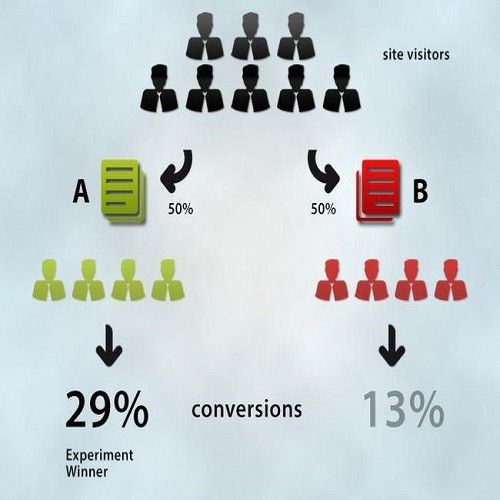
A/B testing can help you determine whether social proof is aiding conversions. You can test user comments, reviews, social sharing, etc. and see which, if any, are the most beneficial.

Usability Testing

If you’re using social proof to try and increase your credibility – you want to conduct some survey questions that enable you to gauge user confidence.

You can also use usability testing to ensure that the volumes of social proof that you’re providing aren’t overwhelming users. Too much information can be worse than none at all. Users are happy to be convinced by social proof but there’s only so much data that they can process easily.

Eyetracking and Usability Testing
Author/Copyright holder: Z22. Copyright terms and licence: CC BY 3.0

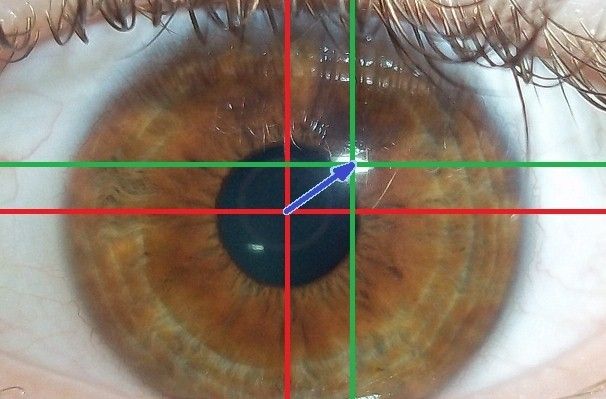
You might also want to determine whether users even notice your social proof. After all, position is important and it’s quite possible that your users won’t benefit from social proof if they don’t even notice it’s taking place. Eyetracking software as part of usability testing can help you decide whether users are noticing social proof and whether they’re paying any real amount of attention to it if they do notice it.

Load Time Testing

Social proof, particularly when it comes from social media or other plugins, can slow down the performance of your website or application. You want to keep measuring load times because poor load times can cause abandonment even before the user has had a chance to interact with your content.

Social Proof and the Mobile Web

Social proof is harder to integrate into the mobile user experience. Average user ratings are popular in app stores, for example, to indicate the value of a particular app and some brief summary reviews are also displayed. However, it’s vital to keep an eye on the available screen real estate and be certain that you’re not overwhelming users when it comes to delivering social proof on mobile. Usability testing is a must.

The Takeaway

Social proof can be a powerful tool to help you guide users to make specific decisions online and in mobile apps. However, you have to take care with how it is implemented and test the way it is implemented to get the greatest benefit. The tips above should help you examine the way you integrate social proof in your products.

References

The original study by Sherif: "A study of some social factors in perception". Archives of Psychology 27: 187

See awesome examples of social proof at work in design.

Hero Image: Author/Copyright holder: Jurgen Appelo. Copyright terms and licence: CC BY 2.0

39% of Today's Skills Will Change by 2030

The World Economic Forum expects 39% of today's skills to be transformed or become outdated by 2030.

The good news is that jobs in UX / UI design and AI are among the fastest-growing professions globally.

Build Skills That Keep You Relevant

Privacy Settings

By using this site, you accept our Cookie Policy and Terms of Use.
Customize
Accept all

Be the One Who Inspires

People remember who shares great ideas.

Share on:

Academic Credibility — On Autopilot

Don't waste time googling citation formats. Just copy, paste and look legit in seconds.