Keep It Simple, Stupid (KISS)

Your constantly-updated definition of Keep It Simple, Stupid (KISS) and collection of videos and articles.
Be a conversation starter: Share this page and inspire others!

295 Shares

What is Keep It Simple, Stupid (KISS)?

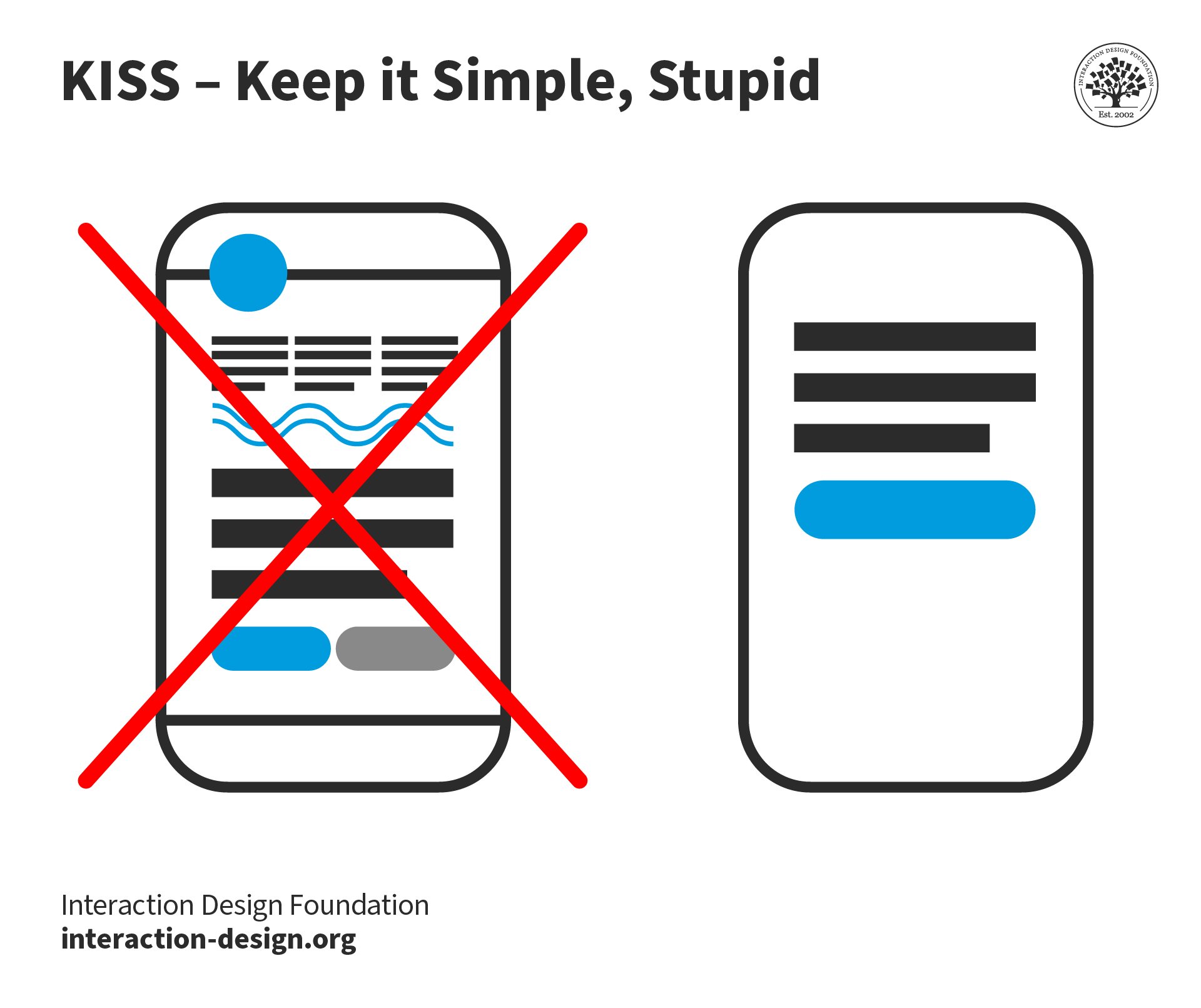
Keep it simple, stupid (KISS) is a design principle which states that designs and/or systems should be as simple as possible. Wherever possible, complexity should be avoided in a system—as simplicity guarantees the greatest levels of user acceptance and interaction. KISS is used in a variety of disciplines, such as interface design, product design, and software development.

KISS - Keep it Simple, Stupid illustrated as a simple smartphone app design

© Interaction Design Foundation, CC BY-SA 4.0

The term was first used in the US Navy and is thought to have been coined by Kelly Johnson, who was the lead engineer at the Lockheed Skunk Works. Johnson told the designers at Lockheed that their designs should be simple enough to be repaired by a man in a combat situation with only some basic mechanic’s training and simple tools. If their products weren’t simple and easy to understand, they would not only cost lives but also quickly become obsolete in combat conditions and thus worthless. In the world of user experience design and related disciplines, the KISS principle borrows from such a scenario in that users who tend to lead busy lives will quickly abandon a complex design. In the case of designing for mobile devices—where the users’ context finds them operating their phones with their fingers, often with one hand—this philosophy is even more vital to follow.

The KISS principle also exists in other variations with the same meaning. Examples are “Keep it short and simple” and “Keep it simple and straightforward.” Though both phrases technically introduce an “A” into the acronym, they both deliver the same message as “Keep it simple, stupid.” The objective of any process is to deliver the simplest possible outcome. As such, the KISS principle speaks to flowing with the intuition of any new user, easing in nuances with care.

Questions About Keep It Simple, Stupid (KISS)?
We've Got Answers!

What is an example of the KISS principle?

An excellent example of the KISS (Keep It Simple, Stupid) principle is the design of Apple products. Apple emphasizes simplicity and user-friendly interfaces, allowing users of any level to operate their products with ease. By eliminating unnecessary elements and focusing on functionality and intuitive design, they embody the KISS principle, making their products accessible and desirable to a broad user base. Learn more about the KISS principle in design here.

What is the KISS method in the military?

The KISS (Keep It Simple, Stupid) method in the military refers to the principle of designing systems and strategies that are simple, straightforward, and devoid of unnecessary complexity. The method emphasizes the importance of easily understandable and executable plans and designs to avoid misunderstandings, errors, and complications, ensuring the swift and effective accomplishment of objectives. This principle is universally applicable and is valued in numerous fields, including design, for its emphasis on clarity and ease of use.

Why is the KISS principle important?

The KISS principle is important because it is directly related to product success. If our users can’t understand a product, they will not use it. Not only is it relevant for the end user experience, but it is relevant for product managers as well—the more complexity we build into our products, the harder it will be to maintain it.

Is the KISS principle the same as Occam's razor?

No, the KISS principle isn't the same as Occam's razor, but they share similarities. The KISS principle in design emphasizes simplicity, advising to avoid unnecessary complexity. In contrast, Occam's razor is a principle in problem-solving that states when we have multiple alternatives, we should opt for the simpler one. Both principles value simplicity but apply to different contexts. Occam’s Razor has a more strategic scope and focuses on overall solutions and decision-making, KISS applies to more tactical level work. For a deeper understanding of Occam's razor, refer to this article: Occam's Razor: The Simplest Solution Is Always the Best.

What is the KISS vs DRY principle?

The KISS (Keep It Simple, Stupid) principle advises keeping designs simple and avoiding unnecessary complexity, making them user-friendly. Conversely, the DRY (Don't Repeat Yourself) principle is a software development concept focusing on reducing the repetition of code patterns, making codebases more manageable and efficient. While KISS emphasizes simplicity in design and user interaction, DRY focuses on efficiency and manageability in code development. They are distinct principles addressing different aspects of the design and development processes.

What is the difference between YAGNI and KISS?

The KISS (Keep It Simple, Stupid) principle emphasizes simplicity and clarity in design, advocating for user-friendly solutions. On the other hand, YAGNI (You Aren’t Gonna Need It) is a programming principle stressing not to add functionality until deemed necessary. While KISS focuses on the overall simplicity of design and user interaction, YAGNI specifically addresses avoiding unnecessary code and features in software development. Both aim to prevent overcomplication but apply to different aspects of the design and development process.

How do you apply the KISS principle in your life?

To apply the KISS (Keep It Simple, Stupid) principle in your life, focus on simplifying tasks and setting clear, attainable goals. Break complex tasks into manageable steps, avoid overthinking, and prioritize simplicity and clarity in decision-making. By embracing simplicity in daily routines, goals, and choices, you enhance efficiency, reduce stress, and improve overall quality of life. Keep solutions straightforward, declutter your environment, and maintain a clear, focused mind to effectively incorporate the KISS principle into your lifestyle.

Where to learn Keep it Simple Stupid (KISS)?

Transcript

To learn the Keep It Simple Stupid (KISS) principle, consider enrolling in the User Experience: The Beginner’s Guide and Conducting Usability Testing courses at Interaction Design Foundation. These courses offer comprehensive insights into creating simple, user-friendly designs and conducting effective usability tests.

Earn a Gift Earn a Gift, Answer a Short Quiz!

1
2
3
4
1
2
3
4
Question 1
Question 2
Question 3
Get Your Gift
Interaction Design Foundation logo

Question 1

What is the core idea behind the KISS principle in design?

1 point towards your gift

  • To incorporate as many features as possible.
  • To simplify designs for better user interaction.
  • To focus on complex layouts for advanced users.
Interaction Design Foundation logo

Question 2

How does the KISS principle contribute to product success?

1 point towards your gift

  • By making the product more challenging for users.
  • By increasing the likelihood that users can quickly adopt and engage with the product.
  • By adding technical complexity for expert users.
Interaction Design Foundation logo

Question 3

What is a potential downside of oversimplifying designs according to the KISS principle?

1 point towards your gift

  • It can lead to a cluttered user interface.
  • It can reduce the product's necessary functionality.
  • It increases development time.

Learn More About Keep It Simple, Stupid (KISS)

Make learning as easy as watching Netflix: Learn more about Keep It Simple, Stupid (KISS) by taking the online IxDF Course Human-Computer Interaction: The Foundations of UX Design.

Why? Because design skills make you valuable. In any job. Any industry.

 In This Course, You'll

  • Get excited about designing products and experiences people truly love. From medical apps that save lives to educational tools that bridge learning gaps, Human-Computer Interaction (HCI) is at the heart of every great User Experience (UX) Design. You'll learn what people enjoy and how to use that knowledge to create meaningful, engaging solutions. No design background? No problem. You already have transferable skills, like empathy, problem-solving, communication, and organizing information, so you have more HCI knowledge than you realize. HCI blends psychology, design, engineering, and ethics to help you craft experiences that feel intuitive and make it easy for people to fulfill their needs and reach their goals. That's what we human beings love. More love means higher business profits and a salary that reflects your value.

  • Make yourself invaluable when you discover the science behind great design. You'll master timeless human-centered design skills like perception, insight, and strategic thinking that become even more powerful in an AI-enhanced world. Turn AI into your superpower with your unique human understanding that no algorithm can generate on its own. Studies show that tech and design-related occupations will grow 23% by 2031, much faster than the average. HCI skills are in demand across every industry. This course helps you structure your existing skills and apply them creatively, from idea to delivery. With your HCI skills, it's easy to drive customer loyalty and business success because you know how to design for people. Level up in your current role or use your new skills to break into a career in design and tech.

  • Gain confidence and credibility as you build experiences so effortless they feel like second nature. It's easier than you think. With ready-to-use templates for global navigation, personas, and more, you'll get everything you need to immediately apply your skills and create user-centered results people keep coming back to. Build a standout portfolio and fast-track your career with optional hands-on exercises. This course will give you real-world human-centered design solutions, such as a website, app, or smart device, to showcase your in-demand skills.

It's Easy to Fast-Track Your Career with the World's Best Experts

Master complex skills effortlessly with proven best practices and toolkits directly from the world's top design experts. Meet your expert for this course:

  • Alan Dix: Author of the bestselling book “Human-Computer Interaction” and Director of the Computational Foundry at Swansea University.

Get an Industry-Recognized IxDF Course Certificate

Increase your credibility, salary potential and job opportunities by showing credible evidence of your skills.

IxDF Course Certificates set the industry gold standard. Add them to your LinkedIn profile, resumé, and job applications.

Course Certificate Example

Be in distinguished company, alongside industry leaders who train their teams with the IxDF and trust IxDF Course Certificates.

Our clients: IBM, HP, Adobe, GE, Accenture, Allianz, Phillips, Deezer, Capgemin, Mcafee, SAP, Telenor, Cigna, British Parliament, State of New York

All Free IxDF Articles on Keep It Simple, Stupid (KISS)

Read full article
Six Simple Rules for Better Navigation UX - Article hero image
Interaction Design Foundation logo

Six Simple Rules for Better Navigation UX

There are many rules for navigation UX; some of them complex and only used in very specific circumstances. Yet, there are some rules which will apply to nearly every situation. We’ve come up with six simple rules that may help you get your navigation UX closer to perfection: Rule 1: Be ClearAuthor/

Social shares
602
Published
Read Article
Read full article
UX Tips for Better Textual Navigation - Article hero image
Interaction Design Foundation logo

UX Tips for Better Textual Navigation

Helping your users find their way around your website is a vital part of delivering a strong user experience. It can be somewhat challenging to get this right. Well formulated labels, the textual element of navigation, can make navigation very easy and badly formulated labels can send your users els

Social shares
552
Published
Read Article
Read full article
KISS (Keep it Simple, Stupid) - A Design Principle - Article hero image
Interaction Design Foundation logo

KISS (Keep it Simple, Stupid) - A Design Principle

It was Albert Einstein who said; “If you can’t explain it, you don’t understand it well enough.” Though it is often mis-reported as being; “If you can’t explain it to a six year old, you don’t understand it well enough.” What Einstein was driving at was a particular application of “keep it simple, s

Social shares
1.3k
Published
Read Article

KISS (Keep it Simple, Stupid) - A Design Principle

KISS (Keep it Simple, Stupid) - A Design Principle

It was Albert Einstein who said; “If you can’t explain it, you don’t understand it well enough.” Though it is often mis-reported as being; “If you can’t explain it to a six year old, you don’t understand it well enough.” What Einstein was driving at was a particular application of “keep it simple, stupid”.

From scientific concepts to products the end-user doesn’t care how clever the creator or designer of something is. They care about being able to take that person’s output and make it useful to their own lives. The simpler the explanation and the simpler the product, the more likely it is that the output will be useful to others.

The phrase; “keep it simple, stupid” is thought to have been coined by the late Kelly Johnson, who was the lead engineer at the Lockheed Skunk Works (a place responsible for the S-71 Blackbird spy plane amongst many other notable achievements). It is worth noting that Kelly’s version of the phrase had no comma and was written “keep it simple stupid”.
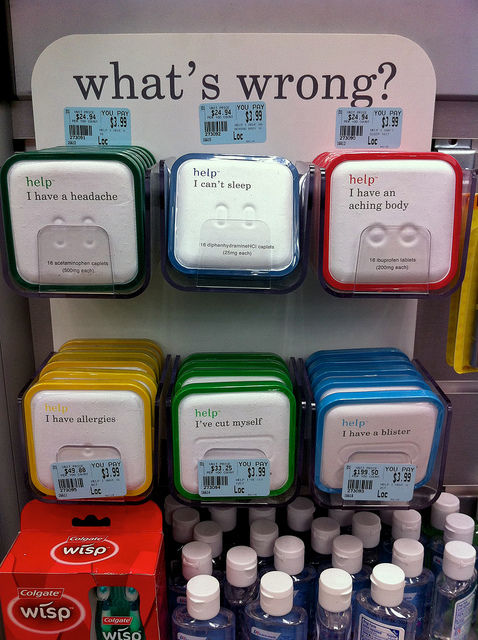
Author/Copyright holder: Terretta. Copyright terms and licence: CC BY-NC-ND 2.0

There’s really not much more to say here is there? Keep it simple stupid.

Kelly explained the idea to others with a simple story. He told the designers at Lockheed that whatever they made had to be something that could be repaired by a man in a field with some basic mechanic’s training and simple tools. The theater of war (for which Lockheed’s products were designed) would not allow for more than that. If their products weren’t simple and easy to understand – they would quickly become obsolete in combat conditions and thus worthless.

Today the KISS principle is celebrated in many engineering professions (including software engineering) and is often brought to bear by managers in many professions as well as by trainers and educators.

The First Usability Principle?

KISS may have been the first usability principle for product design – though it was never formally presented as a usability principle. It focuses on the idea that if we can’t understand a product, we can’t use it properly and that the widest possible audience must be able to understand it, if the product is to gain maximum market share. This is as true for mobile applications as it is for fighter planes.


Author/Copyright holder: United States Navy. Copyright terms and licence: Public Domain.

The Lockheed F-35 will have been built to the KISS principle and so should your products if you want them to succeed.

Variants of KISS

The KISS principle is also offered in two other forms (for those who feel delicate about the inclusion of the word “stupid”):

  • Keep it short and simple

  • Keep it simple and straightforward

Though both phrases technically introduce an “a” into the acronym – they both deliver the same message as “keep it simple, stupid”. The objective of any process is to deliver the simplest possible outcome.

Alternatives to KISS

KISS is related to a fair number of other famous quotes, phrases and principles. Among them:

  • Occam’s Razor - “Among competing hypotheses, the one with the fewest assumptions should be selected” (but often restated as “The simplest solution is most likely the correct solution” which is not quite the same thing).

  • Albert Einstein’s – “Make everything as simple as possible but not simpler” (it is possible that Einstein never actually said this and it was actually a paraphrase of something he said during a lecture but the principle remains sound).

  • Leonardo Da Vinci’s – Simplicity is the ultimate sophistication” (when, perhaps, the greatest designer in history offers this advice, it’s almost certainly good advice).

  • Ludwig Mies Van Der Rohe’s – “Less is more” (Mies was a highly respected architect and peer of the better known Frank Lloyd Wright)

  • Bjarne Stroustrup’s “Make Simple Tasks Simple!” (Stroustrup is a Danish computer scientist and highly regarded academic).

  • Antoin Marie Jean-Baptiste Roger, comte de Saint-Exupery’s “It seems that perfection is not reached when there is nothing left to add but when there is nothing left to take away.”
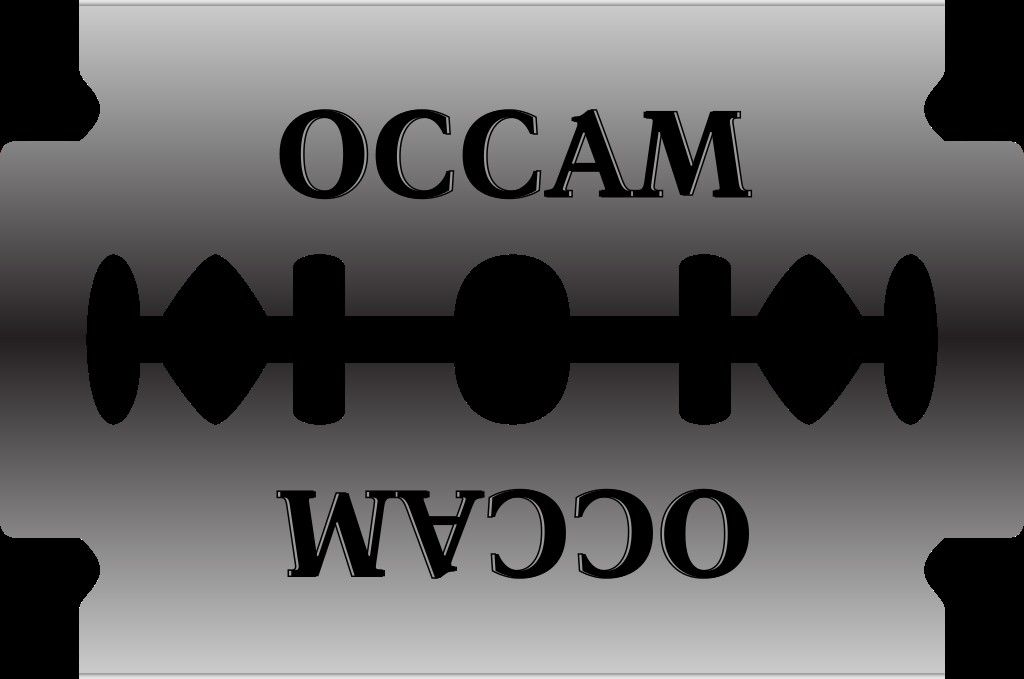

Author/Copyright holder: Fred the Oyster. Copyright terms and licence: CC BY-SA 3.0

Occam’s razor is a metaphorical rather than literal razor and it’s often misquoted too. It is possible for something to be too simple and this diagram, rather ably, demonstrates.

A Note of Caution When Applying KISS to Design

Whilst simplicity is an admirable goal and can lead to enhanced user experiences, it is important not to let simplicity interfere with the design objective. The user must still be able to carry out their task requirements with the finished products or the design process has failed – no matter how simple the final design.

Products such as DSLR Cameras are by nature more complex than the cameras found on the latest generations of smartphones. Complexity is to be resisted when it exists for its own sake and not when complexity can enhance the design for the user.
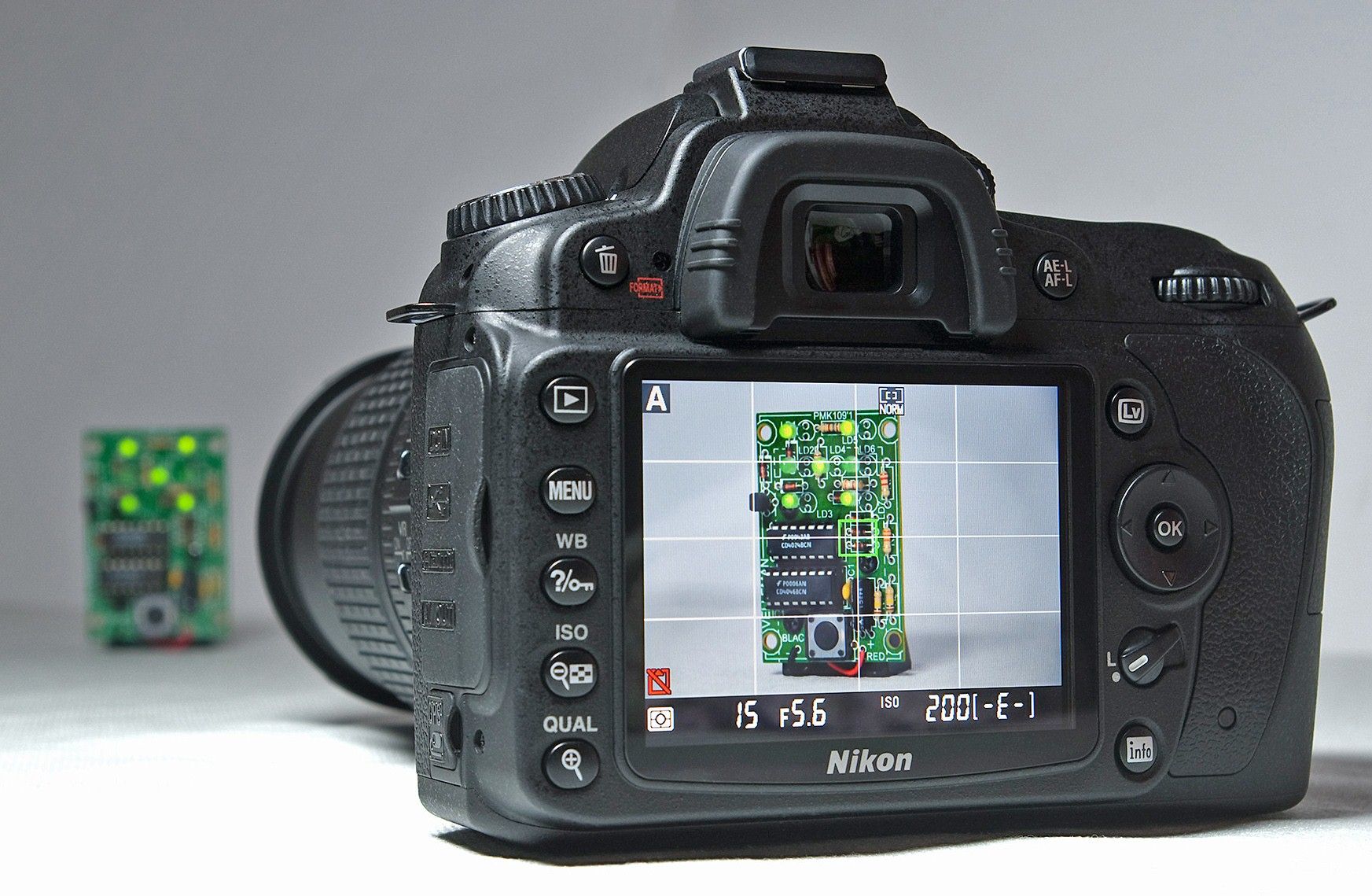

Author/Copyright holder: Bill Bertram. Copyright terms and licence: CC BY-SA 3.0

The DSLR is as simple as it can be without reducing its utility. It’s not as simple as a mobile phone camera but it offers more options to the photographer. KISS has not been abandoned here but rather kept in line with user expectations.

The Take Away

Simplicity is a key design principle. The easier something is to understand and use – the more likely it is to be adopted and engaged with. KISS, “keep it simple, stupid” is thus a great rule of thumb to be applied when considering your design work in a larger context of usage. However, it is also important not to make things so simple that they compromise the functionality of the final design – users will live with a little complexity if it enhances their overall experience.

References

Forbes Magazine explores why using KISS doesn’t make you any stupider. See here.

Lifehacker offers tips into implementing the KISS principle in your life in general here.

Hero Image: Author/Copyright holder: Kristian Bjornard. Copyright terms and licence: CC BY-SA 2.0

Feel Stuck?
Want Better Job Options?

AI is replacing jobs everywhere, yet design jobs are booming with a projected 45% job growth. With design skills, you can create products and services people love. More love means more impact and greater salary potential.

At IxDF, we help you from your first course to your next job, all in one place.

See How Design Skills Turn Into Job Options
Privacy Settings
By using this site, you accept our Cookie Policy and Terms of Use.
Customize
Accept all

Be the One Who Inspires

People remember who shares great ideas.

Share on:

Academic Credibility — On Autopilot

Don't waste time googling citation formats. Just copy, paste and look legit in seconds.