Bandwagon Bias

Your constantly-updated definition of Bandwagon Bias and collection of videos and articles.
Be a conversation starter: Share this page and inspire others!

105 Shares
Save

Get 1 Powerful Email Each Week

Join 313,908 subscribers.

What is Bandwagon Bias?

Bandwagon bias is a cognitive bias that is a hallmark of groupthink.

When you believe something simply because it is a popular belief, then you are subjugating your thinking to bandwagon bias.

Bandwagon bias occurs commonly because it saves you the time and effort that are required by otherwise thinking logically and reaching conclusions by yourself. It is much faster and easier to adopt others’ opinions, especially if those beliefs are popular and consistently reoccurring.

Designers must beware of bandwagon bias and remain logical instead of adopting popular opinion without ample thinking and consideration. If the majority of the team says, “This design is great!” then you should only agree if you truly believe it and have facts to support such an opinion.

Learn More About Bandwagon Bias

Make learning as easy as watching Netflix: Learn more about Bandwagon Bias by taking the online IxDF Course Creativity: Methods to Design Better Products and Services.

Why? Because design skills make you valuable. In any job. Any industry.

In This Course, You'll

  • Get excited to innovate and get creative, even when you feel blocked. Learn a repeatable creative approach that'll help you generate strong concepts on demand, break through when you're stuck, and turn your best ideas into solutions users love. In this course, design legend and author of the bestselling book "Human-Computer Interaction (HCI)," Professor Alan Dix, shows you why the best ideas come from a structured process and gives you the toolkit to do it yourself. The World Economic Forum ranks creative thinking among the top skills employers want in any profession, today and through 2030. Whether you're starting out, switching careers, or in a senior role and want a process you can rely on, you'll turn creativity from something that happens to you into something you can switch on. No creative background needed.

  • Make yourself invaluable by mastering a wide range of ideation methods so you never get stuck in one approach. To generate and explore new ideas, you'll apply Bad Ideas, Random Metaphors, and Arbitrary Constraints, and to refine and develop them, you'll apply Embrace Opposites, Multiple Classifications, and Teasing Apart, Piecing Together (TAPT). With Edward de Bono's Six Thinking Hats, you'll learn to guide a team to see a problem from every angle. You'll also learn to build an environment that nurtures creativity and to remove the hidden barriers that hold people back. You won't just have better ideas, you'll help everyone around you have them too. As AI churns out endless options, it's your timeless, human-centered design skills, like understanding people and what they actually need, that ensure your solutions are genuinely new and useful.

  • Gain confidence and credibility with a creative process that helps you be productive even under pressure. You'll learn to plan and time-manage your work so good ideas arrive when you need them, and apply proven strategies to beat procrastination, bias, and fixation. You'll keep momentum going with busywork, recognize when stepping back to let an idea incubate is the smartest move, and tackle big, messy "wicked problems" without stalling. When you hit a wall, you'll know whether to push through, switch to something else, or step away, instead of forcing it. And because your best ideas often arrive in the shower or on a walk, not at your desk, you'll learn simple ways to capture them before they slip away. The result is a process you can rely on, so you deliver strong work whether the spark comes on schedule or not.

  • Craft your personal portfolio with a piece that clearly captures your entire creative process. With optional, hands-on activities, you'll build a case study that shows how you ideate, from a ready-made persona and empathy map through to a fully developed concept. Downloadable templates let you apply your new skills immediately. You walk away able to show employers and clients what a polished mockup alone doesn't: how you actually approach and solve problems.

Learn From Industry Leaders

Master complex skills with proven best practices and toolkits directly from industry leaders. Meet your experts for this course:

  • Alan Dix: Author of the bestselling book "Human-Computer Interaction" and Director of the Computational Foundry at Swansea University.

  • Don Norman: Father of User Experience (UX) Design, author of the legendary book "The Design of Everyday Things," and co-founder of the Nielsen Norman Group.

Earn Industry-Recognized Certificates

Industry giants trust our courses to train their teams, and prestigious universities integrate our content into their curricula. Add your certificates to your LinkedIn profile, résumé, and job applications.

Our clients: IBM, Harvard University, University of Cambridge, NASA, Adobe, Stanford, Massachusetts Institute of Technology, LinkedIn
Course Certificate

All Free IxDF Articles on Bandwagon Bias

Read full article
The Bandwagon Bias – The Dangers of Groupthink - Article hero image

The Bandwagon Bias – The Dangers of Groupthink

Groupthink is dangerous to our objectivity. It prevents us from thinking for ourselves and making the best decisions. Designers need to be cautious about falling into the bandwagon bias trap but also be aware of how it can be exploited in their designs to improve user experiences and get users to ma

Social shares
823
Published
Read Article

The Bandwagon Bias – The Dangers of Groupthink

The Bandwagon Bias – The Dangers of Groupthink

Groupthink is dangerous to our objectivity. It prevents us from thinking for ourselves and making the best decisions. Designers need to be cautious about falling into the bandwagon bias trap but also be aware of how it can be exploited in their designs to improve user experiences and get users to make the decisions the designer wants them to make.

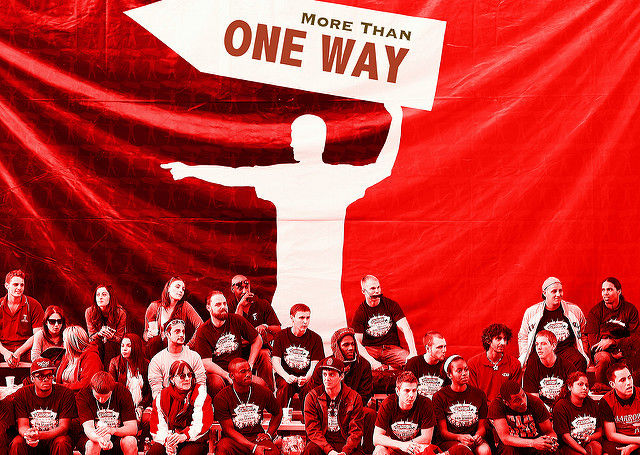
We, human beings, are social creatures. The urge to belong and to conform is strong within us – it helps us form relationships and brings meaning to our lives. It also has a downside; it can make us conform to the wrong beliefs or take the wrong actions because well… “everyone knows…”. For example, nowadays, social media have an enormous effect on groupthink.
Author/Copyright holder: Keoni Cabral. Copyright terms and licence: CC BY 2.0

The science fiction author, Robert Heinlein, had this to say about this urge; “If everybody knows such and such, then it ain’t so, by at least ten thousand to one.” Of course, that statement might be a little strong – everybody knows that if you eat enough cyanide you’re going to die but there’s a great element of truth to the idea too. Back in the 1950s people believed smoking was good for you and it wasn’t. Today, many people believe that sugar in your diet is bad for you; it’s not but it is in excess. And so on.

Bandwagon bias is a form of groupthink. It’s a cognitive bias that makes us believe something because other people believe it. It can make us think something that is achievable is impossible because others have tried and failed before us. It can make us think that there’s only way to tackle a problem because; “that’s the way it’s always been done.”

Tackling our own bandwagon biases is important because it frees us up to be creative and to think for ourselves. It allows us to rise to meet challenges rather than falling at the first hurdle.

However, on the flip side, we can also tap into the bandwagon bias in our designs. The most obvious way to do so is by the use of “social proof”. This is why reviews and star ratings have become such an intrinsic part of online marketing – people are more likely to buy a product or service when they can see that many other people did so and were happy with that decision.

A History of the Bandwagon Bias

Author/Copyright holder: khrawlings . Copyright terms and licence: CC BY 2.0)

The term “bandwagon” in this context became popular in the mid-19th century as a form of derision in American political relationships. It was drawn from a chap called Dan Rice. Dan was a circus clown who performed across the USA. He was incredibly popular and when he came to a place to promote his show – local folks would, literally, “jump on the bandwagon” to participate in his promotions.

It’s not like a politician to miss a trick and when they got wind of Dan’s popular displays – they decide to emulate his work. They added music and bandwagons of their own to their campaigns, to encourage their supporters to “jump on the bandwagon”.

However, the public was as cynical about politics back then as it is today and soon “jumping on the bandwagon” was a phrase that held negative connotations. By the start of the 20th century the phrase was used to mock the person who followed the herd without engaging their brain.

The Bandwagon Bias and You

Like all cognitive biases most of us suffer from the bandwagon bias at some point or other. It might be simply expressed for example; a preference for Apple computers because “everyone knows they’re the best computers for designers”. This is at best a subjective judgement and at worst completely untrue. The reality is that the right tool for design is one you can afford and one which does what you need it to do. Most modern-PCs are as capable as an Apple computer of conducting design related work.

Or it might be a little more complex; “We do it like this at XYZ company because my boss did it like this before me and his boss before him.” None of that means that there isn’t a better way to do things, does it?
Author/Copyright holder: Oscar Berg. Copyright terms and licence: CC BY 2.0

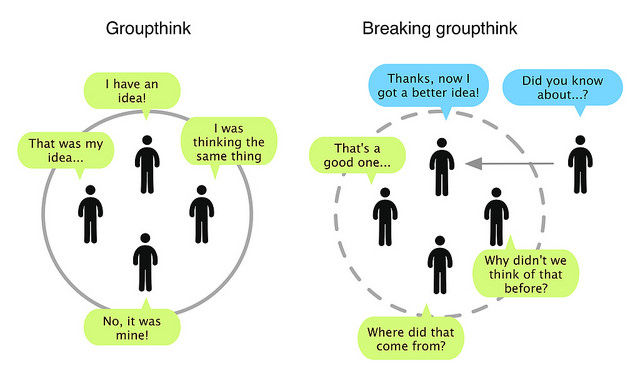
It’s difficult to recognize our biases and the bandwagon bias is no different. We can start by asking ourselves why we believe what we believe and then probing the reasoning until we reach a strong understanding. Then we can ask; “Is that rational?” If the answer is “no” and it might take a bit of soul searching to come to that – then we must tackle the bias.

It can be much easier to tackle biases through the use of a coach or someone that can work with you in a “verbal sparring”. They can help draw out your biases and ask the questions to help you examine them more clearly.

The Take Away

The bandwagon bias is not always incorrect. However, when it is wrong – it limits our ability to carry out work effectively. It’s worth challenging our biases and examining them in context so that we can make informed decisions and generate better work.

Don’t forget that user experience designers can tap into the bandwagon bias via social proof – to improve the experience and customer journey of their products. Though don’t overdo it; people are beginning to distrust social proof due to its overuse and unreliability.

References & Where to Learn More:

Check out our Design League program if you’d like to tackle your own cognitive biases with expert guidance.

More on how to leverage the mechanisms of social computing.

NetMind examines the bandwagon bias and other cognitive biases.

How can social biases affect writers? Read all about it! -

Hero image: Author/Copyright holder: Jeff Warren. Copyright terms and licence: CC BY-SA 2.0

39% of Today's Skills Will Change by 2030

The World Economic Forum expects 39% of today's skills to be transformed or become outdated by 2030.

The good news is that jobs in UX / UI design and AI are among the fastest-growing professions globally.

Build Skills That Keep You Relevant

Privacy Settings

By using this site, you accept our Cookie Policy and Terms of Use.
Customize
Accept all

Be the One Who Inspires

People remember who shares great ideas.

Share on:

Academic Credibility — On Autopilot

Don't waste time googling citation formats. Just copy, paste and look legit in seconds.