Disruptive innovation refers to an innovation that creates a new market or value network, often introducing a simpler, more affordable solution to underserved users, and then relentlessly moves upmarket to displace incumbents. To disruptively innovate, you rethink assumptions to deliver new value and trailblaze with truly novel designs, products, or services.
In this video, Laura Klein: Product Management Expert, Principal at Users Know, Author of Build Better Products and UX for Lean Startups, explains how different types of user research support both incremental improvements and disruptive innovations that redefine products and markets.
To Disrupt is Divine when Designers Introduce Change that Matters
If you only create around existing norms, you may miss the chance to design something that outlasts or replaces them. And if necessity is the “mother” of invention, then being a visionary serves a similar role for innovations that disrupt. Disruption demands you to reframe what’s possible and devise a game-changer that can put your brand on the map and redefine the nature of the industry, too. The recent past offers two particularly noteworthy examples of brands that achieved disrupting “old models” of solving user problems.
Netflix (vs Blockbuster / Video Rental)
Netflix began with DVD-by-mail and then pivoted to streaming. Over time, Netflix disrupted video rental stores that focused on physical inventory and location visits.
Netflix’s UX design focuses on effortless streaming, recommendation systems, and frictionless behavior. This broke the old mental model of “rent, drive, return.” Moreover, this change was more profound than the simple technological advancement DVDs had represented over video tapes.
Despite the nostalgia of people who lament the lost ritual of visiting their local Blockbuster Video, the convenience of streaming was enough to change that paradigm. While DVDs remain popular with many consumers, especially collectors, a visit to a second-hand store may be enough to confirm that the old way, when DVDs commanded the height of the market, has been over for years.

Imagine how radical this idea would have seemed to people in the previous century as they searched for movie titles on the shelves of their local video store. Back then, if you didn’t catch a favorite film on television (and, depending on the rating, it might have been an edited version of it for TV), you’d need to head to your video store.
© Netflix, Fair use
Airbnb (vs “Conventional Hotels / Lodging”)
Airbnb came in with a peer-to-peer model, simplified listing workflow, trust/ratings, and location diversity. It redefined what “stay” means from hotel rooms to local homes, giving visitors new angles on how they encounter new places they travel to: staying in properties ranging from beach houses to windmills and much more. Designers crafted user experiences to reduce friction between hosts and guests, and the model has proved hugely successful.
Airbnb disrupted check-in, trust systems, search, and expectations about accommodation. For example, rather than perhaps retread the familiar look of a hotel chain, tourists can enjoy truly unique properties to help build memories in new destinations. And maybe even more profoundly than that, it has inspired property owners who might otherwise never have dreamed of seizing the opportunity to profit as hosts. They can feel an additional empowerment from having such security to rent out their investments via a well-respected brand.
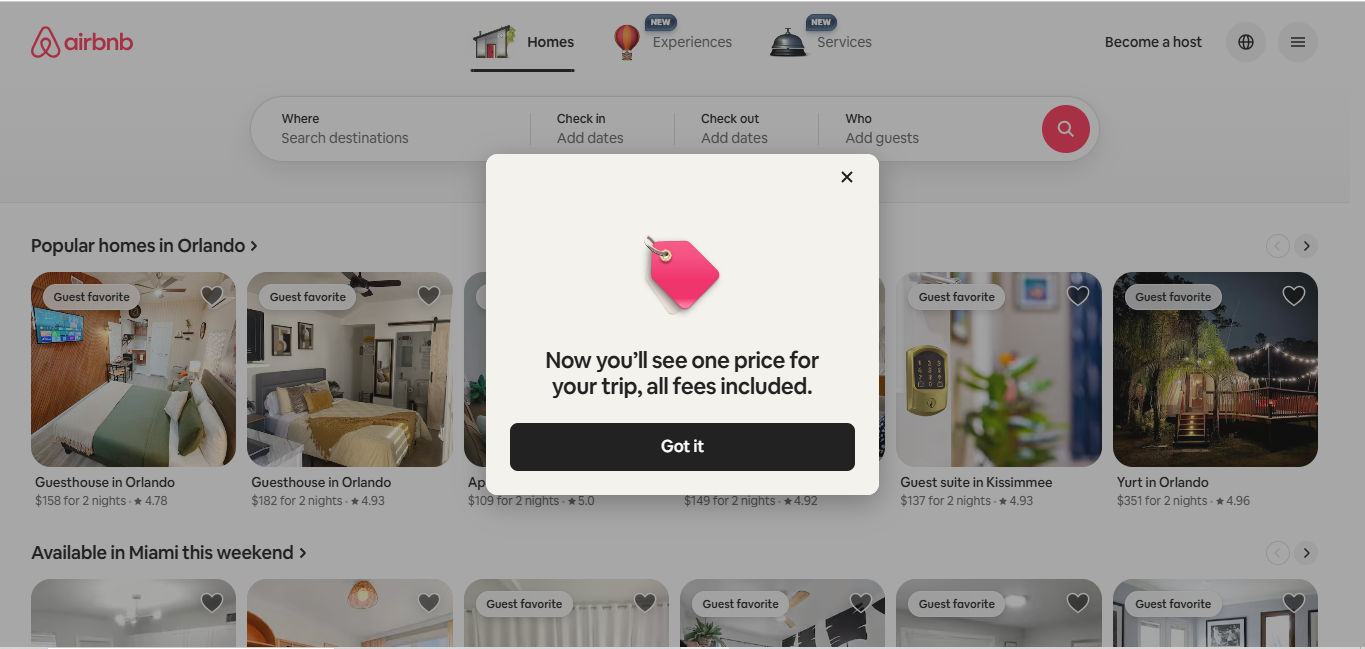
The days of visiting a travel agent to book lodging in a hotel or apartment are long gone in many instances; Airbnb empowers users to find exactly what they want with a wealth of convenient features. This model of pinpointing a property with “one-off” charm is part of what shook up an entire industry to become a household name and a leading tourism and hospitality “go-to.”
© Airbnb, Fair use
Why Designers Make Good Disruptive Innovators
Understanding and applying disruption gives you strategic power, as you can:
Spot Gaps Others Miss
Designers often find unmet user frustrations, workarounds, or underserved segments. These areas provide fertile ground for disruption, enabling you to tap into opportunities others ignore.
Prototype New Paradigms, not just Features
With insight, instead of iterating inside existing boundaries, you can imagine new user flows, interfaces, or interaction models that change expectations and can come to define “the way things are done” in an entire industry.
Help Shape the Value Proposition, not just Usability
Disruptive success depends on how brands align UX design with a new value network: how users access, perceive, adopt, and relate to the product a brand introduces. To make meaningful innovations, you’ll want to influence that architecture, too.
Help Manage Transitions
Disruption can alienate users who are familiar with legacy norms and staying in the old way because it’s seemed like the only way for a long time. As a disruptive designer, you become a bridge and play a critical part in smoothing transitions through migration paths, hybrid UX design, and onboarding for novel systems.
Future-Proof Your Career
Designers who think in terms of disruption delve into UX strategy (“UX strategist” as a formal role differs from what a UX designer does). This bold way of not accepting the status quo but pushing at (and beyond) the frontiers means you can lead product direction.
While generative AI can assist with creativity by remixing existing patterns and ideas, it draws from what already exists and lacks the human ability to frame new problems, define meaning, or drive purposeful innovation. As a designer, your unique value lies in your capacity to envision radically better futures, apply empathy, and create context-aware solutions, something AI cannot do on its own.
In this video, Niwal Sheikh Product Design Lead, Netflix, explains how Netflix’s “More Like This” section demonstrates discoverability in action by connecting users to related content and encouraging exploration. It’s an approach UX strategists use to shape future-focused experiences. Speaking of future-proofing, imagine how hard this would have been for bricks-and-mortar video rental stores from another era.
Design Strategies and Tactics to Help Aim for Disruptive Innovation
Consider some design strategies you can use when you’re aiming for disruptive innovation in UX design.
Reject Assumptions; Interrogate Constraints
An essential mindset to adopt is one where you question foundational assumptions, such as “We must have this feature.” A disruptive mindset often arises when you remove constraints people accept as fixed.
In this video, Alan Dix, Author of the bestselling book “Human-Computer Interaction” and Director of the Computational Foundry at Swansea University, explains how lateral thinking helps you break out of mental “boxes” by questioning assumptions and uncovering hidden constraints in your design process.
Design for Extremes and Fringe Users
Target underserved or marginalized users first. These “edge” needs often reveal new paths that mainstream users later adopt, thanks to the wealth of insights you can yield from conducting user research to notice such marketplace “gaps.”
Generate Radical Design Ideas
Use “extreme ideation” methods; for example, imagine the inverse, zero features, radical constraints, or bad ideas can conjure fascinating insights because you approach the problem space differently. Also, you can sketch flow diagrams that discard legacy patterns; try to break free from “the past” and see where it goes.
Capture the “crazy” power of bad ideas to help speed your way towards ideas that make good, if not excellent, sense, in this video with Alan Dix.
Use Data + Qualitative Insight to Evolve the Edge
User research fuels the engine of creativity. Quantitative research signals, such as usage and retention, plus qualitative interviews help you decide which radical paths are worth pursuing more vigorously.
In this video, William Hudson, User Experience Strategist and Founder of Syntagm Ltd., shows you how quantitative research reveals patterns in user behavior, while qualitative methods uncover the reasons behind them, helping you evolve designs that truly push boundaries.
Prototype Radical Alteration, Not Incremental Tweaks
As you start getting ideas to work on, you’ll find yourself at a crossroads. Your prototypes should explore alternative interactions, flows, or even device paradigms, not just UI (user interface) polish.
In this video, Alan Dix explains why effective prototyping requires exploring bold, alternative designs rather than just refining small details.
Conduct Lean Experiments that Test Core Hypotheses
Now, you’ll want to create minimal tests that validate whether people adopt the new idea at all, and before you think about building fully. Remember, people can find novel concepts difficult to accept, especially when they depart so far from the “norm.” Focus on willingness to switch or retention metrics.
Test, Learn, Iterate
Once you have a design solution tweaked, which could be a minimum viable product (MVP), monitor engagement, conversion, and retention for how users respond to it.
Interview early adopters to understand user behavior and objections. Then, pivot or refine the concept until these problems reduce or vanish.
Get a firmer foundation on how an MVP can form a strong basis from which to improve a digital product, in this video with Frank Spillers: Service Designer, Founder and CEO of Experience Dynamics.
Embrace Modularity and Gradual Migration
Nothing changes overnight, especially when millions of users already own devices and systems they intend to keep for at least a while longer. So, include hybrid modes or compatibility with legacy systems so users can transition instead of feeling forced. This reduces friction and helps your image glow as a beneficial brand and not an annoying upstart that wants to upset the user’s “apple cart” as well as that of an incumbent brand you might displace.
Design for Trust and Psychological Safety
Since disruption equals change and some changes can feel like major upheavals, users will resist. Therefore, build trust via gradual onboarding, education, transparency, and feedback loops.
Scale & Optimize
Expand to further segments as you grow your product beyond its initial user group to reach new types of users with different needs, behaviors, or contexts. Then, when users start to become accustomed to the new solution, you can gradually increase complexity or sophistication. For example, if your disruptive app started with college students booking tutors, expanding to new segments might mean adapting it for working professionals, parents, or high-school students. You might need to tweak features, the user experience, or pricing to meet each group’s expectations while still delivering on your core value solidly and making your brand’s product bankable as a recognized marketplace presence.
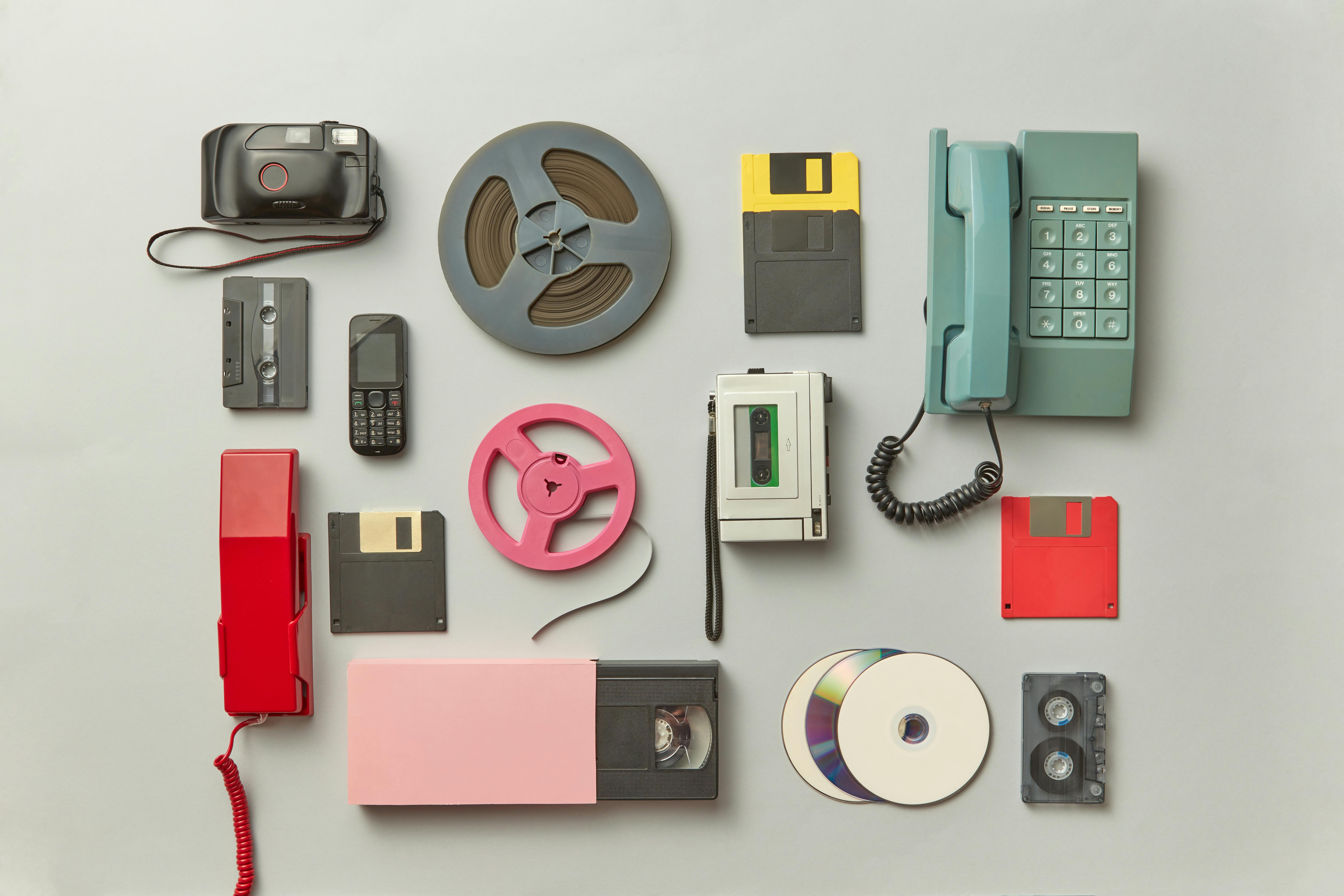
Every item here was at one time a market entry, offering a novel way of solving a problem or satisfying a need. In terms of market share and what most people use, which of the above still have a bankable future as evolved items? Which have combined into one piece of hardware, and so changed the way people encounter music, video, and more?
© Pexels, Photo by DS stories, Fair use
How to Avoid Disruptive Pitfalls, Misconceptions, and Risks
It’s vital to watch out for these missteps:
Overreaching too soon: Don’t build full systems before validating adoption; it’s risky. To stretch for illustration’s sake with a potential future example, imagine the invention of a transmatter beam that could send a living person’s particles from one location to another; safely, at least, for a few brave test volunteers who prove it. Now, imagine taking the technology at that point and proceeding to build numerous (and expensive) “transmatter stations” (like tiny airports with personal capsules). What if you were to discover that nearly all “users” would be too scared (naturally) to take the risk of having themselves “uploaded” and “downloaded” from point A to point B?
Confusing novelty for disruption: A flashy UI (user interface) is not enough. Not every innovation is disruptive, however new it might look. Also, a major new feature in an existing product that targets the same users is a sustaining innovation, not a disruptive one.
Neglecting adoption costs: Users resist change; the switching cost may block uptake, leaving you with a wide chasm to cross and bridge, or abandon.
Losing usability: Radical new models must still be learnable; a genius concept will fall flat on its face if it can’t translate to a product and system people can understand and use.
Ignoring legacy constraints: Some user bases may never fully abandon old systems. Whatever their reasons for being “die-hards,” research what might make them stay on.
Lack of business alignment: Disruption without sustainable models fails. A genius idea with a supportive system and marketplace may hold for a while, but is it viable in the longer term? Investigate the market forces and realities surrounding releasing a new product into a market landscape.
Moral and ethical risks: Disruptive change can harm stakeholders and users; consider equity, privacy, inclusion, and accessibility, for example. That “great” new idea may harbor a Pandora’s box of pains if you don’t research the implications of how a new system “helps” people do things in a “wonderful” new way.
Explore why accessible design will remain vital to include in what you create, in this video.
Assuming you’ve got a perfectly revolutionary item and system and don’t have to do anything more to improve it. Beware: keep innovating. Today’s disruptor can become tomorrow’s incumbent, and “threats” may come from unexpected angles. So, stay close to boundary users and anticipate new disruptors who may find gaps in your product design and UX.
Overall, disruptive innovators embody the human need to innovate and impact the world in ways that go beyond redefining modes and industries, to redefining “the way” to do something and do it well. Indeed, it takes out-of-the box thinking, caution, and a careful eye for relevant metrics beyond traditional usability so brands can keep their finger on the pulse of how successful their disruptive innovations are.
Remember to aim at the bigger picture and understand that innovating disruptively means going beyond technical leaps and influencing market evolution. Some innovations may feel radical, but a brand won’t alter value networks or displace incumbents if it fails to combine business, technology, and UX insight to pull off genuine disruption. If you manage to tap that skill and ensure your product has fertile soil to extend its roots far into, you’ll be able to prove that you were in the right place at the right time, even if you’ll need to keep moving to stay ahead of the game and at the top of your game.