Your constantly-updated definition of Product Development Processes and collection of videos and articles. Be a conversation starter: Share this page and inspire others!
A product development process provides a methodology and structure that can direct all the team members when designing and creating a product from initial user research, over implementation and to product launch.
Creating a process and having the team agree on the process is time-saving and will prevent future misunderstandings. The process is usually crafted around the business and its particular culture.
A process that works for a corporation with its own in-house design team may not translate over to a small studio. A process must be established and agreed upon by the organization prior to setting out the development.
Make learning as easy as watching Netflix: Learn more about Product Development Processes by taking the
online IxDF Course UX Management: Strategy and Tactics.
Why? Because design skills make you valuable. In any job. Any industry.
In This Course, You'll
Get excited to become the leader who turns user-centered thinking into the way your organization operates. Research from McKinsey shows companies thatmake UX a strategic priority achieve 32% greater revenue growth and 56% higher shareholder returns. Yet according to Forrester Research, only 15% of organizations follow a consistent UX design process. This course teaches you to close that gap by moving UX from a team activity to an organizational strategy, guided by the UX Maturity Model and the philosophy of Outside-In Design: commitment to the user, informed by research. The skills that make you good at UX, like identifying root problems, focusing on people's needs, and connecting design decisions to company goals, carry into UX leadership. In this course, you'll learn how to build on your existing skills and apply them at an organizational level, whether you want to move into your first leadership role or you're already leading and want to increase your impact
Make yourself invaluable as you shift from doing UX work to driving UX change. As AI speeds up research, ideation, and delivery, UX leaders need to do more than help teams move faster. They need to protect the quality of decision-making: helping teams question AI outputs, avoid new biases, stay close to real users, and build the UX maturity needed to use AI responsibly. In this course, you'll learn to assess your organization's UX maturity, map your current UX process and design the ideal one for your specific conditions, then build a roadmap to get there. You'll discover how to integrate Lean UX into Agile sprints, use scorecards to measure progress, and restructure your org chart so UX is positioned toinfluence product direction. Expert interviews with senior UX consultants covering leadership, product management, and user research, plus case studies of Apple, Intel, and Best Buy, give you real-world insight into what works and what to avoid.
Gain confidence and credibility when you can make the business case for UX throughout an organization and connect UX efforts to business KPIs such as customer satisfaction, retention, and profitability. With field studies, personas grounded in real behavior, journey mapping, usability testing, and heuristic evaluations, your team will make decisions backed by real user data. You'll be able to clearly communicate that value through cost-benefit analysis, ROI frameworks, and evangelization techniques to get developers, product managers, and executives aligned around user needs. Optional hands-on activities let you assess UX maturity, build an Agile UX collaboration plan, and diagnose the obstacles blocking progress. At the end of this course, you'll be ready to lead UX transformation and prove it with strategic work built around your own organization.
Learn From Industry Leaders
Master complex skills with proven best practices and toolkits directly from industry leaders. Meet your experts for this course:
Frank Spillers: Service Designer and Founder and CEO of Experience Dynamics.
Alison Gavine: Managing Partner and Global User Research Director at Experience Dynamics.
Daniel Loewus-Deitch: UX Leader, Media Psychologist, and Assistant Vice President, User Experience at Unum.
Earn Industry-Recognized Certificates
Industry giants trust our courses to train their teams, and prestigious universities integrate our content into their curricula. Add your certificates to your LinkedIn profile, résumé, and job applications.
All Free IxDF Articles on Product Development Processes
The Factors of Success for New Product Development: An Overview
Bringing a successful product to market is a team effort. While designers are responsible for usability, utility and the rest of the user experience there are many factors which contribute to the success or failure of new product development and many of these are outside of the designer’s direct con
Product Design and UX Design Roles: Unveiling the Differences
Product and user experience (UX) design are both prominent fields—and make rewarding career choices. People often use the two terms interchangeably in conversation, but they’re not the same. Product designer vs. UX designer isn’t a simple “either-or” scenario—and each role has got unique responsibil
How to Become a Product Manager: Best Career Advice
Pick any product and you’ll find that product management is vital to how successful it is—and product managers are who make sure that a product’s life cycle runs smoothly, and it means they know how to align strategy, vision, and user needs. Product managers split into multiple roles that have got u
Social shares
598
Published
Read Article
The Factors of Success for New Product Development: An Overview
Bringing a successful product to market is a team effort. While designers are responsible for usability, utility and the rest of the user experience there are many factors which contribute to the success or failure of new product development and many of these are outside of the designer’s direct control.
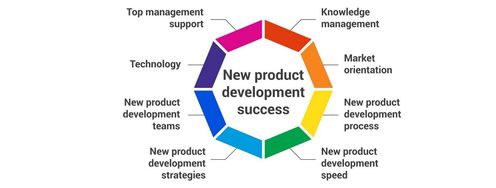
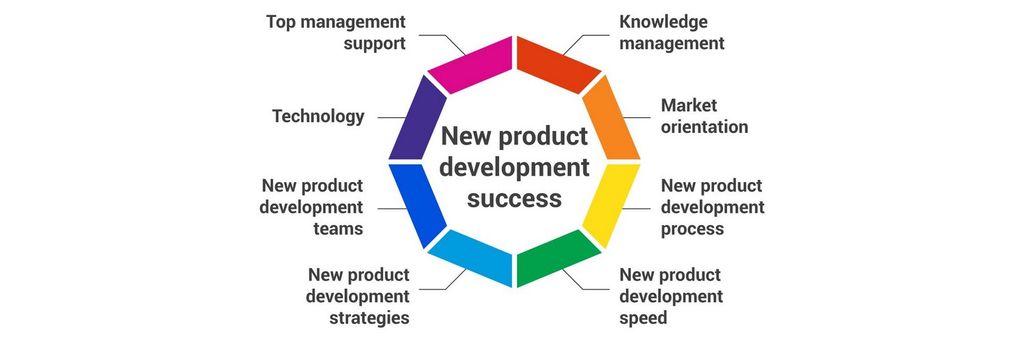
The figure above shows the main factors which contribute to new product development success as promoted by Gonzales and Palacios in 2002:
Let’s take a look at each of those factors and see how much responsibility a designer can take for them and how much lays elsewhere.
Top Management Support
At first glance, this appears to be completely out of control of the design team. After all, top managers make the decision as to what to support and what not to support right?
Unfortunately, it’s not that simple. The support of top management is critical to a project’s success. Without that support, budget or resources are not likely to be granted to the project and it may not get the priority it needs within the business as a whole. However, while the design team cannot force management to support their projects they can develop the political savvy to persuade management to support the best projects.
Learning to influence managers is a critical skill for design teams. Embarking on projects without managerial support is a recipe for failure but winning over support is a question of leadership and communication.
Investopedia defines market orientation as follows: “Market orientation is a company philosophy focused on discovering and meeting the needs and desires of its customers through its product mix.”
It seems reasonable to suggest that while a design team does not have control over company philosophy it should be in a good position to influence this. Conducting user research and where appropriate market research – two fundamentals of developing high quality user experiences; will enable the discovery of customer/user needs and how to meet them.
Technology
The technology used to create and deliver the product must be suitable for the market. While it is unlikely that the design team will have the final say in technology budgets or appropriation it is likely that they will be able to influence the development teams in their choice of technology.
It is clear that, for example, multi-million dollar hardware and software requirements will make a product inaccessible to the consumer market but may not be an insurmountable hurdle for government or corporate markets.
Technology must be chosen with the end-users in mind.
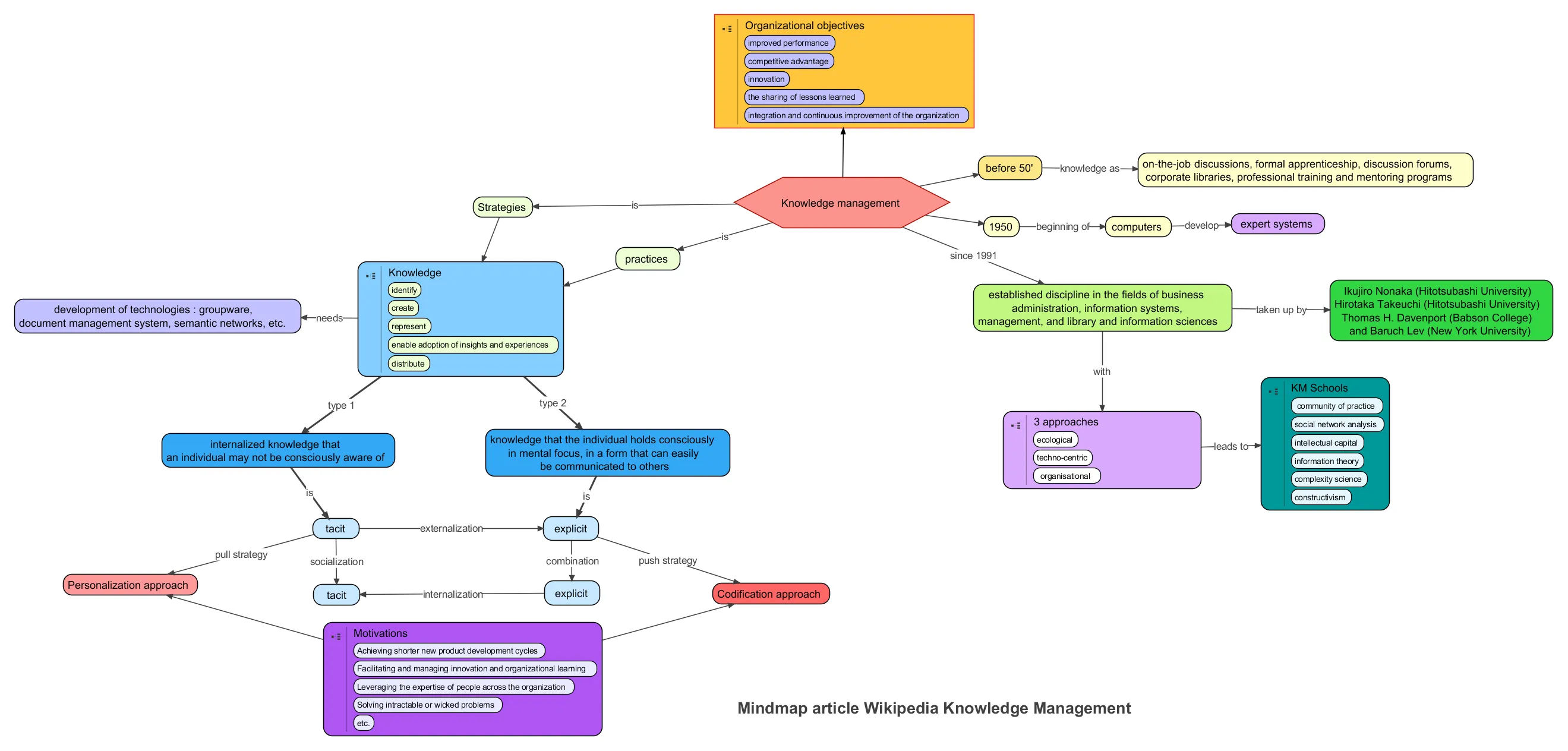
Knowledge Management
In many organizations today; knowledge is treated like gold dust and guarded by its owners as they would stolen treasure. Unfortunately, the creation of knowledge silos like these makes it impossible for knowledge to be effective.
Market research data, for example, can be incredibly useful to a design team but only if they can access that data and it’s not kept securely in the marketing department under lock and key. Likewise user research data can be highly valuable to the marketing team but once again – only if they can access it.
Knowledge management structures will normally fall outside of the design team’s remit. However, there is nothing preventing the design team from advocating for open knowledge management structures or indeed persuading senior management to support such structures.
Strategy, despite the way it is often abused in management speak is simply; “a plan of action designed to achieve a long-term or overall aim.”
Responsibility for new product development strategies is likely to be shared between design, product management and development. This means that the design team will have some input into the strategies chosen and will be able to influence these strategies with their user research to guide the strategy to fit the needs of their users. It is probably fair to say that product management will normally have the final say on a strategic direction but designers have plenty of room to negotiate with product managers to ensure better outcomes.
New Product Development Speed
Speed to market is a critical factor in success. If your new product development process takes 5 years but your competitor’s takes 2 years – it is likely that no matter how good your designs are; they will have been eclipsed by the time they get to market.
Refining the design process to maximize speed whilst protecting the user experience is a delicate balancing act and it is fully within the designer’s remit. However, the development process speed is much less likely to be within the design team’s control and their ability to influence that speed may be marginal at best.
New Product Development Process
Having clear processes for design and development are essential. While these may be tailored to fit specific circumstances – a methodology for working that is clearly understood and agreed to by all members of the product development team is highly likely to produce better results than those created with no formal process.
The design team will, normally, have some input into these processes and be able to negotiate modifications to processes when they fail to produce optimal results. There is little control for the design team over the way other teams execute these processes. Failure in execution, from other teams, is one of the few areas where it is reasonable to say that failure was completely outside of the design team’s control.
New product development normally brings together teams of diverse people from all across an enterprise. It is strongly suggested that these diverse teams tend to be highly creative and more successful than teams of a more standardized nature.
The way teams work together is a critical factor in their success and designers operating as part of such a team have their part to play in this. Professionalism and leadership can be displayed by any member of a team (including those without official leadership and management roles) and while the design team cannot bear any responsibility for the actions of others within a team – they bear complete responsibility for their own actions.
As Michael Jordan, the world famous athlete and basketball superstar says; “Talent wins games, but teamwork and intelligence wins championships.”
The Take Away
Not every factor of success for a new product development project is directly within the design team’s remit. However, in the majority of cases the design team will have the ability to influence these factors and play a strong role in ensuring that the project is given the greatest possible chance of success.
The 8 key factors involved in new product development are Knowledge Management, Market Orientation, New Product Development Process, New Product Development Speed, New Product Development Strategies, New Product Development Teams, Technology and Top Management Support.
GONZáLEZ, F. J. M. & PALACIOS, T. M. B. (2002) The effect of new product development techniques on new product success in Spanish firms. Industrial Marketing Management 31, 261-271
39% of Today's Skills Will Change by 2030
The World Economic Forum expects 39% of today's skills to be transformed or become outdated by 2030.
The good news is that jobs in UX / UI design and AI are among the fastest-growing professions globally.