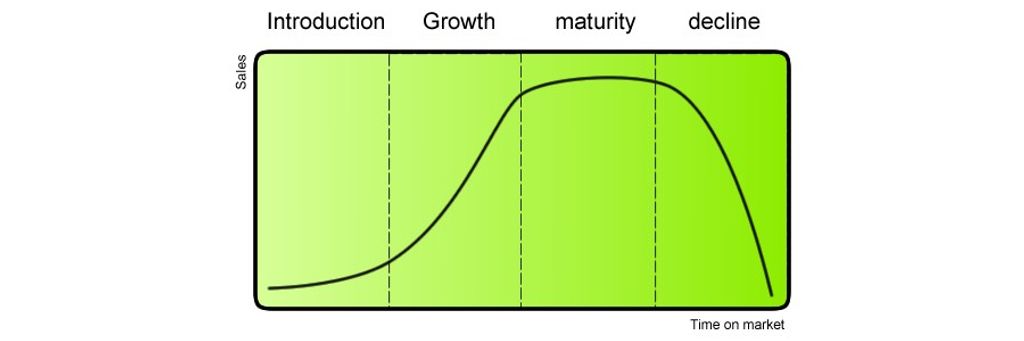
Product Life Cycle

Your constantly-updated definition of Product Life Cycle and collection of videos and articles.
Be a conversation starter: Share this page and inspire others!

419 Shares
Save

Get 1 Powerful Email Each Week

Join 315,231 subscribers.

What is Product Life Cycle?

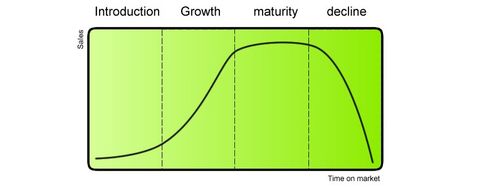
The product life cycle is a tool used to determine the strategies that will be used at any stage in a product's development for sales and marketing purposes. It has four distinct stages; market introduction, growth, maturity and saturation and decline. Each of these suggests different business actions that can improve the profitability of the product. Designers and marketers can optimize business value by basing their strategies on the particular stage that the product is in at any given time.

The product life cycle assumes that the majority of products have a life span.

At each stage, the business faces a different set of advantages and disadvantages, setbacks and opportunities.

In order to meet these challenges, the business must have different strategies for approaching development, design and marketing for any given stage.

Learn More About Product Life Cycle

Make learning as easy as watching Netflix: Learn more about Product Life Cycle by taking the online IxDF Course Get Your Product Used: Adoption and Appropriation.

Why? Because design skills make you valuable. In any job. Any industry.

In This Course, You'll

  • Get excited to learn how to set your product up for lasting adoption after launch, so all the effort you poured into it pays off in real value for your users. Usability and user experience alone won’t guarantee your product’s adoption. A study from Appsflyer found that 1 in every 2 apps is uninstalled within 30 days. And it’s not just throwaway apps: think of Sony Betamax, Segway, and the Palm Pre. Even some of the most innovative, well-designed products never catch on. In this course, design legend and author of the bestselling book “Human-Computer Interaction,” Professor Alan Dix, teaches you how to get past those 30 days by designing adoption into your product from day one, rather than treating it as someone else's job after launch. You’ll also learn how to empower people to adapt your product to their own needs and find uses for it you never imagined. Dix calls this appropriation, and it’s a powerful and underrated driver of usefulness and longevity. AI can generate a product in an afternoon, but only you can make it earn a place in people’s lives. That’s the timeless, human-centered design skill you’ll learn in this course.

  • Make yourself invaluable as you turn prospects into real users, from before you start designing right through to after launch. With the path of use, you’ll guide users who don't yet know they need your product from “no use” to “use.” To achieve this, you’ll combine user research with market research and apply behavioral economics, such as loss aversion and the endowment effect. Dix’s lattice of value helps you think through a problem many new products face: how do you get people to join when the product only becomes valuable once others are using it too? You’ll learn how to design for both sides of that relationship, so newcomers get value from the start, and existing users get more value as the community grows. This approach helps your product reach the tipping point where adoption becomes self-sustaining, known as critical mass.

  • Gain confidence and credibility by learning how to turn post-launch behavior into better product decisions. You’ll use seven guidelines for appropriation, including “allow for interpretation” and “encourage sharing”, and learn to support that behavior rather than fight it. And since not all appropriation is good, you'll judge when to guard against subversion and when to embrace creative reuse. By paying attention to how people actually use and adapt your product, you’ll learn to take advantage of new opportunities, like a use case you never designed for, and keep what you’ve built relevant for longer. With hands-on activities, and real-world examples from the likes of Adobe and Microsoft, you'll design products that don't just launch well, but get adopted, stay in use, and grow as people make them their own.

Learn From Industry Leaders

Master complex skills with proven best practices and toolkits directly from industry leaders. Meet your expert for this course:

  • Alan Dix: Author of the bestselling book “Human-Computer Interaction” and Director of the Computational Foundry at Swansea University.

Earn Industry-Recognized Certificates

Industry giants trust our courses to train their teams, and prestigious universities integrate our content into their curricula. Add your certificates to your LinkedIn profile, résumé, and job applications.

Our clients: IBM, Harvard University, University of Cambridge, NASA, Adobe, Stanford, Massachusetts Institute of Technology, LinkedIn
Course Certificate

All Free IxDF Articles on Product Life Cycle

Read full article
How to Use the Product Life Cycle - Article hero image

How to Use the Product Life Cycle

The product life cycle is an important tool for marketers, management and designers alike. It specifies four individual stages of a product’s life and offers guidance for developing strategies to make the best use of those stages and promote the overall success of the product in the marketplace.Abou

Social shares
878
Published
Read Article
Read full article
Product Design and UX Design Roles: Unveiling the Differences - Article hero image

Product Design and UX Design Roles: Unveiling the Differences

Product and user experience (UX) design are both prominent fields—and make rewarding career choices. People often use the two terms interchangeably in conversation, but they’re not the same. Product designer vs. UX designer isn’t a simple “either-or” scenario—and each role has got unique responsibil

Social shares
795
Published
Read Article
Read full article
How to Become a Product Manager: Best Career Advice - Article hero image

How to Become a Product Manager: Best Career Advice

Pick any product and you’ll find that product management is vital to how successful it is—and product managers are who make sure that a product’s life cycle runs smoothly, and it means they know how to align strategy, vision, and user needs. Product managers split into multiple roles that have got u

Social shares
596
Published
Read Article
Read full article
How to Fit Quantitative Research into the Project Lifecycle - Article hero image

How to Fit Quantitative Research into the Project Lifecycle

Quantitative research methods fit into the project lifecycle at different stages of the process.In this video, we see where different quantitative research methods fit into a typical project lifecycle. Bear in mind that even with an iterative process such as Agile, the short cycles still address dif

Social shares
526
Published
Read Article

How to Use the Product Life Cycle

How to Use the Product Life Cycle

The product life cycle is an important tool for marketers, management and designers alike. It specifies four individual stages of a product’s life and offers guidance for developing strategies to make the best use of those stages and promote the overall success of the product in the marketplace.

About the Product-Life Cycle

Linda Gorchels in her book “The Product Manager’s Handbook” defines the product-life cycle and offers some key assumptions upon which it is based. The assumptions that are made are:

  1. Products, in general, have a limited life span. All products will thus end up passing through a product life cycle.

  2. Each phase of that life cycle presents the business with a set of opportunities and challenges to take advantage of and to overcome.

  3. Products will require different efforts from design, development, marketing, purchasing, etc. during each phase of their life cycle.

The Product Life Cycle

The Phase of the Product Life Cycle

Defining Characteristics of that Stage

Market Introduction

Product branding and quality will be determined.

Any intellectual property protection is obtained.

Pricing may be either be low (to gain market share) or high (to quickly recoup development costs)

Distribution is selective (pending market acceptance of the product)

Marketing is targeted at innovators and early adopters to try and encourage rapid awareness building for the product

At the point of market introduction:

1.Costs will be highest. This is because economies of scale are yet to be realized and there are few (if any) sales to drive costs down.

2.Sales volumes will be relatively slow to begin with. Market adoption takes time to achieve.

3.Little or no competition. It is hoped, though not always the case, that there will be little competition for a new product.

4.Demand needs creating. Marketing is particularly important to create demand

5.Customers need to be encouraged and educated to use the product.

6.Profitability, if any, will be low

Growth

Quality is maintained and development prioritizes additional features, complementary products and support

Pricing will be maintained as the product is likely to enjoy a competitive advantage

Distribution is increased to accommodate increased demands

Marketing focuses on a wider audience

At the point of growth:

1.Costs begin to decline as economies of scale kick in.

2.Sales volumes rise appreciably compared to the introduction phase.

3.Profitability will rise

4.Brand/product awareness will rise

5.Competitors are likely to enter the market

Maturity

Product features will normally be enhanced to enable strong differentiation of the product from competing products

Prices may have to be cut to ward off competitive threats

Distribution will become more intense and new incentives may be introduced to try and encourage sales vs. competitors’ products

Marketing focuses on the differentiation of the product in the market

At the point of maturity:

1.Costs decrease to reflect rising sales volumes and the experience of the business in producing the product

2.Sales volume reaches a peak and market saturation is attained

3.Further competitors enter the market

4.Prices will drop based on competition

5.Brand differentiation and product diversification becomes a possible strategy to protect market share

6.Profitability begins to decline

Decline

Product goes into a maintenance phase

Attempts are made to recreate the product through new uses or by significantly changing the product

The product may become a legacy offering sold to a niche group

Costs are reduced as far as possible

Finally, the product is discontinued when it is no longer economically viable to sell

At the point of decline:

1.Costs begin to become less than optimal

2.Sales volumes decline significantly

3.Prices fall further

4.Profitability depends less on sales than the efficiencies of production and distribution efforts

It is worth noting that while products are often discontinued at the end of the lifecycle; the business will usually remain and will be involved in other products by this stage.
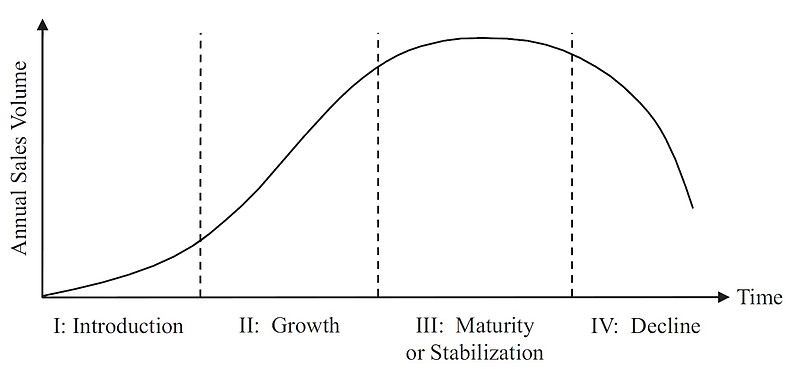
Author/Copyright holder: Malakooti, B. Copyright terms and licence: CC BY-SA 4.0

How to Tell What Stage in the Product-Life Cycle a Product is At

It is important to note that the diagram of the product-life cycle represents an idealized product-life cycle and that most products do not follow the curve in a perfect manner. There may be sudden dips, in sales during growth or maturity, which do not accurately reflect the position of the product in the lifecycle, for example.

Thus there are no absolute indicators for the position of a product during the life cycle. However, there are general indicators which can be applied – in the context of your own observations over time – which will give some indication of a product’s position in its lifecycle. These can be summarized as follows:

Indicative Feature

Life Cycle Stage

Introduction

Growth

Maturity

Decline

Sales Volumes

Low

High

Maximum

Low

Investment Costs

Maximum

High

Low

Low

Competition

Low

Low – Medium

High

Maximum

Profitability

Low

Maximum

High

Low

Challenges of Using the Product-Life Cycle

It is important to note that a product life cycle is a complex thing. Some products have life cycles measured in months or years whereas others may be measured in decades or centuries.

Rising sales do not always indicate growth, falling sales do not always indicate decline. Some products may not experience a decline at all within the lifetime of the business management team (think about Coca-Cola for example which has enjoyed relatively consistent sales for over 100 years).
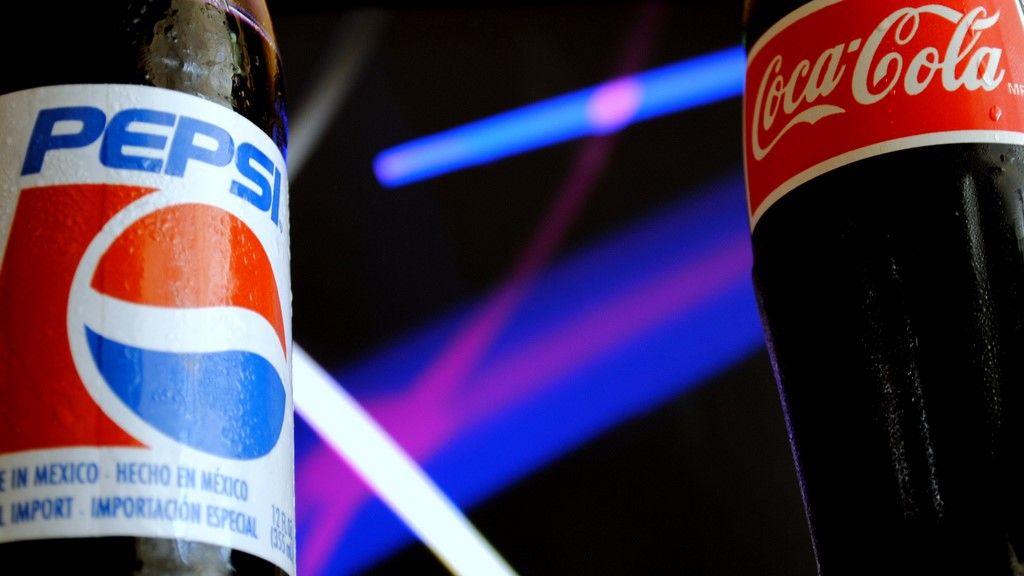
Author/Copyright holder: Sean Loyless. Copyright terms and licence: CC BY 2.0

Because of this, it is important to use the product-life cycle as a guideline to which large quantities of common sense must be applied rather than to use it as a rigid tool for decision making. Maturity and decline, in particular, can be difficult to identify with any form of precision and strategic decisions must be approached with caution to deliver the expected outcomes.

The Take Away

The product-life cycle provides guidance to a business as it progresses a product from introduction, through growth and maturity to decline. It is not designed to be a rigid tool and it is important that common sense and general understanding of the market be used alongside the product-life cycle in order to get the most value from it. Designers are most likely to be involved with the stages of introduction, growth and maturity and be moving on to new projects when a product is in decline.

Never forget Philip Kotler, the world famous marketer’s, advice though; “Watch the product life cycle; but more important, watch the market lifecycle.” It’s not just products that come to an end but markets can too.

References & Where to Learn More:

Course: Get Your Product Used: Adoption and Appropriation

Gorchels, L. (2002) “The Product Manager’s Handbook: The Complete Product Management Resource” , McGraw-Hill, ISBN 978-0658800 13522

Day, G. (1981) The product life cycle: Analysis and applications issues, Journal of Marketing, vol 45, Autumn 1981

Levitt, T. (1965) Exploit the product life cycle, Harvard Business Review, vol 43, November–December 1965

Hero Image: Author/Copyright holder: Mwpnl. Copyright terms and licence: CC BY-SA 3.0

39% of Today's Skills Will Change by 2030

The World Economic Forum expects 39% of today's skills to be transformed or become outdated by 2030.

The good news is that jobs in UX / UI design and AI are among the fastest-growing professions globally.

Build Skills That Keep You Relevant

Privacy Settings

By using this site, you accept our Cookie Policy and Terms of Use.
Customize
Accept all

Be the One Who Inspires

People remember who shares great ideas.

Share on:

Academic Credibility — On Autopilot

Don't waste time googling citation formats. Just copy, paste and look legit in seconds.