Technology Probes

Your constantly-updated definition of Technology Probes and collection of videos and articles.
Be a conversation starter: Share this page and inspire others!

98 Shares

What are Technology Probes?

Although similar in name to cultural probes, technology probes are significantly different. They are mock-ups that simulate the user experience of interacting with the proposed solution. They address the problem of users not understanding new technologies or novel solutions to existing problems.

Transcript

As Alan Dix: Author of the bestselling book “Human-Computer Interaction” and Director of the Computational Foundry at Swansea University suggests in the video, anything that helps to show users what a new solution looks like and how it might work is a technology probe. This could be something as simple as a paper prototype. For screen-based technologies such as mobile apps or websites, a crude mock-up might suffice. However, in the realm of physical devices, we are less concerned with appearances as long as the means or concepts of the interactions are similar. So, we often combine existing technologies in an ad-hoc approximation of a proposed solution.

How Do Probes Differ from Prototypes?

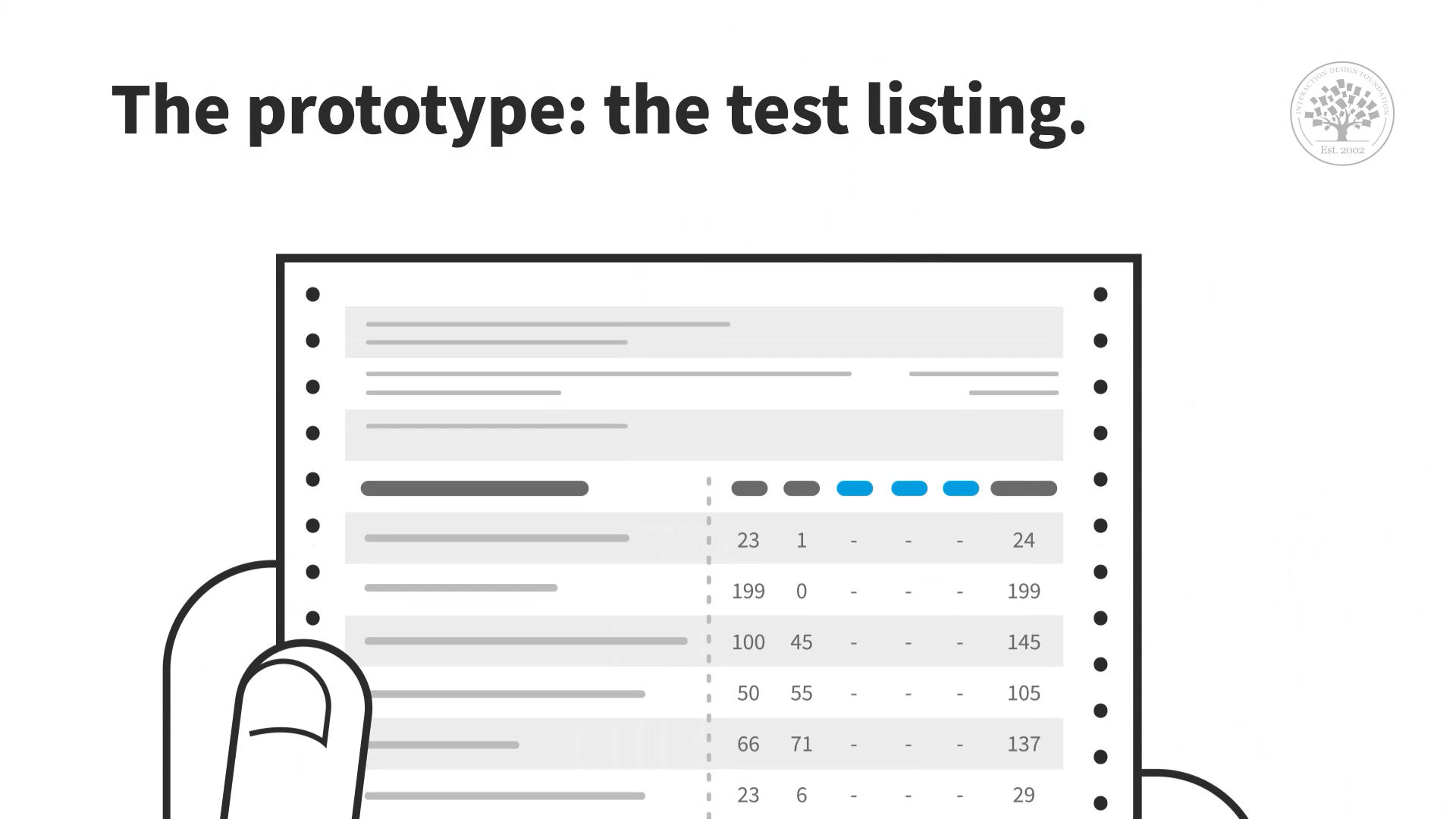
Sample printed report to be used as a prototype.

While a simple prototype can act as a technology probe, there are important differences.

© Interaction Design Foundation, CC BY-SA 3.0

In their 2003 case study of using technology probes with families, Hilary Hutchinson, Ben Bederson and colleagues (see Learn More About Technology Probes) identified four differences between the probes and more fully-featured functional prototypes:

Functionality: While prototypes are often created to assess a wide range of needs, technology probes should be relatively simple. The authors suggest a single purpose and a small number of simple functions.

Usability: The primary purpose of technology probes is to gain understanding of users and how well the proposed solution addresses their needs. Usability is not a primary concern unless it severely impacts the usefulness of the probes. In contrast, prototypes are often seen as an opportunity to refine interaction and user experience. Indeed, it is very likely that successful technology probes are eventually developed into more complete prototypes, but the two artifacts have different purposes.

Logging: Technology probes can collect data about participants’ interactions. In their study, the authors were interested in relationships within the family. The data was also used as a source of new ideas for further development. Prototypes can also collect data, but this isn’t their main purpose and in many cases data collection is limited to usability (effectiveness, efficiency and satisfaction).

Flexibility: Researchers should not be prescriptive about the ways in which probes are used. Participants should be encouraged to experiment and explore. In contrast, prototypes are usually very specific in their purpose and usage.

Design Phase: Probes are a research tool for the design phase. While some forms of prototype are used in early design – paper prototypes, for example – most functional prototypes feature in the later stages of design and development.

When to Use Technology Probes

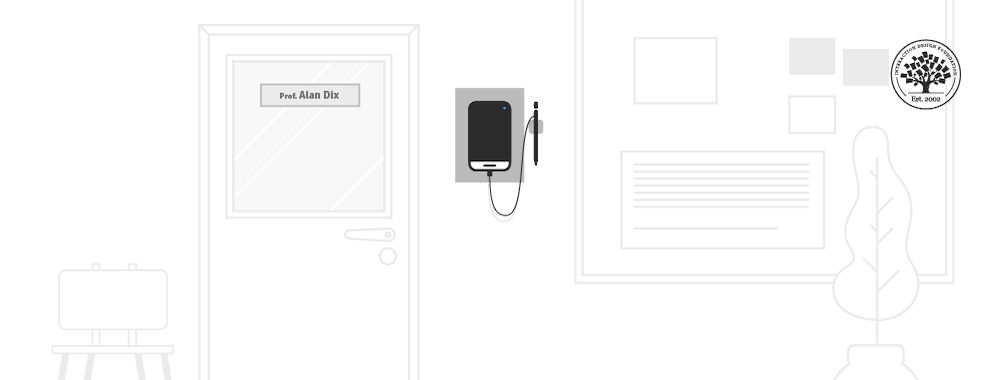
Concept for meeting room/office door electronic message pad.

Technology probe for office/meeting room message pad (Alan Dix)

© Interaction Design Foundation, CC BY-SA 3.0

Technology probes are most effective in novel application areas. Examples would include new technologies, new problem domains or new approaches in existing problem domains. The primary indicator for appropriate use is one where users find it difficult to envisage or understand either the application area itself or the proposed solution.

They can also be used as a research tool where a specific solution has not been proposed. Participants could be asked to interact with a probe in connection with one or more events, and the details of those interactions could inform the design discussion.

To summarize,

  • Use technology probes in novel application areas.

  • Use them early.

  • For “active” probes, make sure they can provide you with useful data.

  • Don’t confuse probes with prototypes – they have different purposes.

Alternatives to Technology Probes

User Research: Simply exploring users’ needs and behaviors – or observing users in situ – may be all that is required. If users suggest that they need a specific solution, find out why that is. If they find it too difficult to articulate a need, further in-depth research may be required. Consider probes if issues remain unresolved.

Prototypes and Wireframes: As discussed earlier, prototypes and technology probes overlap in some areas. In existing application areas, the use of probes may not be particularly beneficial. Create prototypes or wireframes to evaluate more complete designs. Consider paper prototyping for early-design testing.

First-click Testing: This is similar in concept to prototyping but focuses specifically on the question of what users should do given a specific scenario. An image of the device or screen is shown to participants along with a brief scenario. The online testing tool records where users clicked and whether it was within a designated area.

Questions About Technology Probes?
We've Got Answers!

How do technology probes help designers learn about user behavior?

Technology probes help designers observe how users interact with new technologies in natural environments. Designers deploy these simple, functional prototypes not necessarily to test usability, but to spark engagement, collect real-world data, and inspire ideas. These probes uncover how users adapt technology, the values they assign to it, and the challenges they face, all insights that lab studies often miss.

By analyzing the data—photos, usage logs, or user reflections—designers can identify patterns in user behavior and needs. For example, a probe might reveal how a household shares devices or how users improvise functions. These findings would then guide more user-centered innovations.

Uncover essential insights about usability to learn how it’s a vital ingredient in any design.

How do technology probes differ from prototypes or MVPs?

Technology probes differ from prototypes and MVPs (Minimum Viable Products) in purpose, design, and use. Designers create technology probes to explore user behavior and inspire new design ideas, not necessarily to test product performance or usability. Unlike prototypes, which often validate specific functions, or MVPs, which deliver a working product to test market fit, technology probes prioritize learning over performance.

A technology probe helps designers collect qualitative insights by being placed in real-life settings. It encourages users to interact naturally, revealing needs and behaviors designers may not predict—especially important wherever new technologies are concerned. For example, a probe might log how a family shares a digital calendar, uncovering unexpected collaboration habits. In contrast, prototypes and MVPs aim to refine or sell a solution, not explore open-ended possibilities.

Discover why, for many organizations, MVPs serve a purpose along those lines by being out there for users to enjoy the brand experience, in our article Minimum Viable Product (MVP) and Design - Balancing Risk to Gain Reward.

How do technology probes help me explore unknown needs?

Technology probes help designers explore unknown user needs by sparking natural interactions in real-life contexts. Unlike many traditional research tools, probes don’t limit users to predefined tasks. Instead, they invite experimentation and improvisation, allowing designers to uncover unexpected behaviors, unmet needs, and hidden pain points.

When designers place probes in users’ environments, they observe how people adapt, misuse, or reimagine the technology. These interactions often reveal deeper motivations or problems users haven’t verbalized. For instance, a probe designed to log family communication might expose overlooked routines or emotional needs. This discovery process leads to richer insights and more meaningful design opportunities.

Get a greater grasp of what “traditional” user research involves and how to apply various methods appropriately and effectively.

How do I design a good technology probe for UX research?

To design an effective technology probe, begin by defining your research goal: What user behaviors, routines, or environments do you want to explore? Next, build a simple, functional probe that invites open-ended use. The goal isn’t to impress with fancy refinements and polish, but to provoke real-world interaction and reflection.

Good probes spark curiosity and adaptability. They should log meaningful data (like timestamps, user inputs, or photos) and include prompts that encourage users to share their thoughts. Keep the setup minimally invasive so users feel comfortable using the probe in their natural setting. For example, a low-fidelity smart mirror could record daily interactions and ask users how it fits their routine.

Most importantly, design the probe to inspire interaction, not dictate it.

Open the lid on user behavior to understand important aspects of what to look out for when researching users.

What should I include in a technology probe?

A well-crafted technology probe should include three core elements: a functional prototype, data collection mechanisms, and reflection prompts. First, ensure the prototype offers just enough functionality to invite real-world interaction. It doesn’t need to be refined—it needs to be engaging and usable in context.

Second, embed ways to capture usage data. This might include usage logs, photos, timestamps, or interaction histories. These data points reveal patterns and behaviors that users might not articulate directly. Third, add prompts—such as journals, surveys, or simple questions—that encourage users to reflect on their experience. Much like what effective ethnographic research can yield, this combination of behavioral and reflective data helps uncover both what users do and why.

Explore how ethnographic research helps designers guide better design decisions.

How simple or complex should a technology probe be?

A technology probe should lean toward simplicity. Designers create these probes not to showcase advanced features, but to spark natural use and exploration. Keeping the design simple ensures users can focus on their own goals, not on figuring out how the probe works.

The probe needs to be functional enough to enable meaningful interaction, but minimal enough to avoid guiding or limiting user behavior. For example, a basic voice recorder app used in a shared space can reveal communication patterns without influencing how people talk. Complexity is something designers might add later, once they understand users’ needs more deeply.

Simple designs reduce technical issues, too, and make it easier to deploy probes in varied, real-world settings.

Secure a straightforward grip on the power of a simple approach in our article Simplicity in Design: 4 Ways to Achieve Simplicity in Your Designs.

When should I use a technology probe in the UX design process?

Use a technology probe early in the UX design process, specifically during the exploratory research phase. Designers deploy probes when they want to uncover user behaviors, contexts, and latent needs that “traditional” approaches like interviews or surveys might miss. At this stage, the goal is not necessarily to test usability or market fit; it is to learn how users naturally engage with a concept in their environment.

A well-timed probe helps generate user-driven ideas before a designer commits to wireframes or higher-fidelity prototypes. For instance, placing a basic digital scheduler in a home might reveal unexpected family coordination habits that could guide future design. This rich, contextual insight grounds the rest of the design process in real-world behavior.

Discover how well-designed surveys can complement research into users and their world.

How long should I leave a technology probe with users?

Leave a technology probe with users long enough to observe meaningful behavior, but not so long that it blends into the background. Typically, 3 to 14 days strikes the right balance—a window that lets users integrate the probe into their daily routines and reveal natural patterns or unexpected behaviors.

Shorter durations may only capture first impressions, while longer periods risk diminishing user engagement or overwhelming them with data-collection tasks. The ideal length depends on the probe’s purpose and the complexity of the context. For example, a smart journal probe in a shared workspace might need just a week to uncover usage rhythms, whereas a family-focused tool may require two weeks to harvest insights that are to be of use to a designer.

It’s wise to plan a midpoint check-in to ensure the probe still prompts interaction.

Learn how some longer-term-study tech probes share a common point with another valuable type of probe—cultural probes—when it comes to time factors.

How do I collect useful feedback from a technology probe?

To collect useful feedback from a technology probe, combine passive data logging with active user reflection. First, design the probe to automatically capture key behaviors—such as usage frequency, interaction paths, or context-specific data like location or time. This objective data reveals what users actually do.

Next, prompt users to share their thoughts. Use short surveys, guided journals, or interviews to ask open-ended questions about their experiences. Encourage them to note surprises, frustrations, or workarounds. These reflections add emotional depth and uncover needs users might not express directly.

Journey further into the power of journaling for data capture with diary studies in our article 3 Niche Research Techniques You Might Want to Use on Your UX Project.

What are common mistakes when using technology probes?

Common mistakes with technology probes include overengineering, leading user behavior, and poor data planning. Designers often end up adding too many features, which confuses users and shifts focus from exploration to functionality, so keep the probe simple and purpose-driven.

Another mistake is designing the probe to confirm assumptions. Instead, let users interact freely to uncover unexpected insights. Avoid rigid tasks or overly guided interactions that constrain natural behavior. Also, failing to plan for data collection weakens results. Probes need clear mechanisms for capturing both usage patterns and user reflections.

Last, but not least, neglecting to prepare users—through onboarding or ethical consent—can result in low engagement or skewed feedback.

Beware the invisible “lure” of assumptions and what they can do to designs.

Should I explain the purpose of the probe to users beforehand?

Yes, you should explain the purpose of the technology probe to users—but carefully. Provide enough context to gain informed consent and build trust, but don’t over-explain the goals, which might bias behavior. Tell users that the probe explores how they interact with a tool in their daily life, and that their input will guide future designs.

Avoid stating specific hypotheses or expected outcomes. Instead, emphasize that there are no right or wrong ways to use the probe. This approach encourages natural interaction and richer data. Moreover, ensure users understand how their data will be collected and used, respecting privacy and ethics.

Clear, neutral onboarding boosts engagement and improves the quality of insights.

Beware of bias in design—another difficult hazard to spot and well worth minimizing.

What are some helpful resources about technology probes for UX designers?

GeeksforGeeks. (2024, March 14). What are technology probes? GeeksforGeeks Techtips. Retrieved July 17, 2025, from https://www.geeksforgeeks.org/techtips/what-are-technology-probes/

This post offers a concise, practical overview of technology probes as tools for early-stage design research in HCI. It emphasizes how probes help gather behavioral insights, engage users in co‑creation, and support iterative exploration—key practical uses for UX designers. The blog includes examples like voice recorders and smart‑home control cards demonstrating how simple artifacts reveal preferences and prompt design dialogue. It effectively distinguishes probes from traditional prototypes by focusing on experiential data collection rather than usability testing. Overall, it is a handy reference for UX teams needing an accessible introduction to employing technology probes in practice.

Hutchinson, H., Mackay, W., Westerlund, B., Bederson, B. B., Druin, A., Plaisant, C., Beaudouin-Lafon, M., Conversy, S., Evans, H., Hansen, H., Roussel, N., & Eiderbäck, B. (2003). Technology probes: Inspiring design for and with families. Proceedings of the SIGCHI Conference on Human Factors in Computing Systems, 17–24.

This influential paper introduces the concept of technology probes, a hybrid tool blending sociological research, technology testing, and design inspiration. Through deployments in real households, the study demonstrates how simple prototypes—designed more to explore and provoke than to evaluate—can generate rich contextual data and spark user-driven design innovation. For UX designers, the method offers a low-cost, high-insight approach to early-stage ideation and field exploration. Its practical value lies in its adaptability: probes are intentionally unfinished, encouraging user reinterpretation and emotional responses. This paper remains a cornerstone for UX professionals seeking human-centered tools to uncover latent needs and co-create with users in real-world contexts.

Earn a Gift Earn a Gift, Answer a Short Quiz!

1
2
3
4
1
2
3
4
Question 1
Question 2
Question 3
Get Your Gift
Interaction Design Foundation logo

Question 1

What is the goal of technology probes in user research?

1 point towards your gift

  • To explore how users interact with new or unfamiliar technologies
  • To finalize the product design
  • To increase the use of high tech devices for better and faster designs
Interaction Design Foundation logo

Question 2

How do technology probes differ from prototypes?

1 point towards your gift

  • Technology probes aim to understand user interaction, while prototypes refine usability.
  • Technology probes are for final testing, while prototypes are for initial ideas.
  • Technology probes are high-fidelity, while prototypes are low-fidelity.
Interaction Design Foundation logo

Question 3

What role does data logging play in the use of technology probes?

1 point towards your gift

  • It captures user interactions to provide insights for further development.
  • It increases the complexity of the probe.
  • It replaces the need for direct observation.

Learn More About Technology Probes

Make learning as easy as watching Netflix: Learn more about Technology Probes by taking the online IxDF Course Human-Computer Interaction: The Foundations of UX Design.

Why? Because design skills make you valuable. In any job. Any industry.

 In This Course, You'll

  • Get excited about designing products and experiences people truly love. From medical apps that save lives to educational tools that bridge learning gaps, Human-Computer Interaction (HCI) is at the heart of every great User Experience (UX) Design. You'll learn what people enjoy and how to use that knowledge to create meaningful, engaging solutions. No design background? No problem. You already have transferable skills, like empathy, problem-solving, communication, and organizing information, so you have more HCI knowledge than you realize. HCI blends psychology, design, engineering, and ethics to help you craft experiences that feel intuitive and make it easy for people to fulfill their needs and reach their goals. That's what we human beings love. More love means higher business profits and a salary that reflects your value.

  • Make yourself invaluable when you discover the science behind great design. You'll master timeless human-centered design skills like perception, insight, and strategic thinking that become even more powerful in an AI-enhanced world. Turn AI into your superpower with your unique human understanding that no algorithm can generate on its own. Studies show that tech and design-related occupations will grow 23% by 2031, much faster than the average. HCI skills are in demand across every industry. This course helps you structure your existing skills and apply them creatively, from idea to delivery. With your HCI skills, it's easy to drive customer loyalty and business success because you know how to design for people. Level up in your current role or use your new skills to break into a career in design and tech.

  • Gain confidence and credibility as you build experiences so effortless they feel like second nature. It's easier than you think. With ready-to-use templates for global navigation, personas, and more, you'll get everything you need to immediately apply your skills and create user-centered results people keep coming back to. Build a standout portfolio and fast-track your career with optional hands-on exercises. This course will give you real-world human-centered design solutions, such as a website, app, or smart device, to showcase your in-demand skills.

It's Easy to Fast-Track Your Career with the World's Best Experts

Master complex skills effortlessly with proven best practices and toolkits directly from the world's top design experts. Meet your expert for this course:

  • Alan Dix: Author of the bestselling book “Human-Computer Interaction” and Director of the Computational Foundry at Swansea University.

Get an Industry-Recognized IxDF Course Certificate

Increase your credibility, salary potential and job opportunities by showing credible evidence of your skills.

IxDF Course Certificates set the industry gold standard. Add them to your LinkedIn profile, resumé, and job applications.

Course Certificate Example

Be in distinguished company, alongside industry leaders who train their teams with the IxDF and trust IxDF Course Certificates.

Our clients: IBM, HP, Adobe, GE, Accenture, Allianz, Phillips, Deezer, Capgemin, Mcafee, SAP, Telenor, Cigna, British Parliament, State of New York

All Free IxDF Articles on Technology Probes

Read full article
Probes for Context Mapping – How to Design and Use Them - Article hero image
Interaction Design Foundation logo

Probes for Context Mapping – How to Design and Use Them

Whether you are designing a mobile app, a professional online platform or an interactive museum exhibition, it is essential to understand users and the context in which they will use your design. Traditional methods such as interviews and observations will help you to touch the surface of their live

Social shares
863
Published
Read Article

Probes for Context Mapping – How to Design and Use Them

Probes for Context Mapping – How to Design and Use Them

Whether you are designing a mobile app, a professional online platform or an interactive museum exhibition, it is essential to understand users and the context in which they will use your design. Traditional methods such as interviews and observations will help you to touch the surface of their lives. A deeper understanding of what your users feel and dream comes from generative techniques such as context mapping. To use this technique effectively, you need to design the probes kit with care. Learn about the three key points you should pay attention to when preparing probes for context mapping so as to take your designs to the next level.

Human-centred design is premised on empathy, on the idea that the people you’re designing for are your roadmap to innovative solutions. All you have to do is empathize, understand them, and bring them along with you in the design process.”
– IDEO field guide to human-centred design, 2015

People are experts in and regarding their own lives and experiences. The understanding of users in their context is essential for creating truly innovative products. In the early stages of a project, we as designers can use the context mapping technique to inspire and to build empathy. Froukje Sleeswijk-Visser, who is a design researcher and one of the founders of the context mapping technique, describes that this technique:

  • Allows designers to get to the latent needs, dreams and aspirations of a target group.
  • Includes probes that enable users to show you their world, their reflections on it and their dreams about its future, all in an active way.

Probes for context mapping are exercises we give to a target group in a design project; from these, we can get an understanding about their lives. The purpose of probes is to inspire us as designers at the starting phases of a project and to sensitize users to their own context. The way in which you set up the exercises is essential for eliciting the desired rich information.

A typical probes kit includes materials for activities over a short period. They evoke personal responses to a stimulus or a question. You need to design probes that playfully invite users to share rich clues about their lives rather than gather factual information about them.
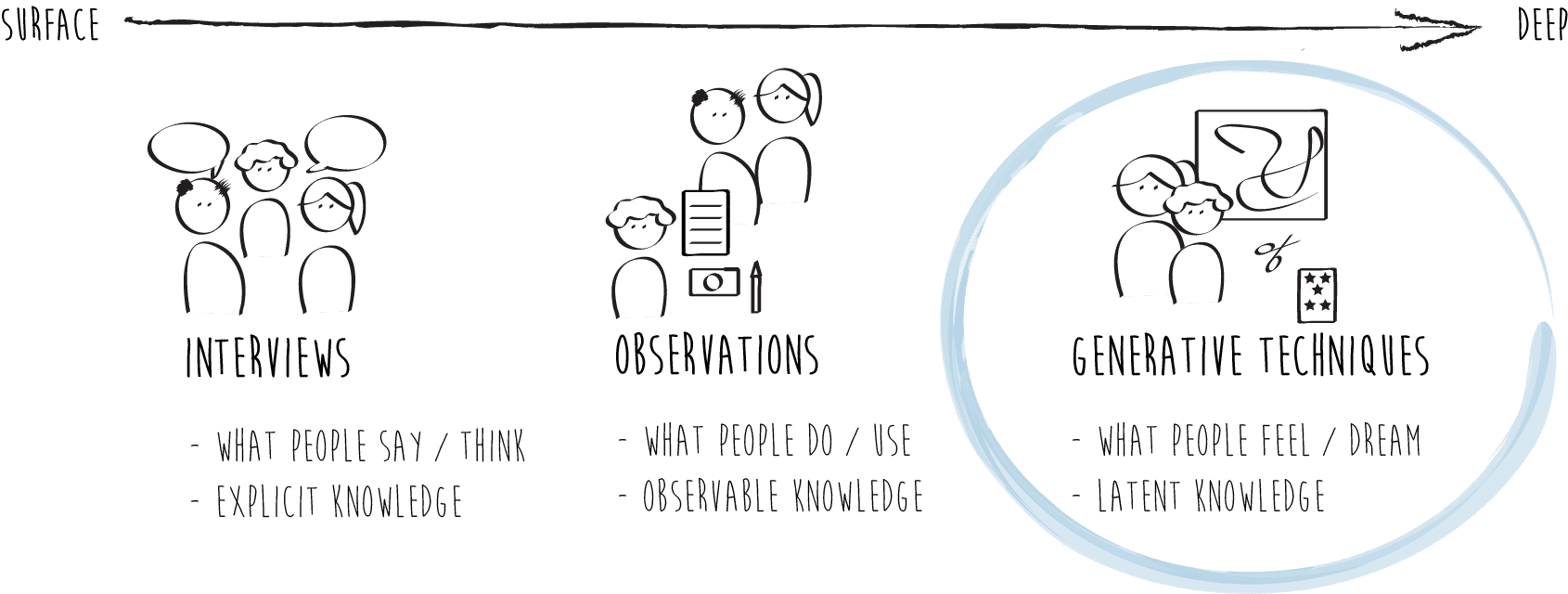
Copyright holder: Priscilla Esser and Interaction Design Foundation, Adapted from Froukje Sleeswijk-Visser, Pieter Jan Stappers, Remko van der Lugt, and Elisabeth B.-N. Sanders, Context Mapping: Experiences from Practice. CoDesign, Vol. 1, No. 2, June 2005, 119–149. Copyright licence: CC BY-NC-ND

Types of user research in the early stages of design. Context mapping is a technique that falls in the category of generative techniques, allowing us as designers to get to a deeper understanding of what users know, feel and dream. In generative techniques, users actively participate in generating ideas that can serve as a starting point for the design process. Adapted from Froukje Sleeswijk-Visser, Pieter Jan Stappers, Remko van der Lugt, and Elisabeth B.-N. Sanders, Context Mapping: Experiences from Practice. CoDesign, Vol. 1, No. 2, June 2005, 119 – 149.

The Three Stages in the Context Mapping Process and how to develop the Best Probes to Fit into it

The context mapping procedure involves three stages:

  • Preparing and developing the probes: We will share the essential three steps, which will help you get started in the best possible way, and you will learn which three types of probes usually work well.
  • Collecting: The main stage is where you collect the insights from your users, who will have your probes kit with small exercises and live with it for a few days. You will then use the results as input for the generative session where your goal is to get to a deeper understanding of what your users know, feel and dream through the ideas they generate.
  • Communicating: Analyzing and sharing the insights with the design team or other stakeholders in the project concludes the context mapping process and ensures that the design process continues in the right direction.

To collect the best insights from users and get them in the right mind-set, you must have proper preparation. You need to collect feelings rather than facts, ambitions rather than tasks. For you to get rich details, the preparation phase should pay attention to three key steps.
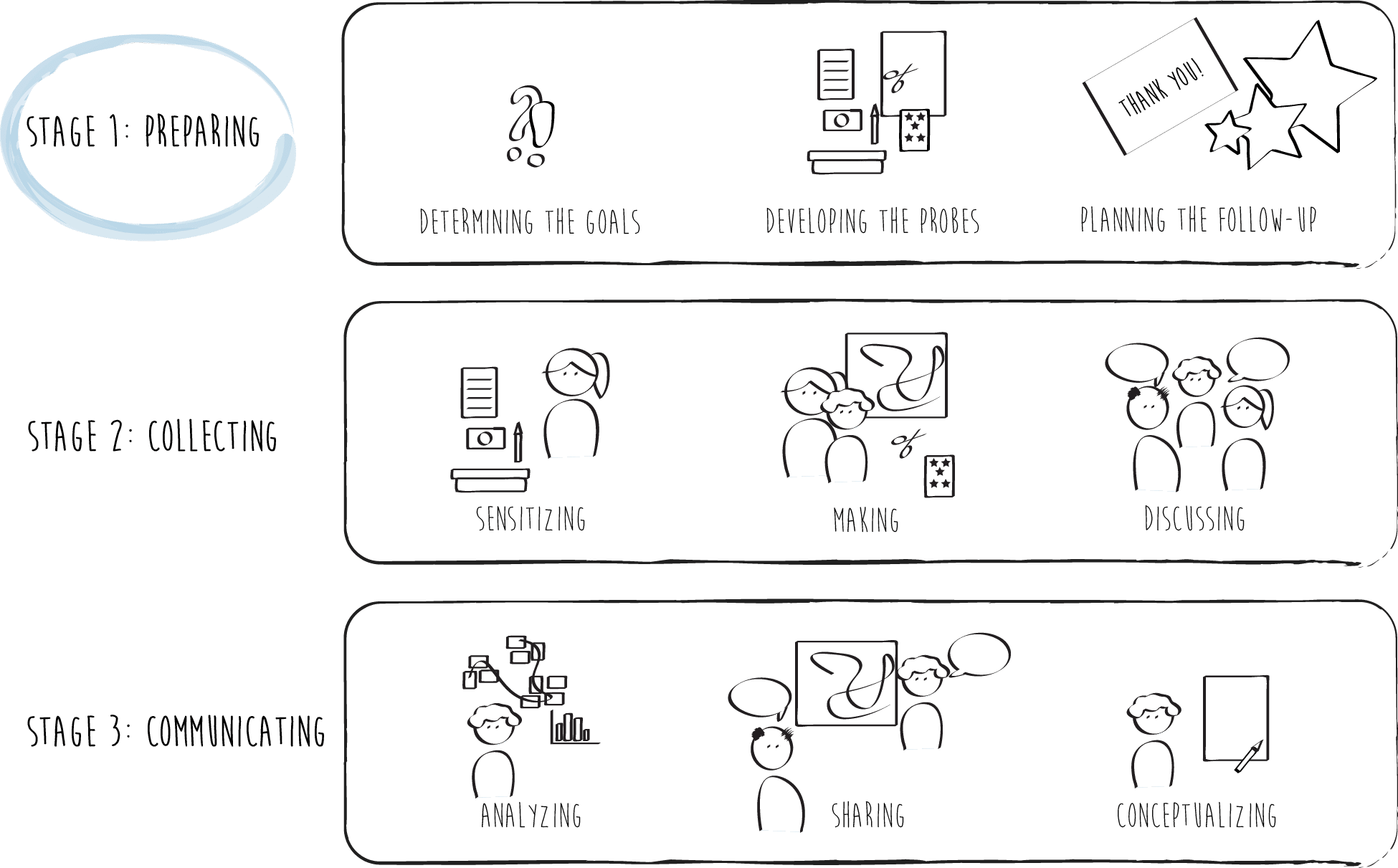
Copyright holder: Priscilla Esser and Interaction Design Foundation, Adapted from ID Studiolab, Context Mapping & Experience Design, 2008. Copyright licence: CC-BY-NC-ND

The process of the context mapping technique involves three stages: Preparing, collecting and communicating. The preparation stage is essential to the two following stages. We will now see how to prepare probes for context mapping in more detail. Adapted from ID Studiolab, Context Mapping & Experience Design, 2008.

Stage 1. Preparing – How to Prepare Probes for Context Mapping

Preparing – Step A

Start by clearly stating the goal of the cultural probe and selecting probe types that match your users. As with any design research method, determining what you need to know is the most important step. For example, when designing an interactive experience to get asthma patients out to exercise, you may need insights into their social lives besides their walking habits. And when you design an online library platform that seduces students to read more relevant literature, you may need insights into their internet activities throughout the day along with their study behaviors.

The trick is to remain broad enough to inspire design, while remaining focused on the design problem at hand. Depending on the goal and your target group, some probes and exercises will be more successful than others. If probing commuters is your goal, you should design a probes kit they can easily take with them. If you want to understand 2nd-grade school teachers, however, you should use a probes kit that focuses on exercises in the classroom.

Key questions to help you get started:

  • What is the goal of the cultural probe? What do you need to know?
  • Which probe types match your users?

Preparing – Step B

Create the kit in a way that you slowly sensitize your users and take them along in your line of thinking.To get participants in the right mind-set and have them reflect on their lives, you need to ease them into it.

The best ways to approach your participants:

  • Help them go from descriptive to imaginative. By starting with gathering some factual information about their habits and contexts, you prep their minds by having them think about it in a way they normally don’t. They will start being more perceptive of their environment—and they will start paying attention to the things you need them to. For example, by starting them with exercises such as mapping out their workflow on a particular day or taking pictures of their meals, you can later ask them what eating goals they would like to achieve, or what support they would need to get a healthier lifestyle.
  • Help them go from the present to the future. By starting with recollecting concrete events and activities (for example, the last time someone has made a large purchase) and then describing and visualizing current behaviors (such as mapping all the incidences of cash payments), the participant is more likely to think about what he would like to see differently in the future. As a designer, you should probably take these steps automatically in your head when someone asks you what a future payment service for people on a tight budget would be. Your users have the ability to give you those insights, as long as you take them with you in the proper steps.

Preparing – Step C

Design for the ending of the probes: decide how to follow up after collecting the probes kit. Your users have put a lot of effort into fulfilling the exercises. Rather than having them send their completed pieces to you in the mail, you should consider ways to make it more personal. If possible, collect the probes kits in person, to show your commitment to them. This will keep them engaged, and it provides you with the opportunity to get them enthusiastic about the generative session you may be hosting afterwards.

“Even with a one-day study enough time needs to be made for the sensitizing process for users, researchers, designers and other members of the team.”
– Sleeswijk-Visser et al., design researcher at Delft University of Technology, 2005

Key questions to help you end the probes:

  • How will you collect the probes kit?
  • How will you follow up after collecting the probes kit?

Example of a bad Probes Kit

Imagine having a design project aimed at improving the experience of hospitalized children suffering from cancer. The context of a child oncology ward is hopefully unfamiliar terrain for you, so you need to do research. The aim of this research is to get insights into how the children experience the environment, whom they like to share the experience with and what would trigger them to be happier, more active and positive.

You know from a short interview with the head nurse that they spend days on end in bed, bored and lonely. Building upon your experience with children, you decide to design some probes that would fit their age group. It starts with a drawing exercise, where they’re asked to draw their daily routine on a timeline, including the people they meet. Then, a photo assignment asks them to take pictures of their favourite parts of the ward. A writing task allows them to write what they would like a day in hospital to be like. Finally, they can draw their perfect hospital room on a pre-printed map—sounds like something a child might enjoy, right?

However, when you retrieve the probes kits from the children, they are sleeping. And their mums and dads explain to you that they have been too sick to do all the tasks. In the end, they have tried to write down the daily routines for you themselves. What went wrong?

You had a clear goal and created the kit to take the children gradually from descriptive to imaginative and from present to future. You explained everything in person and were always available to answer any questions. They knew you would be coming around today. Nevertheless, you didn’t grasp the impact of the disease on each child. It’s time for an iteration.
Copyright holder: Priscilla Esser and Interaction Design Foundation. Copyright licence: CC BY-NC-ND

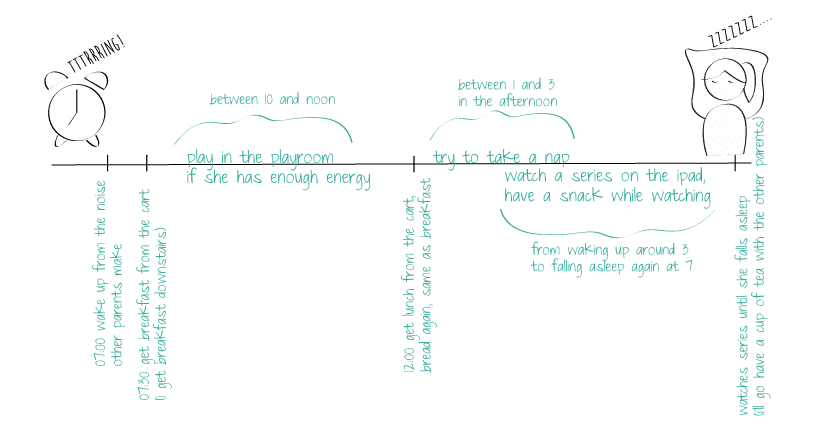
Example of a timeline that could result when parents help their children do the probe exercises while staying in hospital. If this is the only result you get from your probes kit, it is not giving you more inspiring information than an interview could have done. If this turns out to be the case, it is essential that you redesign your probes kit.

Example of a good Probes Kit

The main things you realized from the failed attempt were the constant presence of the parents and the role they play. For the next version of your probes kit, you include them in the exercises. Also, all tasks are fit for lying in bed, and you take more time to allow for bad days where the child will do nothing but sleep. The redesigned kit starts with pictures the child takes of anything he wants in his hospital room. When he can take at least seven pictures, his parents will give him a prize: a cuddly toy that’s included in the kit. Then, the child can draw a circle around his favorite places in the ward on a map. The parents then have to visit that place and guess what the favorite item is. For every good guess, the parents will receive a sticker from the child they can stick on their clothes. The child is also asked to write a postcard to someone he would like to spend time with in hospital, describing what he would like to do. Finally, the parents can read their child a story, written with the patient as the hero. Parts of the story invite the child to engage and fantasize about how the story would unfold. These clues give you all the insights you need into these youngsters’ dreams and wishes.

As you collect the probes kits this time, you encounter smiling mums and dads, explaining to you how they enjoyed working on these assignments with their children. It has taken more time than anticipated, but you finally have the rich insights you need to design something that will truly make a difference in these troubled lives.
Copyright holder: Liz West. Copyright licence: CC BY

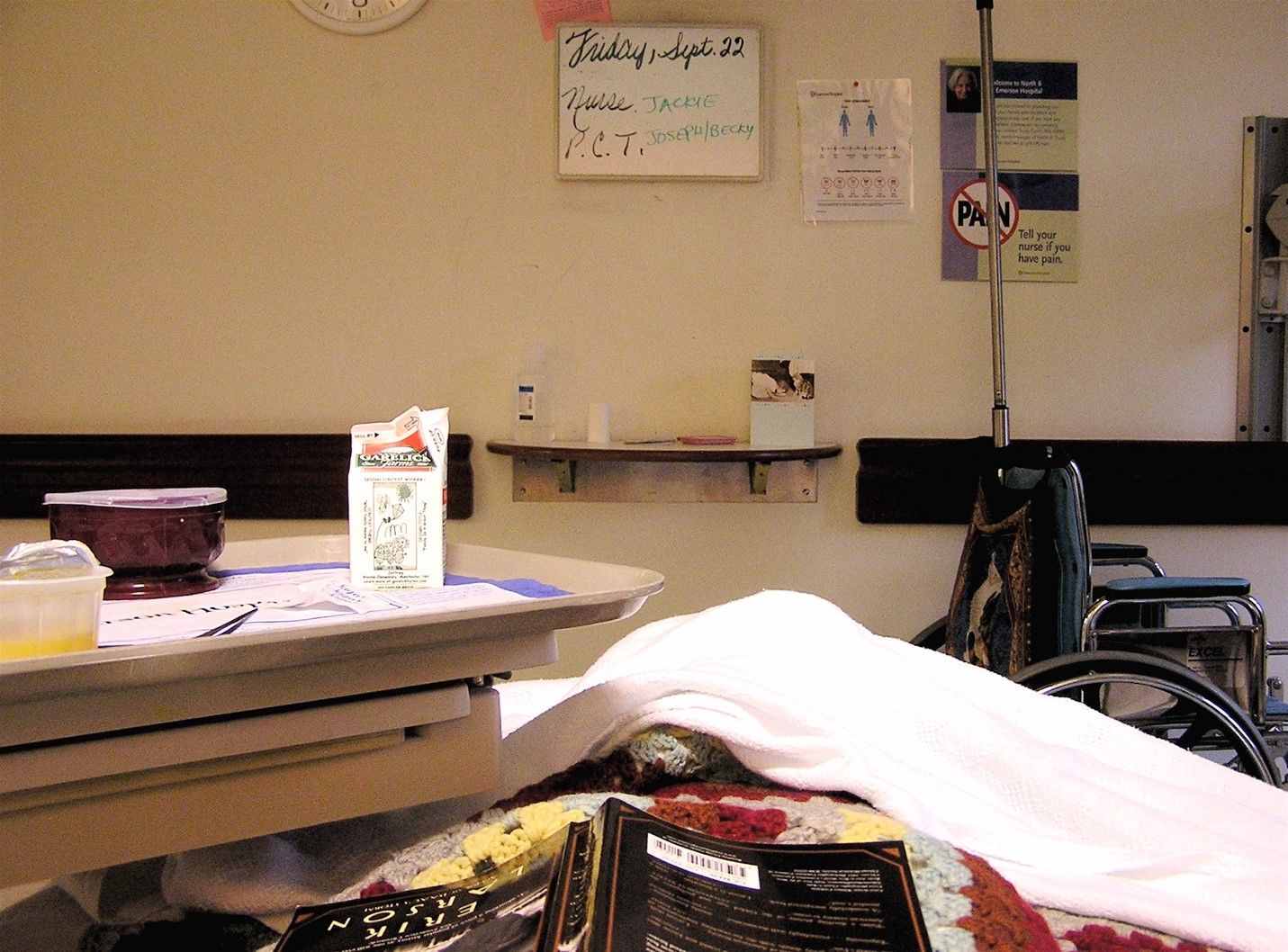
View from a hospital bed, as an example of the results that could come out of a good probes kit. By taking pictures, users can give us insights into their lives and inspire the design process. This picture, for example, shows a lack of personalization in hospital rooms. This can open up a whole new design direction for improving the hospital experience for children.

Best Practices: Three Types of Probes that usually Work well

As designers, we typically create probes to gather information over time. Best practice: many of us choose a one-week time frame as participants often do not want to be engaged if the process is too long, but you should adapt it to your target group’s needs. Each assignment should take no more than five to ten minutes per day to complete (or less, as became obvious in the child cancer example). You may find the following probes useful in numerous projects:

  • Writing and drawing about events or objects in their context. Have participants write a short story on a particular aspect of their day or a specific event in the past. To provoke a certain type of text, you can provide specific formats for the texts, such as postcards or small diaries. Provide paper and pencils for participants to draw what’s in their heads rather than what’s objectively observable. Drawing is perfect for gathering their subjective experiences. Make people feel comfortable by giving examples of non-intimidating drawing styles.
  • Taking a photograph of their situation on set times in a day. Give a focused assignment with subject, type and number of photos. Possibly give them a trigger via text message when the timing of the picture is essential. If your target group has smart phones, you should, of course, take advantage of it.
  • Mapping their daily routines and the feelings they generate. Provide maps of indoor or outdoor areas relevant for the subject. Also, provide pens or pencils to write and draw on the maps. If you want to know about their feelings and experiences, have some spaces around the maps to make notes. The mapping exercise can be part of a photograph assignment. For example, you can ask them to take pictures along their route to work and indicate on a map where they took the pictures.

Stage 2. Collecting – The Main Stage

Now you’re ready to go to the next stage in the context mapping process where you can start collecting the insights from your users.

Collecting – Step A

First, you will give your users your probes kit with small exercises, and they will live with it for a few days. This step is called sensitising, as it helps users get sensitive to their own context and viewing it in a more conscious way. They will fill the kit with all the rich goodness you need as input for your design process. When you get the kits back, you will have a field day going through them all. You should lay the kits out in front of you and try to see patterns. Pieter Jan Stappers and Elisabeth Sanders, experts on generative research methods, advise you to label every piece of information for future reference every time. You can do this by recording the who (including the participants’ names), where and when of the data.

Collecting – Step B

You will then use the data as input for the generative session. Although users are experts in their own lives, they are not designers and thus not used to thinking about designs that do not exist yet. The kits will have sensitised your users, so they are more prepared to think about the future and create solutions themselves. In the generative session, you help users create ideas.

Collecting – Step C

Lastly, you need to start a discussion with the users. With the probes kits, they have given inspiring insights and fragments of their lives. In the generative session, they have created new ideas on what would work in their context. You should complete this information by understanding the reasoning behind it. Having an open discussion will allow you to get this understanding.

Stage 3. Communicating – the Final Stage

Finally, after collecting all the inspiring material from your users, you need to analyze it. Sometimes, patterns or clusters will emerge. Other times, a single picture or quote will stand out. Regardless of the types of insights you come up with, or how you found them in the rich data, you need to communicate them. Fellow design team members will need the insights to push the design process in the right direction. Other stakeholders may need the insights to internalize the need to innovate.

According to Pieter Jan Stappers and Elisabeth Sanders, a challenge in this stage is to communicate the insights in a way that reflects the dreams and aspirations of your target group while respecting their privacy.

The Take Away

The context mapping procedure involves three stages:preparing, collecting and communicating. Preparing the right kind of probes kit is essential for gathering rich insights into your target group that will inspire the early stages of design. Three key steps you should consider when preparing and designing a probes kit are:

  • Always start by clearly stating the goal of the cultural probe and selecting probe types that match your users.
  • Create the kit in a way that slowly sensitises your users and takes them along in your line of thinking.
  • Design for the ending of the probes: decide how to follow up after collecting the probes kit.

As designing a probes kit is like any other small design task, you should try out your probes kit and adapt the set of exercises when it doesn’t fit your design problem or target group as anticipated. Through the rich data they provide in the probes kits, your users will actively give you inspiration for the design process. Finally, you need to communicate the insights to other design team members or stakeholders—to ensure that the design process takes the right direction.

References & Where to Learn More

Hero Image: Copyright holder: Gunnar Bothner-By. Copyright licence: CC BY / Enhanced brightness from original

Froukje Sleeswijk-Visser, Pieter Jan Stappers, Remko van der Lugt, and Elisabeth B.-N. Sanders, Context Mapping: Experiences from Practice. CoDesign, Vol. 1, No. 2, June 2005, 119–149.

Pieter Jan Stappers, and Elisabeth B.-N. Sanders, Convivial Toolbox: Generative Research for the Front End of Design, 2012.
Feel Stuck?
Want Better Job Options?

AI is replacing jobs everywhere, yet design jobs are booming with a projected 45% job growth. With design skills, you can create products and services people love. More love means more impact and greater salary potential.

At IxDF, we help you from your first course to your next job, all in one place.

See How Design Skills Turn Into Job Options
Privacy Settings
By using this site, you accept our Cookie Policy and Terms of Use.
Customize
Accept all

Be the One Who Inspires

People remember who shares great ideas.

Share on:

Academic Credibility — On Autopilot

Don't waste time googling citation formats. Just copy, paste and look legit in seconds.